

 English
 中文简体
中文简体






Best Outdoor Patio Umbrellas: Features, Sizing, Fabric, Wind Resistance & FAQ
Posted by Admin
Content
- 1 The Short Answer: Which Patio Umbrella Is Actually the Best?
- 2 Four Checks That Separate a Good Patio Umbrella from a Bad One
- 3 What Size Patio Umbrella Do You Need?
- 4 Canopy Fabric and Frame Materials: What Actually Lasts
- 5 Wind Resistance: Why Umbrellas Tip Over and How to Stop It
- 6 Center-Pole or Cantilever: Which Layout Works for You?
- 7 What to Check When You Buy Several Patio Umbrellas
- 8 Maintenance That Keeps an Umbrella Working Past Year Five
- 9 Patio Umbrella FAQ
- 10 Final Checklist Before You Order
The Short Answer: Which Patio Umbrella Is Actually the Best?
At noon in July, the difference between a good patio umbrella and a bad one takes about twenty minutes to appear. The good one holds a taut canopy over the lunch table, filters most of the sun, and stands still in a light breeze. The bad one ends up tucked in a corner because its pole wobbles, its fabric started fading after a few weeks, and nobody trusts the crank anymore. To avoid that second outcome, the best outdoor patio umbrella for most homeowners is a 9-11 foot unit with a rust-resistant aluminum or fiberglass frame, a canopy rated UPF 50+, an air-vented top, and a base weight that matches the canopy size.
Those four elements decide roughly 90 percent of the real-world experience. Coverage comes from size, durability comes from fabric and frame, and stability comes from the vent plus the base. Everything else, from tilt mechanisms to color options, matters mainly for convenience and looks.
- Size first: a canopy that is too small leaves half the table in direct sun.
- Fabric second: cheap printed polyester fades fast and lets heat through.
- Frame third: rib count and pole material decide how the umbrella behaves in gusty weather.
- Base fourth: an underweight base turns a stable canopy into a sail.
The rest of this guide explains each point in practical terms, with the numbers you need, so you can choose correctly the first time.
Four Checks That Separate a Good Patio Umbrella from a Bad One
Run these four checks on any model you are considering. They take less than five minutes and reveal a lot more about the product than the photo does.
- Check the shade area, not just the diameter. A 9-foot canopy covers roughly 64 square feet; a 10-foot canopy covers about 79 square feet. That extra foot of diameter adds close to 15 square feet of shade, which is enough to cover another guest's chair.
- Check the fabric's UV rating and how the color was applied. Solution-dyed fabric has pigment locked into each fiber, so it resists fading for years. Screen-printed patterns sit on the surface and wear off after a season or two.
- Check the ribs. Entry-level umbrellas use 6 ribs; 8 ribs keep larger canopies taut and help the umbrella hold its shape when the wind pushes upward. For anything above 9 feet, 8 ribs should be the minimum.
- Check the pole wall thickness and coating. Powder-coated aluminum resists rust and stays light enough to move comfortably. Bare steel is heavier and will corrode wherever the coating gets scratched.
What Size Patio Umbrella Do You Need?
Measure the table first, then choose the canopy. The rule used by most outdoor furniture suppliers is simple: the canopy should extend about 18 inches past the edge of the table on every side. This keeps the sun off guests' shoulders, not just off the plates.
For a round 60-inch table that seats six, pair it with a 9 to 10 foot canopy. A 72-inch table calls for 11 feet or more. For a long rectangular dining set, two umbrellas usually work better than one giant canopy: two units shade the whole table without creating a single large sail that strains the frame and base.
| Table width | Recommended canopy width | Approximate shade area | Minimum base weight |
|---|---|---|---|
| Up to 40 inches | 6.5-7.5 feet | 33-44 sq ft | 20-30 lb |
| 40-54 inches | 8-9 feet | 50-64 sq ft | 35-45 lb |
| 54-66 inches | 9-10 feet | 64-79 sq ft | 45-60 lb |
| 66 inches and up | 11-13 feet | 95-133 sq ft | 60-75 lb |
If your table falls in the common 54-66 inch range, a 9-foot, 8-rib garden patio umbrella is a proven pick: the extra ribs keep the canopy drum-tight and noticeably reduce flapping in coastal or valley breezes.
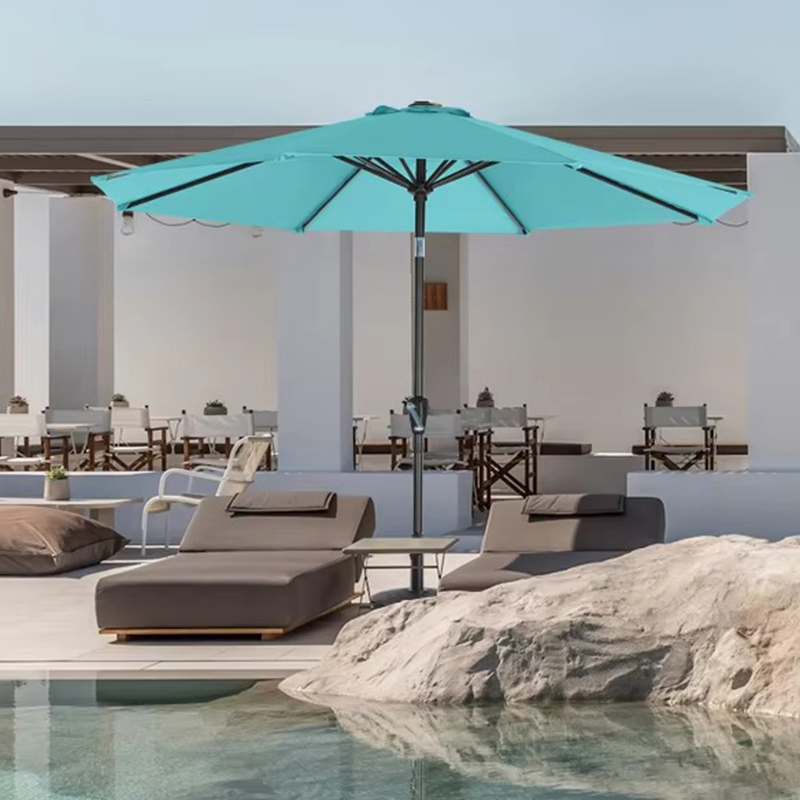 Custom 9 Feet 8 Ribs Large Size Garden Patio Umbrella Suppliers, OEM/ODM FactoryJinqiao Umbrella Co., Ltd is China OEM/ODM 9 Feet 8 Ribs Large Size Garden Patio Umbrella suppliers and 9 Feet 8 Ribs Large Size Garden P...View Product →
Rule of thumb: never choose a canopy smaller than the table. A slightly oversized umbrella looks better, shades more, and adds very little to the price.
Canopy Fabric and Frame Materials: What Actually Lasts
Fabric is the part that faces the sun, rain, pollen, and everything else a garden throws at it. The frame is the part that keeps the fabric where it belongs. Both need to be chosen for your climate, not for the catalog photo.
Canopy Fabric Options
Three fabrics dominate the market: polyester, solution-dyed acrylic, and olefin. They look similar in a showroom and behave very differently in year three.
| Fabric type | UV resistance | Water behavior | Typical outdoor life | Best for |
|---|---|---|---|---|
| Polyester (UV-coated) | Blocks most UV while the finish stays intact | Water-repellent at first; absorbs moisture once the coating wears | 3-5 years | Budget-friendly residential decks |
| Solution-dyed acrylic | Color locked into each fiber; strong UV resistance | Quick-drying; naturally weather-resistant | 5-8+ years | Hot, sunny climates and long-term use |
| Olefin (polypropylene) | Good UV resistance | Water-resistant and quick-drying | 4-6 years | Poolside and humid coastal areas |
In lightweight fabrics, a UPF 50 rating blocks roughly 98 percent of ultraviolet radiation. That is solid protection for an afternoon on the patio, but only while the fabric is in good condition. Once a coating-based fabric starts to degrade, its protection drops faster than a solution-dyed fabric of the same age. We wrote a closer look at how patio umbrella materials behave under sun and rain if you want the technical details before ordering.
Frame and Rib Materials
The frame carries the load. Aluminum and fiberglass offer the best balance of weight and durability. Powder-coated aluminum resists rust and keeps the umbrella light enough to tilt and lower by hand. Fiberglass ribs flex under a gust and then return to their original shape; steel ribs bend permanently after a strong gust, and wooden ribs can split if exposed to moisture repeatedly.
- Aluminum poles: lightweight, corrosion-resistant, the standard choice for most residential patios.
- Steel poles: heavier and strong, but rust-prone where the finish chips.
- Fiberglass ribs: flex instead of snapping, which makes them the preferred option for exposed sites.
- Wood poles: elegant look, but they require annual sealing and dry storage.
For buyers who want maximum weather coverage, a double-layer ventilated waterproof patio umbrella uses an air gap between two canopy layers to reduce heat buildup and let hot air escape through the crown. The second layer also slows rain penetration, which is why double-layer designs tend to outperform single-layer models in all-day use.
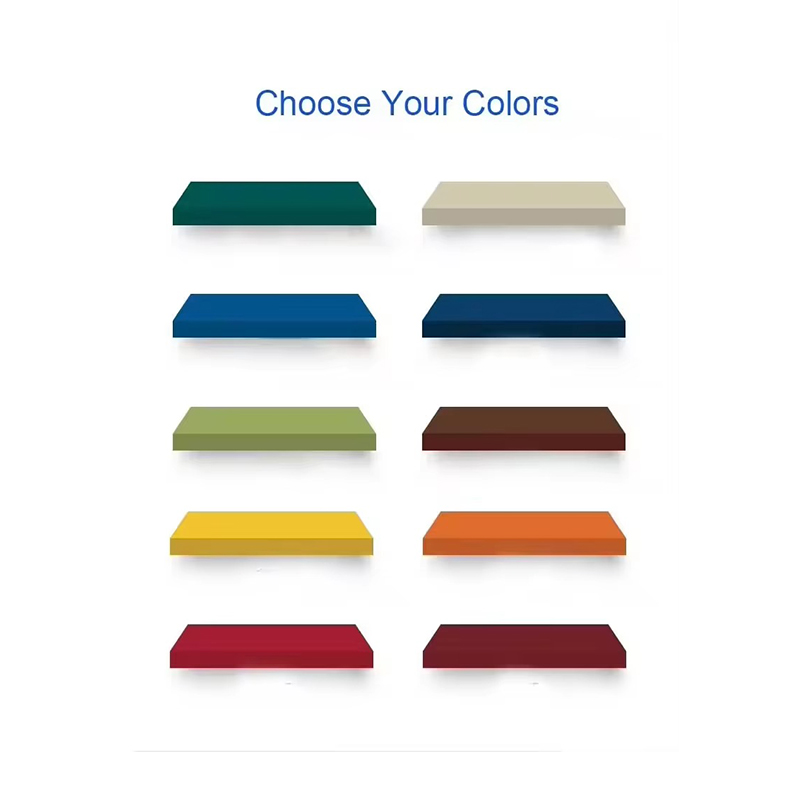 Custom Double Layer Ventilated Waterproof Patio Umbrella Suppliers, OEM/ODM FactJinqiao Umbrella Co., Ltd is China OEM/ODM Double Layer Ventilated Waterproof Patio Umbrella suppliers and Double Layer Ventilated Waterp...View Product →
Wind Resistance: Why Umbrellas Tip Over and How to Stop It
An umbrella fails in wind in two ways. Either the ribs break under the upward force, or the whole unit tips over because the base is too light. Both are preventable, but they require different solutions.
Vented and Double-Layer Canopies
A vent is a small opening near the crown of the canopy. It gives air a way through, releasing the pressure that builds underneath a flat canopy. An unvented 10-foot canopy catches more air than most people expect; the same canopy with a vent experiences noticeably less lift. Double-layer construction adds a second escape path and is especially useful on exposed rooftops and terraces. We explain the mechanism in more detail in our practical look at double-layer ventilated canopies.
If your area gets regular afternoon gusts, a windproof large umbrella with a base keeps the canopy firm because the base adds stability and the reinforced hub spreads stress evenly across the ribs.
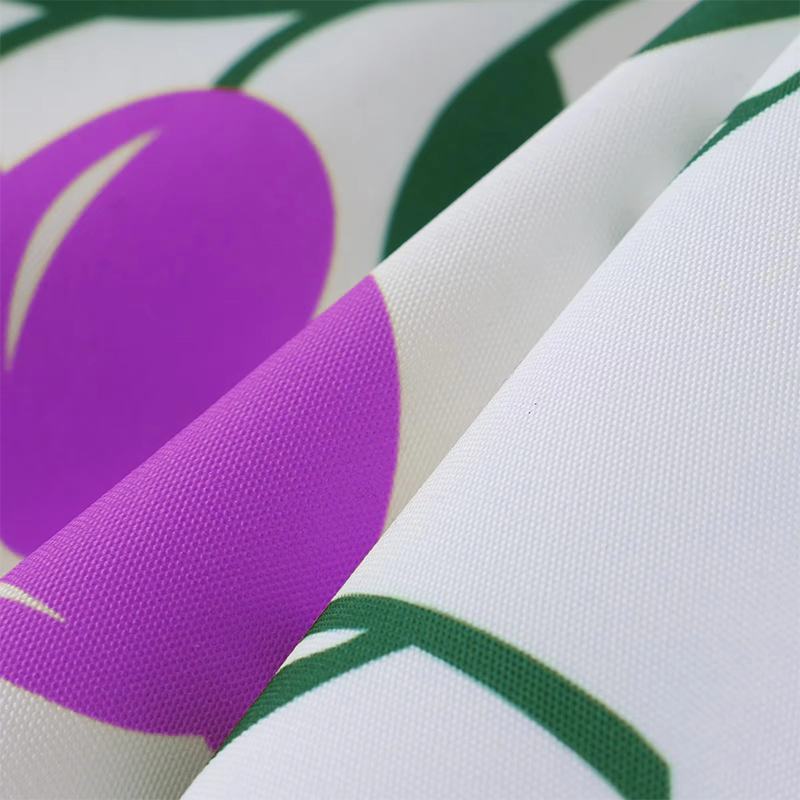 Custom High Quality Windproof Large Umbrella With Base Garden Umbrella SuppliersJinqiao Umbrella Co., Ltd is China OEM/ODM High Quality Windproof Large Umbrella With Base Garden Umbrella suppliers and High Quality Win...View Product →
Base Weight Guidelines
For a center-pole umbrella, plan on 35-45 lb for an 8-9 foot canopy, 45-60 lb for a 9-10 foot canopy, and 60-75 lb or more above 11 feet. Cantilever designs need 75-130 lb because the offset pole puts a twisting load on the base. Hollow bases can be filled with sand or water to adjust the weight on site, which is the practical choice if you plan to move the umbrella frequently.
| Wind speed | Expected behavior | Recommended action |
|---|---|---|
| 0-10 mph | Normal sway, no strain | Leave open and enjoy |
| 10-20 mph | Canopy flaps, frame creaks | Keep the vent open and seat the base on flat ground |
| 20-30 mph | Risk of rib stress or tipping | Close the umbrella or tie it down |
| 30+ mph | Structural damage likely | Move it indoors or fully collapse |
A raised base, a slope, or a cracked paver changes all of these numbers for the worse. The umbrella is only as stable as the surface under the base.
Center-Pole or Cantilever: Which Layout Works for You?
The two configurations solve different problems. Center-pole umbrellas drop the pole through a hole in the table or stand beside it on a free-standing base. Cantilever, or offset, umbrellas anchor the pole in a side base and swing the canopy over the furniture, leaving the seating area pole-free.
| Feature | Center-pole umbrella | Cantilever (offset) umbrella |
|---|---|---|
| Installation | Table hole or free-standing base | Single heavy side base |
| Pole-free seating area | No | Yes, the canopy hangs from an offset arm |
| Shade flexibility | Fixed position over the table | 360-degree rotation around the base |
| Base weight needed | 35-75 lb depending on size | 75-130 lb |
| Typical use | Dining tables, small patios | Lounge sets, conversation areas, large tables |
When Center-Pole Is the Smarter Choice
Choose a center-pole umbrella for a standard dining table with a center hole, for balconies, and when you want something light enough to move by yourself. It costs less, takes up a smaller footprint, and remains the simplest system to maintain or replace.
When a Cantilever Is Worth the Extra Money
Choose a cantilever when the sun swings across a wide seating area or when you do not want a pole interrupting the conversation circle. The flexibility costs more in price and in base weight, but for a permanent shade zone over loungers, it is usually the better layout.
What to Check When You Buy Several Patio Umbrellas
If the purchase is for a restaurant terrace, a hotel pool area, a rental fleet, or a retail range, the decision process changes. A single-unit buyer can afford to choose by look; a volume buyer needs consistency, replaceability, and predictable service costs.
- Fabric batch consistency: The shade of navy in order one must match order two. Ask how the supplier controls dye lots before placing a large order.
- Replacement parts: Canopies, rib sets, and base plates are the first components to fail. If the supplier stocks spare parts, the cost per year of ownership drops significantly.
- Shipping and assembly: Commercial orders arrive as component kits. Confirm that hubs come pre-assembled, poles are packed separately, and the packaging protects the canopy during transit.
- Custom requirements: For branded use, confirm whether the supplier can print or embroider a logo, fit a wind-rated frame, or adjust pole height and tilt travel. Manufacturers with OEM/ODM experience are usually more flexible than retail-only sellers.
Background details such as pole thickness, canopy tension, and hinge design are covered in our umbrella knowledge hub, which is useful when you need to compare suppliers or explain specifications to an installation team.
Maintenance That Keeps an Umbrella Working Past Year Five
A decent patio umbrella should last five to eight years. Almost every failure that shortens that lifespan comes from neglect rather than manufacturing.
- Clean the canopy every 6-8 weeks during the season with cool water and a mild soap. Rinse thoroughly and let the fabric dry fully before closing it; mildew forms quickly in damp folds.
- Lubricate the crank gear and tilt mechanism once a season with a silicone spray or white lithium grease. Oil-based greases attract dust and turn into abrasive paste over time.
- Close the umbrella when wind speeds pass 20-25 mph. Even a well-built 10-footer creates a large surface, and constant flapping loosens stitching long before the fabric itself wears out.
- Remove leaves, twigs, and pooled water from the canopy after storms. Standing water stresses the ribs and promotes algae growth along the seams.
- Store the umbrella upright in a dry, shaded location in the off-season. If space is tight, use a breathable storage cover rather than a plastic bag, which traps condensation.
Patio Umbrella FAQ
What size outdoor patio umbrella do I need for a 60-inch table?
A 60-inch round table pairs correctly with a 9 to 10 foot canopy. The canopy overhangs the table by 18 to 24 inches on each side, which is enough to shade seated guests without looking oversized.
Are cantilever umbrellas better than center-pole umbrellas?
Better depends on the layout. Cantilever models free up the area under the canopy and rotate 360 degrees, which makes them ideal for lounge sets. Center-pole models are simpler, lighter, and cheaper for dining tables. If the table has a hole in the center, the center-pole design is typically the correct one.
How much wind can a patio umbrella handle?
In practical terms, a well-rooted center-pole umbrella with a vented canopy is safe in winds up to about 20 mph, roughly 32 km/h. Above that, close it. Fiberglass ribs and an adequately heavy base extend the safe range slightly, but no household patio umbrella is designed to stay open in storm-level wind.
How heavy should the umbrella base be?
For an 8-9 foot center-pole canopy, use 35-45 lb. For 9-10 foot, use 45-60 lb. For 11-13 foot, use 60-75 lb or more. Cantilever models need a heavier base, typically 75-130 lb, because the offset pole multiplies the tipping force.
Do patio umbrellas really block UV?
A canopy rated UPF 50 blocks approximately 98 percent of ultraviolet radiation. That is enough for relaxed afternoon use. The protection depends on the fabric's condition; faded, worn, or poorly coated fabric provides less protection than a fresh solution-dyed canopy with the same rating.
How long should a good patio umbrella last?
Expect 3-5 years from a budget polyester model and 5-8 years or more from a solution-dyed acrylic model, provided the frame is aluminum or fiberglass and the umbrella is stored during the off-season. The frame usually outlasts the fabric, which is why buying a model with a replaceable canopy is a smart long-term investment.
Final Checklist Before You Order
Apply these in the order below. They summarize the points that matter most.
- Measure the table or seating area and write down the maximum usable canopy width.
- Compare shade area, not just diameter: 8 ft is about 50 sq ft; 9 ft is about 64 sq ft; 10 ft is about 79 sq ft.
- Choose solution-dyed acrylic or UV-treated polyester for anything meant to last more than three seasons.
- Demand 8 ribs for 9-foot and larger models; fiberglass ribs are preferable in exposed positions.
- Match the base to the canopy: 45-60 lb for a 9-10 foot center-pole umbrella, 75-130 lb for a cantilever.
- Operate the crank, tilt, and locking mechanism before assembly; these are the first parts to fail on cheap units.
- If buying several units, ask about fabric batch consistency, spare parts, and custom options in the same conversation.
A patio umbrella does not need to be the most expensive model in the shop. It needs to be the right size, made from the right materials, and balanced with the right base. Measure first, compare those three numbers, and the rest of the buying process takes care of itself.
Recommended products
Contact Us Now
Copyright 2024 @ Shaoxing Jinqiao Umbrella Co., Ltd. All Rights Reserved. OEM/ODM umbrellas manufacturers Custom Umbrellas Factory
