

 English
 中文简体






Can an Umbrella Really Protect You from the Sun? A Full UV Protection Guide
Posted by Admin
Content
- 1 How an Umbrella Blocks UV Radiation
- 2 Fabric and Coating: The Real Difference Between Umbrellas
- 3 Color Science: Which Color Blocks the Most Sun?
- 4 UPF Ratings: What the Numbers Actually Mean
- 5 Rain Umbrella vs. Sun Umbrella: Which One Actually Works
- 6 Size, Shape, and Angle: Cover the Whole Body, Not Just the Head
- 7 Patio and Garden Umbrellas: Fixed Protection for Long Summer Days
- 8 Portable Protection: Beach, Fishing, and Camping
- 9 How to Maintain the UV Protection of Your Umbrella
- 10 Frequently Asked Questions
- 10.1 1. Do I still need sunscreen if I use a sun umbrella?
- 10.2 2. What color umbrella blocks the most sun?
- 10.3 3. Can a rain umbrella be used as a sun umbrella in an emergency?
- 10.4 4. How big should a beach umbrella be to protect a full recliner?
- 10.5 5. Is UPF 50+ enough, or should I look for a higher number?
- 10.6 6. How do I test whether my umbrella is truly sun-protective?
- 11 Final Verdict: Yes, But Choose the Right Umbrella
It is 1:30 p.m. on a July beach. The sand is glowing, the heat is pressing down from every side, and you watch your skin start to turn pink after just 12 minutes of exposure. You pull a large umbrella out of your bag, twist it firmly into the sand, and drop into its shadow. Finally, relief. But are you actually protected from the sun, or just sitting in a slightly darker spot?
The direct answer is: Yes, a well-designed sun umbrella with a UPF 50+ rating can block up to 99% of ultraviolet radiation, making it one of the most effective portable sun protection tools you can own. However, not every umbrella delivers this level of defense. The canopy material, coating, weave density, color, size, and tilt angle all determine whether you are truly safe under that shadow. This guide explains the science in plain language and exactly what to look for before you buy.
How an Umbrella Blocks UV Radiation
Sunlight carries two types of ultraviolet radiation that damage your skin: UVA (320–400 nm), which penetrates deep into the skin and causes premature aging, and UVB (280–320 nm), which burns the surface layers. A canopy blocks these rays in two ways: by reflecting them off the outer fabric surface and by absorbing them inside the fabric fibers before they reach your body.
The effectiveness of that protection is measured by the Ultraviolet Protection Factor (UPF). A UPF 50 rating means the fabric allows only 1/50th of UV radiation to pass through, so roughly 98% is blocked. Dedicated sun umbrellas perform even better. In a 2024 study published in the National Library of Medicine, researchers tested umbrellas marketed for sun protection and found that purpose-built models blocked more than 99% of incoming UV rays.
One detail people often miss is reflected UV. Sitting completely in the shade of an umbrella does not protect you from radiation bouncing off sand, water, or concrete. This is why the inner coating of the canopy matters as much as the outer layer, which we will cover next.
Fabric and Coating: The Real Difference Between Umbrellas
When you put two umbrellas side by side under a bright sun, the winner is not the one that looks thicker; it is the one with a tighter weave and a protective finish. The most common canopy fabric is polyester, and its density is measured in T-count (threads per inch). A 210T polyester canopy leaves far fewer micro-gaps for UV to slip through than a light 150T fabric.
There are three coating types that genuinely improve sun blocking:
- Silver reflective coating – bounces UV and infrared heat off the top of the canopy, keeping the space underneath visibly cooler.
- Black (PU) inner coating – absorbs radiation that penetrates the outer layer and stops reflected UV from bouncing off the underside.
- Canvas or waxed cotton – extremely dense and water-resistant, used mainly on premium wooden-pole garden umbrellas.
For a closer look at how materials affect long-term performance, feel free to read our detailed guide on patio umbrella materials and sun protection durability. The short version is simple: choose a dense polyester with a black or silver undercoating and completely avoid thin, uncoated fabrics.
Color Science: Which Color Blocks the Most Sun?
It is true that darker outer fabrics absorb more UV radiation, so less of it reaches your skin. However, the story does not end with the outer color. The highest-performing combination found in real-world testing is a dark outer canopy with a black inner coating. The dark shell (navy, charcoal, forest green) captures UVA and UVB energy, while the black interior prevents reflected rays from bouncing off the ground and up into your face.
Light-colored umbrellas reflect visible light, which on its own feels cooler. But if the fabric is thin, that reflected visible light still comes with a significant amount of UV radiation. The table below summarizes the performance of common color and coating combinations.
| Outer fabric | Inner coating | UV blocking | Temperature under canopy |
|---|---|---|---|
| Dark (navy/black) | Black PU | 98–99% | Cool, with slight heat absorption at the top |
| Light (white/tan) | Black PU | 95–98% | Coolest feel |
| Light (white/tan) | None / silver spray | 50–80% | Warm to hot, poor UV defense |
If you only remember one rule, remember this: dark outside, black inside. That combination delivers the best balance of heat rejection and UV absorption for both beach and patio use.
UPF Ratings: What the Numbers Actually Mean
UPF labels are the most reliable way to compare umbrellas, but many shoppers do not understand the jump between numbers. A UPF 30 umbrella is not twice as good as UPF 15; the difference is a matter of a few percentage points.
| UPF rating | UV blocked | Best use case |
|---|---|---|
| UPF 15 | 93.3% | Short errands, minimal sun exposure |
| UPF 30 | 96.7% | Casual outdoor dining |
| UPF 50 | 98% | Beach, pool and all-day patio |
| UPF 50+ | 98% or higher | Strongest protection, sensitive skin |
When shopping, look for the words “UPF 50+” or “UV tested” on the label. A standard umbrella that never mentions UV protection is unlikely to block enough radiation for a full day outdoors.
Rain Umbrella vs. Sun Umbrella: Which One Actually Works
You are caught off guard, the sky is clear, and all you have is an old rain umbrella from your car. Will it save your skin? Partially, but not reliably. A rain umbrella is designed to repel water, not to block radiation. Its thin polyester canopy can allow more than 30% to 50% of UV rays to pass through, depending on the color and fabric density.
The exception is a black-lined rain umbrella. The dark inner coating absorbs much of the UV that crosses the outer layer. Still, it has not been tested to a UPF standard, so you should treat it as an emergency option rather than a primary defense.
| Feature | Rain umbrella | Sun umbrella |
|---|---|---|
| Fabric density | Thin, often 150T | Dense 210T or coated |
| UPF label | Rarely present | UPF 50+ common |
| Black inner coating | Optional, rare | Standard on quality models |
| Ground UV reflection | Passes through easily | Absorbed by inner coating |
If you spend most of your day outdoors under the sun, choose a purpose-built sun umbrella. Many models now also handle light rain, which gives you the best of both worlds.
Size, Shape, and Angle: Cover the Whole Body, Not Just the Head
A tiny 1.5-meter umbrella might cover your face, but your shoulders, legs, and feet stay exposed. The single most important measurement is the arc diameter. For a lounger or two beach chairs, look for an arc of at least 180 cm (6 ft). For a full family table, a 250 cm (8.2 ft) arc is more appropriate.
Do not ignore the angle adjustment feature. UV intensity is highest when the sun is directly overhead, but in the early morning and late afternoon the sun hits you from a low angle. Tilting the umbrella 15 to 45 degrees extends your shade and keeps the canopy between you and the low sun.
- 0°–15° – high sun, noon hours
- 15°–30° – late morning / early afternoon
- 30°–45° – early morning / late afternoon
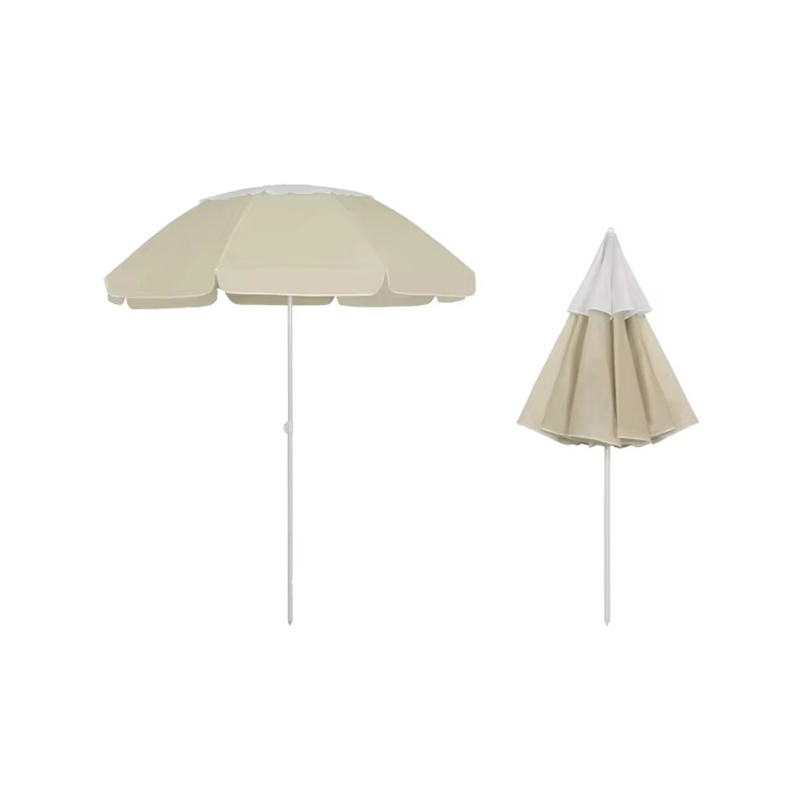
A model that combines a large arc with adjustable tilt is the UPF50 angle-adjustable sunshade beach umbrella. It uses a dense coated canopy to block the vast majority of UV and lets you change the shadow direction as the sun moves across the sky.
 UPF50+ Angle Adjustable Beach Umbrella with UV-Protective CanopyThis beach umbrella offers an adjustable tilt to follow the sun while its dense coated fabric blocks most UV rays. A good pick if you need flexible shade for patios, pools, or outdoor seating areas where portability matters less than coverage.View Product →
Patio and Garden Umbrellas: Fixed Protection for Long Summer Days
When your sun exposure happens on the patio, next to the pool, or around an outdoor dining table, portability becomes less important than coverage, stability, and wind resistance. For a permanent outdoor setup, choose a garden umbrella with a 9-foot (2.7 m) canopy, at least 8 ribs, and a sturdy base. The extra rib count keeps the canopy tension high so it does not flap in the wind.
Another useful feature is a double-layer ventilated canopy. The open vent at the top lets hot air escape instead of pushing up inside the umbrella, which lowers the temperature underneath and reduces the risk of the whole structure being caught by a gust of wind.
| Use area | Recommended size | Rib count | Base type |
|---|---|---|---|
| Dining table (6 seats) | 9 ft / 2.7 m | 8 ribs | Cross base or table insert |
| Poolside lounger | 6.5–7 ft / 2 m | 6–8 ribs | Portable offset base |
| Deck / small balcony | 4-rib table umbrella | 4–6 ribs | Table through-hole |
For a long-term garden installation, the high-quality windproof large umbrella with a base is a practical choice. Its heavy-duty frame and thick canopy are designed to handle a full summer of direct exposure without the coating degrading quickly.
 Windproof Garden Umbrella with Stable Base and Adjustable AngleBuilt with a reinforced aluminum frame and a fillable base for extra stability, this garden umbrella resists wind and provides UPF50+ protection. Ideal for permanent outdoor installations like courtyards, terraces, or dining setups that need durable all-season shading.View Product →
Portable Protection: Beach, Fishing, and Camping
If your time outdoors involves moving from the car to the beach, a fishing spot, or a campsite, then weight and compactness are just as important as UV protection. The best portable sun umbrellas use lightweight aluminum poles and fiberglass ribs, which resist bending while staying easy to carry. A one-click opening mechanism makes it possible to set up full shade in under 20 seconds.
For dedicated outdoor enthusiasts, the portable folding fishing umbrella balances diameter and packability. It is about the size of a hiking stick when folded but opens into a full canopy with a tested sun-blocking coating.
 Portable Folding Fishing Umbrella with Waterproof and UV ProtectionLightweight and compact when folded, this umbrella suits anglers and campers who need easy transport without sacrificing shade. Its waterproof, UV-resistant material and adjustable angle help maintain comfort during long outdoor sessions, though regular care is needed to preserve the coating.View Product →
How to Maintain the UV Protection of Your Umbrella
A high-quality sun umbrella will lose its effectiveness if the coating flakes off or the fabric degrades. Sunscreen, salt water, and pool chemicals can all attack the protective layer over time. To extend its life:
- Rinse the canopy with fresh water after every beach trip.
- Clean with mild soap and a soft sponge; do not put it in a washing machine.
- Let the fabric dry completely before collapsing it, so mold does not develop.
- Store it in a cool, dry place away from direct sunlight when not in use.
- Check the inside of the canopy each spring. If the black coating begins to crack or powder away, it is time for a replacement.
With proper care, a dense coated canopy will retain its UPF performance for three to five years of regular seasonal use.
Frequently Asked Questions
1. Do I still need sunscreen if I use a sun umbrella?
Yes. The umbrella blocks direct UV from above, but up to 10% to 15% of UV can reach you from reflections off sand, water, concrete, or the underside of nearby surfaces. Applying SPF 30+ sunscreen to exposed feet, hands, and legs closes that gap.
2. What color umbrella blocks the most sun?
A dark outer canopy such as black, navy, or forest green, combined with a black inner coating. This setup both absorbs UV at the top layer and prevents reflected UV from bouncing off the ground below.
3. Can a rain umbrella be used as a sun umbrella in an emergency?
It is better than nothing, but a thin rain umbrella may allow up to half of UV to pass through. Use it only for short intervals and pair it with a wide-brimmed hat and sunscreen until you can find proper shade.
4. How big should a beach umbrella be to protect a full recliner?
Look for an arc diameter of at least 180 cm (6 feet). A 200 to 250 cm arc provides generous side-to-side coverage and allows you to tilt the canopy without exposing your legs.
5. Is UPF 50+ enough, or should I look for a higher number?
UPF 50+ blocks 98% of UV, which is beyond the practical protection limit. The extra percentage you could gain from a higher rating is less than 1% and does not translate to a meaningful difference in sunburn prevention.
6. How do I test whether my umbrella is truly sun-protective?
Hold your hand underneath the closed canopy and place the fabric directly between your eyes and the sun. If you can clearly see the shape of the sun through the fabric, the weave is too loose. A reliable way is to check the label for a UPF mark or an independent UV test report.
Final Verdict: Yes, But Choose the Right Umbrella
An umbrella can absolutely protect you from the sun, provided it has a dense fabric, a black or silver protective coating, a UPF 50+ rating, and a size that matches your seating and local sun angle. A rain umbrella or a cheap novelty parasol will not deliver the same result.
Use the same standard if you are buying for a beach vacation, a garden terrace, or a fishing trip: dark outer shell, black inner coating, tested UPF 50+, and a sturdy frame. Add sunscreen for reflected rays, set the angle toward the sun, and your umbrella becomes a true portable shade fortress.
Recommended products
Contact Us Now
Copyright 2024 @ Shaoxing Jinqiao Umbrella Co., Ltd. All Rights Reserved. OEM/ODM umbrellas manufacturers Custom Umbrellas Factory
