

 English
 中文简体
中文简体






How to Anchor a Beach Umbrella: Proven Methods That Stop Wind Lift for Good
Posted by Admin
Content
- 1 Why a Beach Umbrella Lifts Off Even When It Looks Secure
- 2 Seven Ways to Anchor a Beach Umbrella, Compared
- 3 How to Install a Screw-Type Sand Anchor in Three Minutes
- 4 Match the Anchor to Your Umbrella Size and Beach Conditions
- 5 Three Backup Techniques That Make Any Anchor More Reliable
- 6 Seven Common Anchoring Mistakes That Send Umbrellas Flying
- 7 Safe Wind Limits: When a Beach Umbrella Must Come Down
- 8 Frequently Asked Questions About Anchoring a Beach Umbrella
- 8.1 How deep should a beach umbrella anchor go?
- 8.2 Will a screw anchor work in wet or packed sand?
- 8.3 Can I use a cordless drill to install a beach umbrella anchor?
- 8.4 How much wind can a beach umbrella handle?
- 8.5 What is the strongest way to anchor a beach umbrella without buying extra gear?
- 8.6 Do sandbags help if I already have a deep screw anchor?
- 8.7 Why does my umbrella fly away even though it felt secure when I pushed it in?
- 8.8 What is the best way to anchor a beach umbrella on a rocky or shell-covered beach?
The most reliable way to anchor a beach umbrella in sand is to use a screw-type sand anchor twisted at least 45 to 50 centimeters (18 inches) deep, then lower the canopy and tilt it 10 to 15 degrees into the wind. If you only push the pole into the sand, you are trusting a thin layer of loose dry sand to hold something that behaves like a sail. A deep screw anchor, a low canopy, and a slight windward tilt form the combination that keeps an umbrella planted through a full day at the beach.
This guide covers seven anchoring methods ranked by real-world security, a step-by-step screw anchor installation you can finish in three minutes, backup techniques used by experienced beach equipment operators, and clear wind limits for leaving an umbrella up. You will also understand why so many umbrellas fly away even after they felt solid when first pushed into the sand.
The most exposed hours are usually mid-afternoon, when the sea breeze strengthens and gusts arrive without warning. That is why the anchoring method matters more than the umbrella’s price tag.
Why a Beach Umbrella Lifts Off Even When It Looks Secure
A standard 7-foot beach umbrella has a canopy area of roughly 3.4 to 4 square meters. The wind flows under the fabric and creates lift, exactly like an airplane wing. Using the basic aerodynamic load formula (force equals half the air density times wind speed squared times canopy area times a lift coefficient), a 25 mph gust can generate roughly 10 to 15 kilograms (22 to 33 pounds) of upward force on a typical 7-foot canopy. A complete beach umbrella with pole and fabric usually weighs between 2 and 3 kilograms. It takes off the moment the canopy tilt lets air accumulate underneath.
Dry beach sand above the tide line has almost no internal cohesion. When you push a pole into it, the grains simply flow around the shaft, leaving small air pockets. Each time the umbrella sways, the pole enlarges those pockets and loses friction. That is why a pole that felt rock-hard when you pushed it in can lean 15 degrees after a single gust, and then lift completely on the next one.
Three factors multiply the risk:
- Canopy height. A taller canopy increases the lever arm; the same wind produces much more torque at the base of the pole.
- Canopy angle. A flat horizontal canopy acts as a sail; a tilted canopy lets the wind spill over the top instead of pushing underneath.
- Sand condition. Dry, coarse sand provides very poor grip, while damp, compact sand below the surface holds a pole or anchor far better.
Repeated gusts can also permanently bend the ribs and pole of an umbrella even when it does not fly away. For a closer look at how much deformation a beach umbrella can recover from, this explanation of whether a beach umbrella can bounce back to its original shape after wind deformation provides useful technical detail.
Seven Ways to Anchor a Beach Umbrella, Compared
Not every anchoring method suits every beach day. The comparison below ranks each method by its ability to resist both straight vertical pull and the angular twisting pull that gusts create.
| Method | Security | Setup time | Extra tools | Best situation |
|---|---|---|---|---|
| Screw-type sand anchor | High | 2 to 3 min | None | Most beaches, long or short stays |
| Auger bit with cordless drill | Very high | 1 to 2 min | Drill and auger bit | Compact wet sand, frequent setups |
| Manual sand auger | Medium-high | 3 to 4 min | Arm strength | Hard, compacted sand |
| Rock-and-bury push-in | Medium | 4 to 5 min | Hands or scooper | Loose sand, short stays |
| Sandbag or fillable base bag | Medium | 1 min | Wet sand to fill it | Umbrellas with built-in pole bases |
| Guy lines plus tent pegs | High when combined | 5 to 7 min | Lines and three pegs | Windy days, long stationary setups |
| Weighted plate base | Low-medium | Instant | None | Very light wind or hard surfaces |
The screw-type sand anchor wins for most beach days because it works with the sand rather than against it. The helical threads pull the anchor downward into compacted sand below the loose surface layer, and the wide thread surface distributes the pull over a large volume of sand. It also resists angular pull, which is what actually topples an umbrella before it lifts.
Auger bits for cordless drills offer the fastest installation when the sand is compact or the surface is crusty, but they leave a smooth-sided hole that can loosen as the sand dries. If you use a drill auger, always twist a manual screw anchor into the same hole afterward to compact the sand around it, or set the pole and stomp the sand firmly around it before you open the canopy.
How to Install a Screw-Type Sand Anchor in Three Minutes
The screw anchor is the only common beach anchor that converts your twisting motion into downward grip. Correct installation matters; a screw anchor installed 20 centimeters deep is only as secure as a pushed pole, while one installed 50 centimeters deep will often stay put in a 30 mph gust.
- Choose a spot at least 2 meters from towels, coolers, and other groups, and remove loose shells, seaweed, and the dry surface layer where the anchor will enter.
- Place the anchor at a 45 degree angle and press down while twisting clockwise. The tip breaks through the surface crust more easily at an angle.
- As the auger begins to bite, gradually bring the anchor to a vertical position while continuing steady clockwise pressure. Keep a firm grip; the anchor should pull itself downward with each full turn.
- Stop when the top ring or plate reaches the sand surface. In soft dry sand, this usually requires 45 to 50 centimeters of depth; in wet compact sand you may hit resistance earlier, which is actually fine because compact sand holds much better.
- Insert the umbrella pole into the anchor socket and lock the collar. Check that the pole cannot rotate freely; a spinning pole will loosen the anchor over time.
- Lower the canopy to just above head height. If the umbrella has an adjustable tilt, angle the canopy 10 to 15 degrees into the wind so the gust flows over the fabric instead of under it.
- Test the setup. Place both hands near the canopy hub and pull upward with your body weight. If the anchor stays completely still, you are done; if it rises even 2 centimeters, seat it another 10 centimeters deeper.
When you shop for a beach umbrella that reduces this work, look for models with a built-in stabilizer stand. A windproof thickened fishing umbrella with an integrated stand, for example, gives you a wider footprint and a lower center of gravity before you even add the anchor, so the screw anchor only needs to handle the remaining lift.
 Windproof Thickened Fishing Umbrella with Adjustable StandA stable beach umbrella with an integrated stand and UPF50+ fabric. Its low center of gravity reduces anchor load, making it a practical choice for windy shore conditions.View Product →
Match the Anchor to Your Umbrella Size and Beach Conditions
A beach umbrella’s stability depends on canopy size, sand type, and wind forecast. Anchoring a 6-foot personal umbrella the same way as a 9-foot oversized shade is one of the most common setup mistakes.
| Umbrella size | Typical height | Recommended anchor | Minimum depth | Windy day backup |
|---|---|---|---|---|
| Up to 6 feet | 180 cm | Small screw anchor | 30 cm | One sandbag downwind |
| 7 to 7.5 feet | 200 to 220 cm | Standard screw anchor | 45 cm | Two sandbags or three guy lines |
| 8.5 to 9 feet | 230 to 260 cm | Heavy-duty screw or auger | 60 cm | Guy lines plus two sandbags |
The canopy area difference explains the upgrade logic. A 9-foot umbrella has roughly 60 percent more fabric area than a 7-foot model, so the wind load rises in the same proportion. The anchor must grow in depth and grip accordingly. Note the pole diameter too. An anchor socket that fits a 2.2 centimeter pole will not securely hold a 3.2 centimeter pole, and the wobble will loosen the sand around the anchor over an afternoon.
If you need wide coverage for a family group, an oversized sunshade beach umbrella gives you more shade per pole, but it demands the deepest anchor and at least one backup method on days with wind over the 15 to 20 mph range.
 Oversized Sunshade Beach Umbrella for Family ShadeProvides wide coverage for groups, with a lift system and reinforced ribs. It suits beach parties, but requires a deep anchor in strong wind as noted in the guide.View Product →
When comparing umbrella models, check the pole diameter, fabric area, and any published wind resistance specification. Most manufacturers list these details on their beach umbrella category page; use that information to decide whether you need a standard, deep, or heavy-duty anchor before you pack the car.
Three Backup Techniques That Make Any Anchor More Reliable
Even a correctly installed screw anchor can be outmatched by a sudden gust. The three backup techniques below are cheap, take only minutes, and are the difference between a stable umbrella and a rescue.
1. Sandbags on the downwind side
Fill two bags with 4 to 5 kilograms of wet sand each and place them on the sand at the base of the pole on the side facing away from the wind. Wet sandbags act as dead weight that resists both vertical and angular pull. This single addition raises the gust resistance of a screw anchor by a noticeable margin.
2. Guy lines at two-thirds height
Use three lines of about 2 meters each, attach them to the pole at two-thirds of its height, and peg them out at 120 degree intervals roughly 1.5 to 2 meters from the base. Tension each line until the pole stops flexing when you push it. Guy lines are the strongest backup and are standard for beach umbrellas that stay set up all day.
3. The rock-and-bury install method
A widely tested technique, demonstrated during a TODAY Show beach umbrella safety segment, uses a back-and-forth rocking motion instead of a straight downward stab. Push the pole in while rocking it from side to side so the sand settles around the shaft and fills the air pocket. After reaching the desired depth, stomp the sand around the pole with your heel to compact it. This method alone is not as strong as a screw anchor, but it greatly improves a simple push-in setup.
4. Tilt the canopy into the wind
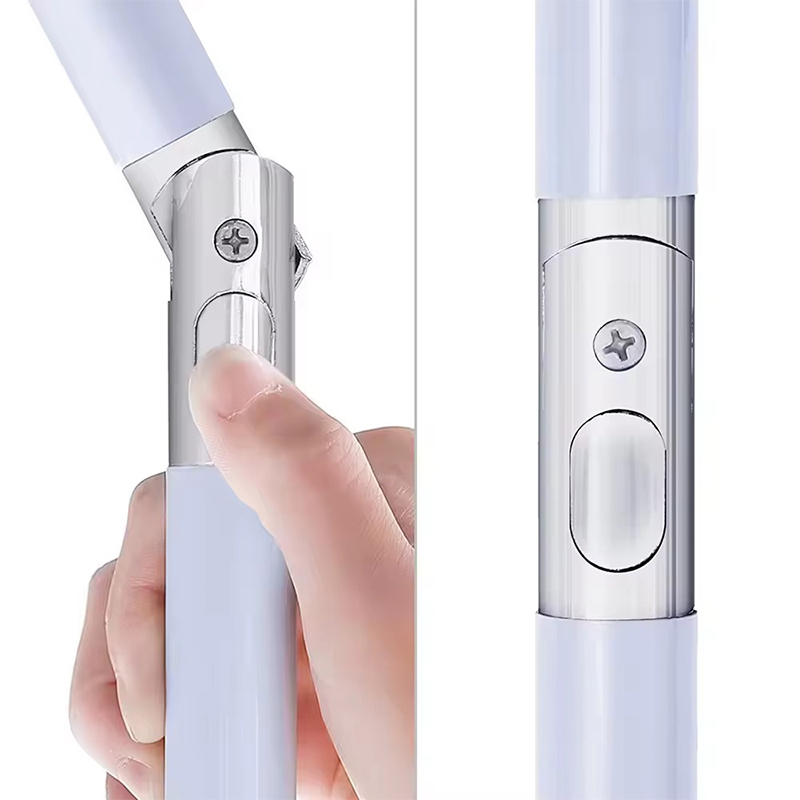
Tilting the canopy between 10 and 15 degrees into the wind redirects airflow over the top of the fabric. An umbrella with an angle-adjustable hub makes this automatic while the pole stays vertical in the anchor. This small adjustment reduces the effective lift load on the anchor by a significant portion and is often the difference between a stable umbrella and one that starts shivering in every gust.
 UPF50+ Angle-Adjustable Beach UmbrellaFeatures an adjustable hub that tilts into the wind for better stability, blocking 99% of UV rays. Useful for reducing lift on the anchor during gusts.View Product →
Seven Common Anchoring Mistakes That Send Umbrellas Flying
- Pushing the pole straight into the sand. This does not compact the sand under the pole; it simply displaces grains that can move again with the first wobble. Use a screw anchor, or at least the rock-and-bury method.
- Stopping at 20 centimeters of depth. A shallow push feels secure because the top layer of sand is dry and resistant at first, but the sand loosens quickly as the pole sways. Use at least 45 centimeters for any standard umbrella.
- Leaving the canopy fully open and at maximum height. A tall, flat canopy presents a large surface to the wind and multiplies the leverage at the base.
- Ignoring wind direction. Setting the canopy at a right angle to the wind turns it into a sail. Face the canopy into the wind and tilt it downward on the windward side.
- Using only one method when gusts are forecast. A deep screw anchor alone can still fail in 25 mph gusts. Add sandbags or guy lines before the wind arrives, not after the umbrella starts moving.
- Setting up in a wind funnel. The edge of a dune, the gap between buildings, or a narrow stretch of beach can accelerate wind by 30 percent or more. Pick a spot with an open fetch or a natural windbreak behind you.
- Leaving the umbrella unattended. An umbrella that is stable at 1 p.m. can fail at 3 p.m. when the sea breeze peaks. Take it down or add backup weights once you leave the spot.
Safe Wind Limits: When a Beach Umbrella Must Come Down
According to the U.S. Consumer Product Safety Commission injury estimates, more than 3,000 people are treated in American emergency rooms every year for beach umbrella related injuries, with a large share caused by umbrellas launched airborne by sudden gusts. The injuries are not limited to cuts and bruises; dozens of reported cases involve a pole striking the head, chest, or neck of someone sitting nearby.
- Under 15 mph (24 km/h): A standard screw anchor with the canopy lowered and tilted is sufficient for hours of safe use.
- 15 to 25 mph (24 to 40 km/h): Add sandbags plus guy lines, lower the canopy as much as possible, and never walk away from the umbrella for long.
- Above 25 mph (40 km/h): Take the umbrella down. Gusts can exceed the average by 30 to 50 percent, and a lightweight aluminum frame is near its structural limit at this point.
A passing shower or storm cell can change wind speed faster than you expect. If you are staying for several hours, set a phone weather alert and keep an eye on the water surface; whitecaps and streaks of foam are a reliable sign that the wind is rising.
Frequently Asked Questions About Anchoring a Beach Umbrella
How deep should a beach umbrella anchor go?
At least 45 to 50 centimeters (18 to 20 inches) for a standard 7-foot umbrella. Small personal umbrellas up to 6 feet can manage with 30 centimeters, and oversized 9-foot models need 60 centimeters or more.
Will a screw anchor work in wet or packed sand?
Yes, and usually better than in dry sand. Wet compacted sand has high internal friction, so the helix of the screw anchor locks in quickly. Expect less depth in packed sand, but the holding force per centimeter is actually higher.
Can I use a cordless drill to install a beach umbrella anchor?
Yes, with an auger bit and a drill rated for the torque. Keep the drill speed low, apply steady downward pressure, and stop at intervals to clean the sand from the threads. Finish by hand with a screw anchor or stomp the sand compact around the pole so the hole does not collapse and loosen.
How much wind can a beach umbrella handle?
With a correctly installed 45 to 50 centimeter screw anchor, a standard 7-foot umbrella can typically stay up in steady winds up to about 20 to 25 mph. Once gusts reach 25 to 30 mph, the combination of fabric stress and anchor load makes it unsafe to leave the umbrella up.
What is the strongest way to anchor a beach umbrella without buying extra gear?
Use the rock-and-bury method to set the pole 35 to 40 centimeters into the sand, then fill a bag with wet sand and place it on the downwind side of the base, and tilt the canopy into the wind. This free setup resists moderate gusts but is still not as strong as a screw anchor.
Do sandbags help if I already have a deep screw anchor?
Yes. The screw anchor resists vertical pull, but a gust can still create angular torque that rocks the pole sideways. Sandbags on the downwind side and guy lines stop that rocking motion; the two methods complement each other rather than replacing each other.
Why does my umbrella fly away even though it felt secure when I pushed it in?
Because dry loose sand relaxes and erodes around the pole as the umbrella vibrates. A pole that starts 25 centimeters deep can work itself up to 10 centimeters or less after repeated small movements. A screw anchor eliminates most of this self-loosening because the helix keeps pulling into fresh sand.
What is the best way to anchor a beach umbrella on a rocky or shell-covered beach?
Look for a patch of sand and use a screw anchor set as deep as possible, then pile broken shells and heavy stones around the base area, and add a sandbag filled with the heaviest available material. If the beach is almost entirely rock, use a weighted base filled with wet sand or stones, and keep the canopy low.
Anchor deep, keep the canopy low, tilt into the wind, and never leave an umbrella unattended when the breeze is rising. That simple routine will keep your beach umbrella exactly where you planted it.
Recommended products
Contact Us Now
Copyright 2024 @ Shaoxing Jinqiao Umbrella Co., Ltd. All Rights Reserved. OEM/ODM umbrellas manufacturers Custom Umbrellas Factory
