

 English
 中文简体






Easy Setup Beach Canopy: A Practical Buying Guide for Quick Beach Shade
Posted by Admin
Content
- 1 What "Easy Setup" Means in Real Terms
- 2 Three Beach Canopy Styles Compared for Setup Speed
- 3 The Mechanical Features That Actually Speed Up Setup
- 4 Anchoring: Fast Setup Is Worthless If the Canopy Takes Flight
- 5 Portability: Packed Size, Weight, and Carrying Comfort
- 6 Fabric and Frame Materials That Keep Setup Hassle-Free
- 7 Who Benefits Most From an Easy-Setup Beach Canopy
- 8 A Five-Minute Checklist Before You Buy
- 9 Frequently Asked Questions
- 9.1 How long does it actually take to set up an easy beach canopy?
- 9.2 Can one person set up a beach canopy alone?
- 9.3 What is the best easy setup beach canopy for windy conditions?
- 9.4 Are pop-up beach canopies easy to fold back down?
- 9.5 What size canopy do I need for two or four people?
- 9.6 Does a higher UPF rating interfere with quick setup?
- 10 Final Thoughts: Match the Canopy to Your Beach Routine
You park the car, drag a cooler across the sand, and realize the sun is already too hot. What happens in the next ten minutes decides whether your beach day starts with relaxation or frustration. An easy setup beach canopy does not need a second person, a single tool, or more than three minutes of your time. That is the benchmark that matters.
This guide explains what makes a beach canopy genuinely simple to set up, compares the main canopy styles, and shows you exactly which mechanical details to check before you buy. The short version up front: a truly easy setup beach canopy opens in 30 seconds to 2 minutes, folds down without a wrestling match, and stays anchored once deployed.
What "Easy Setup" Means in Real Terms
"Easy setup" is a vague claim. Every manufacturer says it; few define it. Before you compare models, decide what the phrase must deliver for you. The practical standard used by seasoned beachgoers and gear reviewers has five parts:
- Setup time under 3 minutes from carry bag to fully anchored shade.
- No tools required. Anything that needs a wrench or screwdriver does not qualify.
- Solo operation. One adult should handle it without holding a pole between their knees.
- Takedown under 3 minutes. This point is often forgotten but equally important.
- No learning curve after the first try. Repeatability is what separates good designs from gimmicks.
Pop-up beach canopies, for example, can open in 10 to 20 seconds, but some require a precise two-person fold to go back into the bag. If takedown takes six minutes and leaves you sweating, the canopy is not easy, it is only fast in one direction.
Three Beach Canopy Styles Compared for Setup Speed
Beach canopies generally fall into three families: pop-up canopies, umbrella-style canopies, and frame-and-pole canopies. Each has a different setup profile, and the right choice depends on your tolerance for assembly versus packed size.
| Specification | Pop-Up Canopy | Umbrella-Style | Frame & Pole |
|---|---|---|---|
| Setup time | 10-30 seconds | 30 seconds-2 minutes | 3-8 minutes |
| Takedown time | 1-2 minutes (fold sequence required) | 1-2 minutes | 3-6 minutes |
| Typical weight | 8-15 lb | 5-10 lb | 10-20 lb |
| Packed shape | Round disc, 6-10 in thick | Long bag, 4-6 ft | Multiple loose pieces |
| Wind behavior | Fair; catches gusts | Good; canopy can be angled | Good if guyed out |
| One-person friendly | Yes, after learning the fold | Yes | Rarely |
For most solo and duo beachgoers, umbrella-style canopies offer the best balance of setup speed, wind resistance, and packed size. Pop-up canopies are unbeatable when you want maximum shade area quickly, but their folding ritual discourages many owners from using them on short trips.
Hybrid designs that combine an umbrella frame with tent-like wall panels give you the deployment speed of an umbrella and the side protection of a tent, which helps on windy beach days.
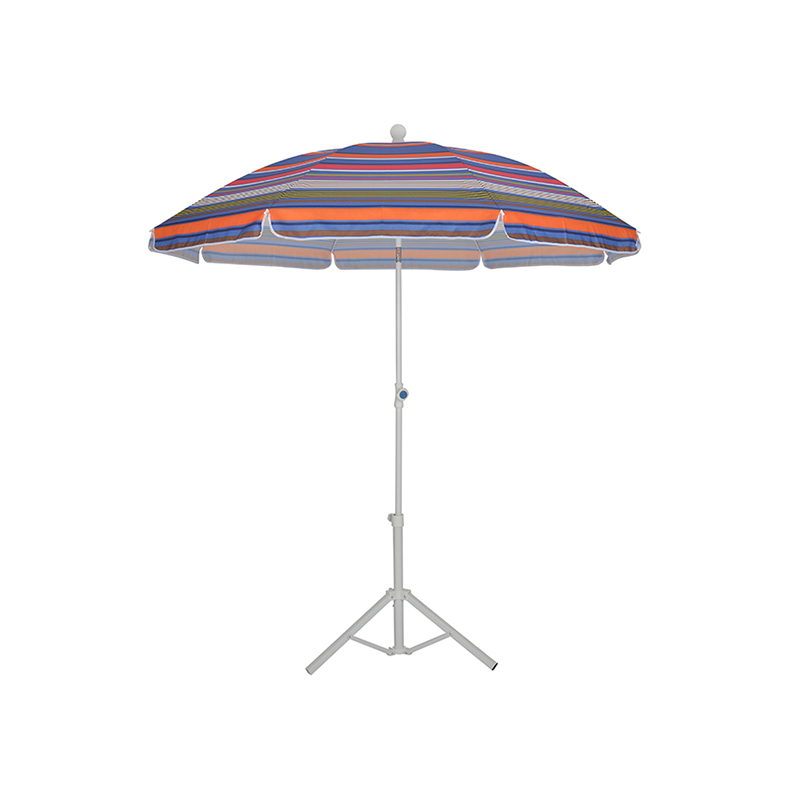
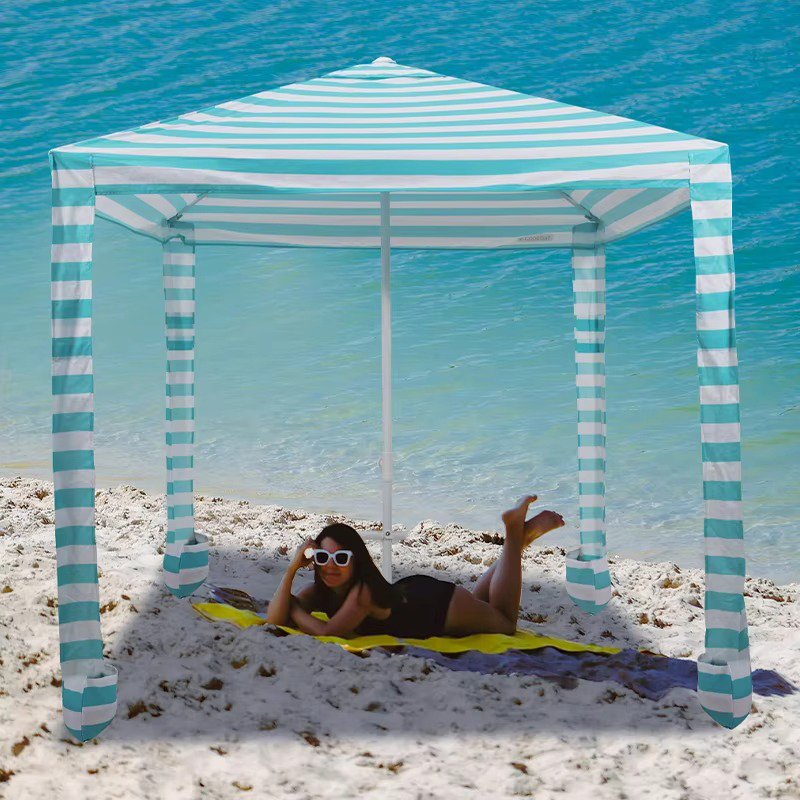 Foldable Aluminum Umbrella Tent for Windy Beach DaysThis hybrid design pairs an umbrella frame with tent-like panels, offering quick setup and side protection. Its waterproof fabric and aluminum frame suit varied weather, making it worth a look for windy trips.View Product →
The Mechanical Features That Actually Speed Up Setup
Not all easy-setup claims are created equal. The designs that work reliably share the same underlying mechanisms. Look for these five details when you compare products:
- Pre-attached canopy fabric. Canopies that require you to thread poles through sleeves every time lose all their speed advantage. Fabric that is permanently attached to the frame allows the whole structure to deploy as one unit.
- Central hub mechanism. A push-button or twist-to-lock hub lets the ribs extend evenly, so the canopy opens symmetrically and locks in place without loose joints.
- Automatic open or semi-automatic assist. Spring-assisted ribs do the spreading work for you. Semi-automatic designs still let you control the final height, giving you speed without losing adjustability.
- One-piece telescoping pole. A single pole that clicks to full height beats a three-section pole that has to be aligned and locked at each joint.
- Integrated tilt and angle adjustment. Being able to follow the sun without lifting the whole canopy off the sand is a setup advantage over the course of the day, not just at the start.
These mechanisms also affect long-term reliability. A well-built hub and telescoping pole survive hundreds of beach days; a cheap plastic mechanism can crack in the first season. Inspect the moving parts before buying, especially the locking buttons and spring housings.
Anchoring: Fast Setup Is Worthless If the Canopy Takes Flight
The easiest setup in the world does not help when a sea breeze rolls your canopy into the next beach blanket. Anchoring should be treated as part of the setup process, and the fastest beach canopies integrate anchoring into their frame design instead of treating it as an afterthought.
| Anchor Method | Setup Time | Best Sand Type | Solo-Friendly |
|---|---|---|---|
| Sandbag pockets sewn into the canopy | 30-60 seconds | Dry loose sand | Yes |
| Auger screw anchors | 1-2 minutes per anchor | Firm packed sand | Yes |
| Pin or stake anchors | 1-2 minutes | Firm sand or grass | Yes |
| Weighted base / stand | Under 30 seconds | Any flat surface | Yes, if base is pre-filled |
The fastest anchoring systems are those you can deploy while the canopy is still half-open. Some umbrella-style canopies have an integrated center pole that rests into a base or a hole you pre-dig, which means you do not have to hold the canopy upright while crouching to fill sandbags.
Also check the number of tie-down points. A canopy with four corners that accept guy lines or stakes will be noticeably more stable than one with only two. For a deeper technical look at how wind affects canopy frames and how they recover from deformation, read this breakdown of beach umbrella shape recovery after wind deformation.
Portability: Packed Size, Weight, and Carrying Comfort
Setup ease starts when you leave the car, not when you open the canopy. A 15 lb pop-up canopy may open fast, but if the only way to carry it is under your arm across a long stretch of sand, you might leave it behind half the time.
- Weight below 8 lb is the practical threshold for one person to carry comfortably over soft sand.
- Packed length matters. An umbrella-style canopy that packs down to 4 ft is easier to sling over the shoulder than a 6 ft tube that drags on the ground.
- Look for a padded shoulder strap or a backpack-style carry bag. Hand-carried round cases put all the load on one arm.
- Check the bag's fabric and zipper. Sand and salt are hard on zippers; a double-stitched bag with a large opening saves time at packing-up.
Portable instant sun protection designs are a good match here, because they intentionally trade a bit of shade area for a smaller, lighter frame that opens without any pole assembly.
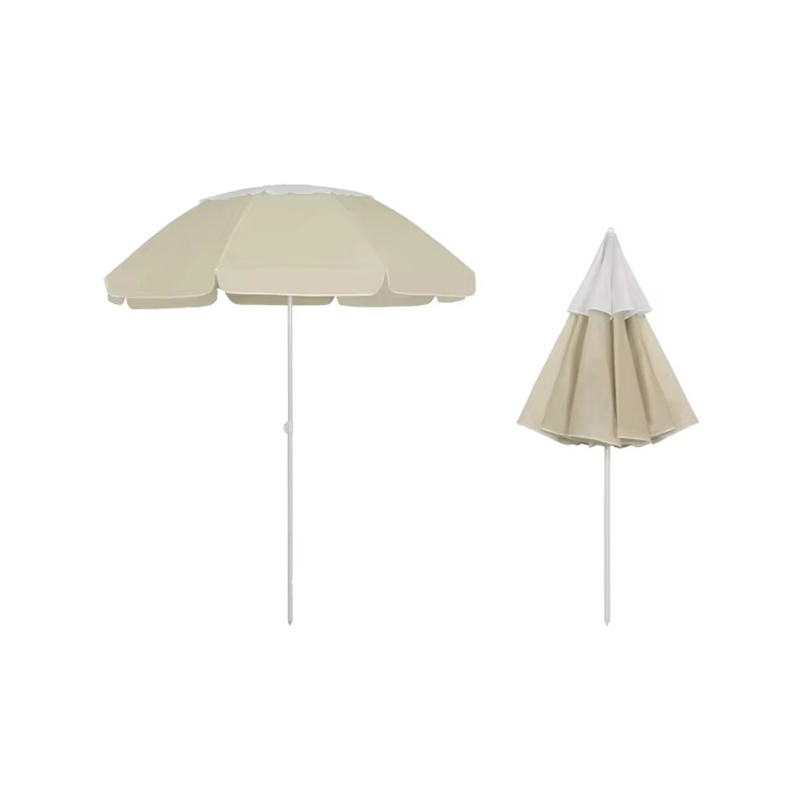
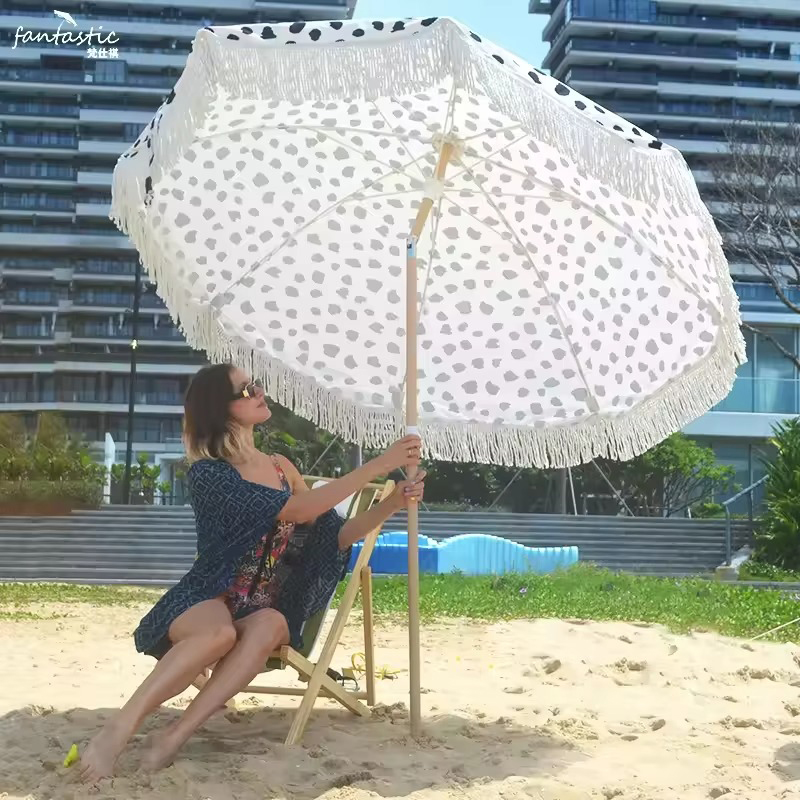 Portable Instant Sun Protection Beach UmbrellaA lightweight, easy-fold umbrella with UPF50+ fabric and wind-resistant construction. Its compact form reduces carry weight significantly, which matters when you are hauling other gear across a long walk.View Product →
For day trips where you also carry water, food, and toys, every pound counts. A canopy that is 3 lb lighter than the alternative makes a measurable difference on a 200-yard walk.
Fabric and Frame Materials That Keep Setup Hassle-Free
Materials determine how smooth the mechanism stays over time. A frame that jams, a slider that sticks, or a pole that corrodes turns a once-easy canopy into a time sink.
| Material | Weight | Longevity in Salt Air | Typical Use |
|---|---|---|---|
| Aluminum alloy poles | Light | Excellent | Portable beach canopies |
| Steel frames | Heavy | Fair; requires coating | Fixed or large canopies |
| Fiberglass ribs | Medium | Excellent | Flexible frame sections |
| Polyester fabric, 190T-210T | Light | Good | Canopy covers, UPF 50+ |
On the fabric side, look for a UPF 50+ rating and a water-resistant or waterproof coating. A canopy that absorbs water after a rain shower adds several pounds to your carry load and slows down the whole operation. Vented canopy tops also reduce wind lift, which means fewer moments where you have to re-secure the frame during setup.
Who Benefits Most From an Easy-Setup Beach Canopy
Certain beach routines make quick setup far more valuable than others. If any of the following descriptions sound familiar, an easy-setup canopy is worth prioritizing over maximum shade or lowest price.
- Families with young children. You need shade up immediately so kids are not sitting unprotected while you wrestle with poles. A canopy that opens in under a minute wins.
- Solo beachgoers. With no one to hold the frame while you adjust it, one-person mechanics are non-negotiable.
- Older adults or anyone with limited grip strength. Semi-automatic opening and twist-lock adjustments avoid heavy pulling and awkward bending.
- Fishing and surf anglers. When a fish is biting, you do not want to be mid-assembly. A canopy that goes up fast and stays put is part of your fishing gear.
- People who visit the beach frequently but briefly. If you stay for 1-2 hours, you will not engage with a complicated setup more than a handful of times before you stop bringing it.
Semi-automatic models are a strong pick for these groups because they reduce the physical effort of opening the canopy while keeping the frame under your control. That combination matters when the canopy is larger or the ribs are stiff.
 Semi-Automatic Tassel Beach Umbrella with Aluminum PoleThe semi-automatic opening system reduces effort while keeping canopy control, ideal for larger or stiffer frames. Its stylish tassel design and waterproof, UV-blocking canopy add practical appeal.View Product →
A Five-Minute Checklist Before You Buy
Use this checklist when comparing products online or in a store. It filters out most of the models that look easy on paper but disappoint on the beach.
- Read the setup instructions before buying. If the official instructions mention tools, a second person, or a complex folding diagram, pass.
- Check the center height. Can you sit upright under it? A canopy with a center height under 70 in feels cramped for most adults.
- Count the stable anchor points. Four is the minimum for windy beach days.
- Verify the UPF rating. UPF 50+ means roughly 98% of UV rays are blocked. Anything lower than UPF 40 is a compromise for extended exposure.
- Look for replaceable parts. A canopy whose fabric cannot be separated from the frame is harder to clean and maintain over the years.
If you are leaning toward an umbrella-style beach canopy rather than a tent-style pop-up, browsing a complete beach umbrella product range is a fast way to compare sizes, pole types, and fabric options side by side.
Frequently Asked Questions
How long does it actually take to set up an easy beach canopy?
Pop-up canopies commonly open in 10 to 30 seconds, while umbrella-style canopies take 30 seconds to 2 minutes. Frame-and-pole canopies typically require 3 to 8 minutes. The more accurate test is the round trip from bag to fully anchored shade and back into the bag.
Can one person set up a beach canopy alone?
Yes, if the canopy is designed with a single-person mechanism: pre-attached fabric, a central hub lock, and a telescoping pole. Avoid models whose instructions ask you to align multiple loose poles while holding the fabric up.
What is the best easy setup beach canopy for windy conditions?
Umbrella-style canopies with air vents, a tilt function, and screw-in auger anchors generally handle wind better than wide flat pop-ups. Vented fabric reduces lift, and the angle adjustment lets you point the canopy away from the wind.
Are pop-up beach canopies easy to fold back down?
Most pop-ups open easily but require a specific pull-and-fold sequence to collapse. Practice folding your chosen model at home once or twice. If the fold is too frustrating at home, it will be worse on the beach.
What size canopy do I need for two or four people?
For two people sitting in chairs, a canopy diameter of 6.5 to 7.5 ft is usually enough. For four adults, aim for at least 8 ft of diameter or a rectangular pop-up in the 8 by 8 ft to 10 by 10 ft range. For lying down, make a 10 by 10 pop-up the primary option.
Does a higher UPF rating interfere with quick setup?
No. UPF is a property of the fabric, not the frame. You can get UPF 50+ fabric in pop-up, umbrella-style, or pole-frame canopies. Setup speed depends on the frame and attachment design, not the UV rating.
Final Thoughts: Match the Canopy to Your Beach Routine
The right easy-setup beach canopy is the one that fits how you actually use the beach. If you arrive early, stay all day, and bring a lot of gear, a compact umbrella-style canopy with good anchoring gives the best balance of speed and stability. If your main goal is instant cover for kids, a pop-up canopy is hard to beat despite its folding quirks. If you mostly fish or camp near the shore, a hybrid umbrella tent with side walls protects against wind and sand spray.
Remember the three numbers that define easy setup:
- Under 3 minutes: full deployment and takedown on each side.
- Zero tools: no wrench, hammer, or screwdriver required.
- One person: the whole process, including anchoring, works alone.
Apply those numbers to every model you consider, and the marketing language stops mattering. The canopy that passes this test is the one you will actually use every trip.
Recommended products
Contact Us Now
Copyright 2024 @ Shaoxing Jinqiao Umbrella Co., Ltd. All Rights Reserved. OEM/ODM umbrellas manufacturers Custom Umbrellas Factory
