

 English
 中文简体






How Heavy Should a Patio Umbrella Base Be? Complete Weight Guide & Safety Tips
Posted by Admin
Content
- 1 The 10-Pounds-Per-Foot Rule and Why It Works
- 2 Base Weight Chart for Every Common Umbrella Size
- 3 Wind, Tilt, and Freestanding Adjustments
- 4 Why Cantilever Umbrellas Need a Significantly Heavier Base
- 5 Freestanding vs. Table-Mounted: How the Table Changes the Math
- 6 Base Materials Compared: Weight, Durability, and Portability
- 7 How to Add 10 to 40 Pounds Without Buying a New Base
- 8 A 30-Second Stability Check Before Each Use
- 9 Frequently Asked Questions
- 9.1 How heavy should a 9-foot patio umbrella base be?
- 9.2 Can I use a heavier base than the umbrella manufacturer recommends?
- 9.3 Is water enough to fill a fillable umbrella base?
- 9.4 What weight is needed for a cantilever umbrella base?
- 9.5 Does a table umbrella still need a base if the table is very heavy?
A patio umbrella base should weigh at least 20 to 30 pounds for a 6-foot canopy, 35 to 50 pounds for an 8-foot canopy, and 50 to 75 pounds for a 9-foot canopy. For freestanding setups, add 10 pounds; for coastal or exposed decks, add another 10 to 20 pounds. The most conservative starting point is 10 pounds of base weight per foot of canopy diameter.
Base weight is a safety component, not an accessory. The canopy works like a sail, the pole transfers the wind load, and the base resists the tipping moment through its own mass and footprint. When the base is too light, an afternoon gust can lift the whole assembly, bend the pole, crack a tabletop, or push the umbrella into a window. A correctly weighted base keeps the umbrella vertical through ordinary wind and gives you time to close it when stronger gusts arrive.
Three variables determine the right number: the diameter of the canopy, whether the umbrella is freestanding or supported by a table, and the wind exposure of your yard. The sections below give you exact weight ranges, explain how to adjust for wind and tilting, compare base materials, and show how to add 40 pounds of ballast without buying a new base.
The 10-Pounds-Per-Foot Rule and Why It Works
The 10-pounds-per-foot rule states that the base should provide 10 pounds of weight for every foot of umbrella diameter. Under this rule, a 6-foot umbrella gets a 60-pound base and a 9-foot umbrella gets a 90-pound base. The rule appears in manufacturer manuals and in buying guides from major home improvement retailers because it covers freestanding bases, tilted canopies, and moderate wind in one single number.
Lighter minimums are common for table-mounted umbrellas. Published buying guidance for table-supported patio umbrellas lists 20 to 30 pounds for 6- to 7-foot canopies and 40 to 50 pounds for 7.5- to 10-foot canopies. These figures work because the table adds its own mass and lowers the pivot point. The 10-pounds-per-foot rule is still the safer reference for freestanding bases, cantilever frames, and locations with no wind shelter.
The physics explains why weight matters more than pole material. The wind pushes the canopy at a distance of several feet from the center. That force creates a torque equal to wind pressure multiplied by the canopy area and the lever arm. The base resists with its weight multiplied by the footprint width. Doubling the base weight doubles the resistance; widening the base legs also increases resistance without adding any weight.
Adjust the rule in three situations. Subtract weight when the umbrella passes through a thick table and you want to keep the setup easy to move. Add 10 pounds when the umbrella has a tilt mechanism. Add 20 to 30 percent for cantilever designs. The final number should always feel slightly heavier than you expected; an underweight base is the most common reason umbrellas end up broken.
Base Weight Chart for Every Common Umbrella Size
Use the chart below as your starting reference. The table-supported column assumes the umbrella pole is held in the center hole of a patio table that is at least 42 inches wide. The freestanding column assumes no other furniture assists the base. The windy-coastal column applies to exposed decks, rooftops, waterfront properties, and yards near the corners of tall buildings.
| Canopy Diameter | Table-Supported | Freestanding | Windy / Coastal |
|---|---|---|---|
| 6 ft / 1.8 m | 20–30 lb | 30–40 lb | 40–50 lb |
| 7 ft / 2.1 m | 25–35 lb | 35–45 lb | 50–60 lb |
| 8 ft / 2.4 m | 35–50 lb | 50–65 lb | 65–80 lb |
| 9 ft / 2.7 m | 50–75 lb | 75–90 lb | 90–110 lb |
| 10 ft / 3.0 m | 60–80 lb | 90–100 lb | 110–130 lb |
| 11 ft / 3.4 m | 75–100 lb | 100–120 lb | 130–150 lb |
Find your umbrella diameter by measuring the canopy across its widest point from fabric edge to fabric edge. If your model sits between two sizes, round up to the larger row; the extra weight is cheap compared with the price of a bent pole. For a 9-foot umbrella, also verify the rib count and frame quality, because a large canopy without enough ribs tends to flap and pull more on the base.
 9-Foot 8-Rib Large Garden Patio Umbrella for Wide ShadeThis large 9-foot umbrella with 8 ribs is suited for wide terraces and patios. Its high-density, UV-resistant canopy and wind-resistant rib design make it a practical choice when sizing up from a smaller umbrella.View Product →
Wind, Tilt, and Freestanding Adjustments
Wind is the leading cause of umbrella failure. The pressure acting on the canopy grows with the square of the wind speed, so a 20 mph gust exerts roughly four times the force of a 10 mph breeze. A base that is fine in a gentle afternoon can rock, slide, and tip when a stronger squall passes through. If local forecasts show gusts above 20 mph, take the umbrella down or close it flat.
Three conditions require immediate added weight. Freestanding bases carry the entire load, so add 10 pounds to the table-supported minimum. Tilting shifts the canopy's center of gravity toward the edge of the base, so add another 10 pounds. Exposed or coastal locations experience sustained gusts, so add a further 10 to 20 pounds. For an 8-foot umbrella, that means 50 pounds in a table setup, 70 pounds freestanding, and 80 to 90 pounds on a windy deck.
Canopy engineering changes the wind math. A vented canopy allows air to flow through the top, reducing lift and pressure buildup. Flexible ribs made of fiberglass or treated aluminum bend under load instead of snapping. Canopy fabric with a waterproof coating also stays taut in rain, preventing heavy rainwater from pooling and adding unexpected downward weight. To compare these factors side by side, read how umbrella fabric and frame materials affect sun protection and durability.
Inspect the base collar and the pole as a pair. A pole with anti-rotation slots locks into the base and prevents twisting. A tightening collar keeps the pole fixed so the umbrella does not wobble at the joint. Wind damage often starts at that collar before the base itself moves.
 Windproof Large Garden Umbrella with Fillable BaseThis reinforced aluminum-framed umbrella includes a water- or sand-fillable base for added stability. Its adjustable angle and UPF50+ canopy suit windy courtyards, making it worth considering for offset-style shading needs.View Product →
Why Cantilever Umbrellas Need a Significantly Heavier Base
Cantilever or offset umbrellas place the pole away from the canopy center. The canopy overhangs the entire area you want to shade, but that design pushes the center of gravity outward. A 9- to 10-foot cantilever canopy normally needs 100 to 150 pounds of base weight, roughly double a center-pole umbrella of the same size.
Cantilever bases are typically rectangular slabs or wide discs, not narrow plates. Do not substitute a smaller round base even if the pole diameter fits. The width of the cantilever base is essential: a 30-inch-wide footprint resists tipping far better than a 15-inch plate loaded with extra weights.
Close a cantilever umbrella whenever it is not in use. Retract the offset arm when storing the unit for the season. If your cantilever base is a fillable plastic container, fill it with dry sand or gravel instead of water, because frozen water can crack the container and turn a heavy base into a useless shell.
Freestanding vs. Table-Mounted: How the Table Changes the Math
When an umbrella passes through a table top, the table becomes part of the anchoring structure. The table's mass resists the tipping moment and the table top provides a wider pivot surface. A 7-foot umbrella inside a heavy stone table can run with a 25- to 30-pound base; the same umbrella on a lawn needs at least 40 to 50 pounds.
Do not skip the base entirely when the umbrella sits in a table. Without a base, the pole can slide sideways inside the table hole, scratch the table surface, or lean at an angle after a gust. The base keeps the pole vertical and distributes the load evenly around the hole. A plate base with a tapered pin is the standard choice for table-mount holes of 1.5 to 2 inches.
For freestanding placement, choose a spider base with legs that spread at least 24 to 30 inches or a wide disc base with a diameter close to half the umbrella height. A wider footprint provides more stability than extra weight on a narrow plate. Always push the umbrella open while holding the pole, then let the canopy catch the air gradually.
Base Materials Compared: Weight, Durability, and Portability
Base material matters for two reasons: how much stationary weight it provides and how easily you can move it. Cast iron and steel feel solid and last for years; resin and plastic are light until you fill them with sand. The table below compares the five common options.
| Material | Typical Weight | Best For | Watch Out For |
|---|---|---|---|
| Cast iron | 25–50 lb | Permanent residential setups | Rust if the paint chips; hard to move |
| Concrete | 25–60 lb | Budget-heavy setups, commercial use | Porous; can stain surfaces |
| Steel / powder-coated metal | 15–45 lb | Modern decks, compact storage | Scratches; can bend on impact |
| Resin / plastic (fillable) | 6–15 lb empty; 40–80 lb filled | Seasonal storage, portability | Plastic can crack in freezing temperatures |
| Marble / granite | 30–60 lb | Upscale patios, design-focused spaces | Expensive; sharp edges when chipped |
Cast iron bases are the default choice for permanent residential patios. They resist tipping, sit flat under table legs, and age well if the paint finish is maintained. Concrete bases deliver similar weight at a lower price but remain porous and can stain pavers. Resin bases make sense for seasonal setups because you can empty them and store them flat in the winter.
The same material thinking applies to the umbrella itself. A lightweight aluminum frame is easier to adjust, while a wooden pole adds classic looks but requires more careful storage. To compare the rib structures and frame materials used in different canopy sizes, look through the courtyard umbrella collection.
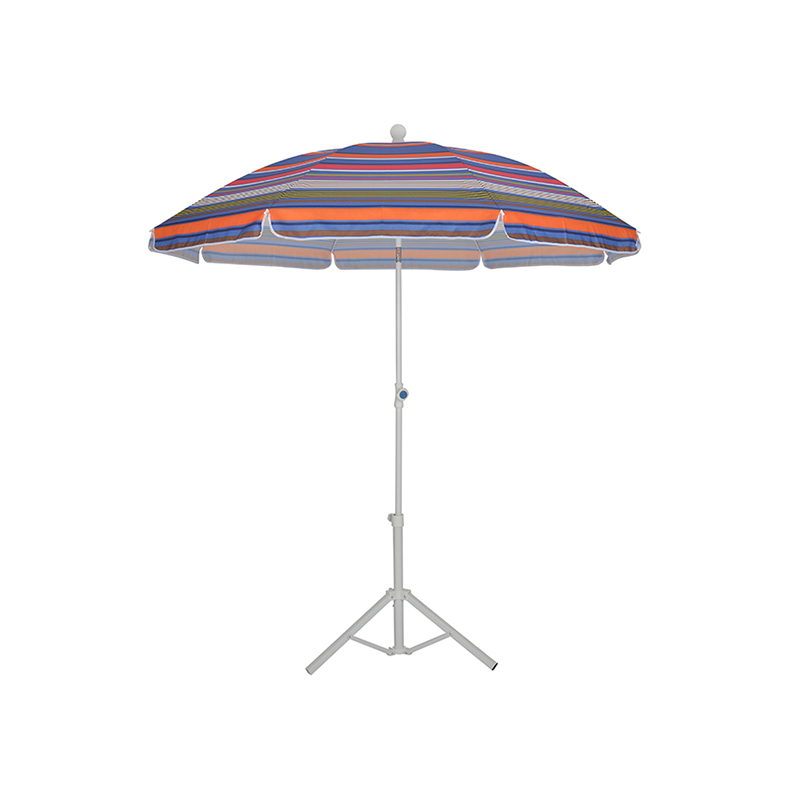
 Sunshade Patio Umbrella with Base and Adjustable AngleA steel-framed patio umbrella with a built-in base and UPF50+ fabric. The adjustable angle and simple design fit courtyards and balconies, offering stable shade for daily relaxation or gatherings.View Product →
How to Add 10 to 40 Pounds Without Buying a New Base
If your current base is a few pounds short, or you want extra ballast for a windy weekend, these four methods work without replacing the base.
- Drape a 20- or 30-pound sandbag over the crossbars of a spider base. Sandbags hug the frame, stay in place, and can be removed when guests need to move the umbrella.
- Slide two 8-inch square concrete pavers over the pole before it goes into the base. Each paver adds 15 to 20 pounds directly above the base, improving the center of gravity.
- Place 10- or 25-pound weight plates from a dumbbell set over the pole. Plates with a 1-inch center hole are the correct size for most umbrella poles.
- Fill a resin base with dry sand instead of water. Sand weighs roughly 100 pounds per cubic foot, while water weighs about 62 pounds per cubic foot; sand also eliminates frost cracking.
Whichever method you choose, keep the added weight centered around the pole and tighten the collar after loading. Then push the open canopy sideways by hand to confirm the base stays flat. If the base lifts, add more weight or use a heavier base for that canopy size.
A 30-Second Stability Check Before Each Use
Taking a few seconds to check stability before you sit down can prevent the most expensive accidents. Walk around the umbrella and look at the base from all sides.
- Press the canopy rim with one hand. If the opposite side of the base lifts off the ground, add ballast or close the umbrella.
- Shake the pole gently. Movement inside the base collar means the locking screw is loose or the pole is too small for the sleeve.
- Check that all base legs sit flat on the floor. A tilted base dramatically reduces its effective resistance.
- Scan the canopy for loose seams or bent ribs. A torn canopy catches more wind and often fails first.
- Close the umbrella when gusts go above 20 mph. No base can fully compensate for the forces at that wind speed.
Store the umbrella closed when it is not in use for more than a few hours. If you own a portable umbrella with a lightweight aluminum frame, the same stability rules still apply; the base may be smaller, but the checks stay the same. In winter, keep fillable bases empty and store them indoors to extend their life.
Frequently Asked Questions
How heavy should a 9-foot patio umbrella base be?
A 9-foot umbrella should use a base of 50 to 75 pounds when the pole is held by a table, 75 to 90 pounds when the umbrella stands alone, and 90 to 110 pounds when the yard is exposed to wind. Rounding up is always safer for a canopy that large.
Can I use a heavier base than the umbrella manufacturer recommends?
Yes, a heavier base is almost always safer. Confirm that the umbrella pole fits the base sleeve, and that the base is not so heavy that you strain your back during seasonal moves. For bases above 100 pounds, place them on casters or leave them in one position.
Is water enough to fill a fillable umbrella base?
Water is acceptable for seasonal use but not ideal for permanent installations. Water weighs about 62 pounds per cubic foot, while dry sand weighs about 100 pounds per cubic foot. Sand also cannot freeze and crack the container, and it prevents algae growth during a rainy season.
What weight is needed for a cantilever umbrella base?
A cantilever umbrella with a 9- to 10-foot canopy usually needs 100 to 150 pounds of base weight. The manufacturer's manual takes priority over general guidelines because the base is shaped specifically for the offset frame. Never go below the value stated on the product specification sheet.
Does a table umbrella still need a base if the table is very heavy?
Yes. The table adds stability, but the umbrella pole still needs a base to stay vertical inside the table hole. Use a base with a tapered pin that locks into the table mounting plate. For a 7- to 8-foot umbrella, start with 25 to 50 pounds and increase the weight when the umbrella will be tilted for long periods.
The correct base weight is the least expensive insurance you can add to a patio umbrella. Start with 10 pounds per foot of canopy diameter, reduce the number only when the table carries part of the load, and add weight for wind, tilt, and freestanding placement. The final number will usually surprise you on the heavy side, but that weight is what keeps the umbrella upright.
Write the recommended weight on the inside of the base with a marker, or store it as a note on your phone. When you replace the umbrella or buy a second base, the note will save you from repeating the calculation. A stable umbrella extends the life of the frame, protects the canopy fabric from flexing, and keeps your outdoor space safe for everyone.
Measure the canopy, check the wind conditions, choose the base material, and add ballast when needed. With those steps in place, the umbrella stays where you put it, and the shade stays where you need it.
Recommended products

Contact Us Now
Copyright 2024 @ Shaoxing Jinqiao Umbrella Co., Ltd. All Rights Reserved. OEM/ODM umbrellas manufacturers Custom Umbrellas Factory
