

 English
 中文简体






How to Use a Beach Umbrella: Setup, Anchoring, and Shade Tips Explained
Posted by Admin
Content
- 1 The Short Answer: Three Things Decide Whether It Stands
- 2 Read the Numbers First: Diameter, Shade Footprint, and Weight
- 3 The Entry Angle Is Not Arbitrary: Why You Lean Into the Wind
- 4 Tilt the Canopy So the Shade Falls on Your Chair
- 5 Holding It Down: Sandbags, Screw Anchors, and Bases Compared
- 6 Different Surfaces Need Different Techniques
- 7 Instant-Open Umbrellas: Convenient, but Do Not Skip the Anchoring
- 8 Taking It Down and Keeping It Usable Next Season
- 9 Five Mistakes That Put Umbrellas on Their Side
- 10 Frequently Asked Questions
- 10.1 How deep should a beach umbrella pole go into the sand?
- 10.2 Which direction should the umbrella lean?
- 10.3 How much weight does a beach umbrella base need?
- 10.4 How often should I move the umbrella to follow the sun?
- 10.5 Can one person set up a large beach umbrella alone?
- 10.6 Does a vented canopy really make a difference?
- 10.7 What is the safest wind speed to leave an umbrella up?
You have seen it happen: a gust rolls through, the umbrella leans, pops out of the sand, and tumbles down the beach with someone chasing it. Almost every time, the cause is the same combination. The pole was pushed straight down into loose dry sand, no wind angle was set, and nothing with real weight was holding the base. The fix takes about ninety seconds. Drive the pole in at 15 to 20 degrees into the wind, bury it at least 40 cm deep, tilt the canopy toward the shaded side instead of pointing it straight up, and add a genuine counterweight rather than trusting the umbrella's own mass.
Done properly, a common 2.2 m to 2.7 m beach umbrella will hold in roughly 30 km/h (about 8 m/s) of wind. Left straight-up and unanchored, the same umbrella starts walking at 15 km/h. What follows breaks the process into the order you actually do it on the sand.
The Short Answer: Three Things Decide Whether It Stands
Which umbrella you buy decides how much UV gets through and how heavy your bag feels. How you use it decides whether it stays upright. Start with these three settings and adjust from there.
- Entry angle: keep the pole at 60 to 75 degrees from the sand, meaning 15 to 30 degrees off vertical, and lean it into the wind.
- Entry depth: 40 cm minimum, and 60 cm or more in dry, loose, windblown sand.
- Counterweight: 15 to 20 kg of sand in bags, or a 15 kg base if the umbrella uses a freestanding stand.
These three variables solve different problems, which is why skipping any one of them breaks the whole setup. Shade coverage comes from canopy diameter and tilt. Stability comes from depth, angle, and weight. Sunburn protection comes from the fabric rating and from actually staying inside the shaded footprint. An umbrella rated UPF 50 blocks roughly 98 percent of UV radiation, but that number means nothing if the canopy has rotated away from you an hour later.
Read the Numbers First: Diameter, Shade Footprint, and Weight
Most beach umbrella mistakes start before you reach the sand, at the point of choosing a size that does not match how many people will sit under it. The figures below assume a round canopy and a vertical pole; tilting the canopy by 20 degrees cuts the usable shaded area by roughly 25 to 30 percent, which is why buying one size up is usually the safer call.
| Canopy Diameter | Projected Shade Area | Comfortable Seating | Suggested Pole Diameter | Minimum Counterweight |
|---|---|---|---|---|
| 1.8 m / 6 ft | approx. 2.5 m2 | 2 adults | 22 to 25 mm | 10 kg |
| 2.2 m / 7.2 ft | approx. 3.8 m2 | 2 to 3 adults | 25 to 28 mm | 15 kg |
| 2.7 m / 8.8 ft | approx. 5.7 m2 | 3 to 4 adults | 28 to 32 mm | 18 to 20 kg |
| 3.0 m / 10 ft and above | approx. 7.1 m2 | 4 adults or more | 32 mm and above | 25 kg and above |
Two practical takeaways come out of this table. First, canopy area grows with the square of the diameter, so moving from 1.8 m to 2.7 m more than doubles the shade, and the weight penalty is modest. Second, pole diameter needs to scale with canopy size. A 2.7 m canopy on a 22 mm pole will bend visibly in a 25 km/h breeze, and once a pole takes a permanent set, the umbrella never opens cleanly again.
If you are buying for a household rather than a resort, 2.2 m is the practical sweet spot: light enough for one person to carry, wide enough for two chairs and a cooler. If you are sourcing in volume for a rental fleet or a beach club, it is worth comparing how an outdoor umbrella manufacturer documents pole gauge, fabric weight, and rib count before you commit to a specification.
The Entry Angle Is Not Arbitrary: Why You Lean Into the Wind
Push a pole straight down and you have built a lever. Wind pressure lands on the canopy, the canopy transfers that force to the pole, and the pole's contact point at ground level becomes a pivot. Nothing resists rotation, so the whole assembly tips. Lean the pole into the wind by 15 to 20 degrees and two things change at once: part of the wind load travels down the axis of the pole into undisturbed sand, and the effective frontal area of the canopy drops because it is no longer standing square to the airflow.
How much force are you actually fighting?
Using standard wind pressure relationships, a 2.2 m canopy presents an effective frontal area of roughly 2.3 m2 once the fabric billows. At 30 km/h that translates to a horizontal push of about 110 to 120 newtons, which is the equivalent of a 12 kg weight dragging sideways. At 45 km/h the same canopy sees more than 250 newtons, closer to 25 kg of sideways pull. That is why a water bottle on the base does nothing useful, and why a 15 kg sandbag is a sensible starting point rather than an exaggeration.
Reading the wind direction on the beach
On most coastlines, the afternoon breeze comes off the water as the land heats up. Watch three signals before you push the pole in.
- Look at the wave crests nearest the shore. Whitecaps forming and breaking early mean the breeze is already above 20 km/h.
- Hold a length of ribbon or a towel corner up for five seconds. The direction it settles into is your upwind side.
- Check whether flags, kites, or lifeguard banners are streaming steadily. Steady streaming at full extension usually means the umbrella needs a heavier base than normal.
Then push the pole in so the top leans toward the water, not toward the dunes. If the wind shifts through the afternoon, which it usually does, re-check the lean once an hour and reset it rather than waiting for the umbrella to correct itself.
Tilt the Canopy So the Shade Falls on Your Chair
A canopy pointing straight up throws its shade directly below the pole. That is rarely where anyone is sitting. As the sun climbs from mid-morning to early afternoon, its azimuth moves roughly 15 degrees per hour, so a fixed vertical umbrella is only correctly placed for a narrow window of the day. This is the single most common reason people complain that "the umbrella doesn't cover anything" when the canopy diameter is actually fine.
The mechanics matter too. The canopy shape itself changes where the shade lands and how much of it survives when the canopy tilts. A deeper, more domed canopy holds a wider shadow at low sun angles, while a flat canopy loses coverage quickly once it leans. That relationship is worth reading about in more detail if you are choosing between designs, particularly the way the canopy shape determines the amount of shade it provides.
For daily use, the process is simple. Sit down first, then tilt. Rotate the canopy until its edge is directly above your head and the shadow covers the chairs, coolers, and anyone lying on a towel. Re-adjust every 60 to 90 minutes. If the umbrella has a push-button or ratchet tilt joint, use it rather than bending the pole itself, because forcing a pole at the hub is how ribs crack.
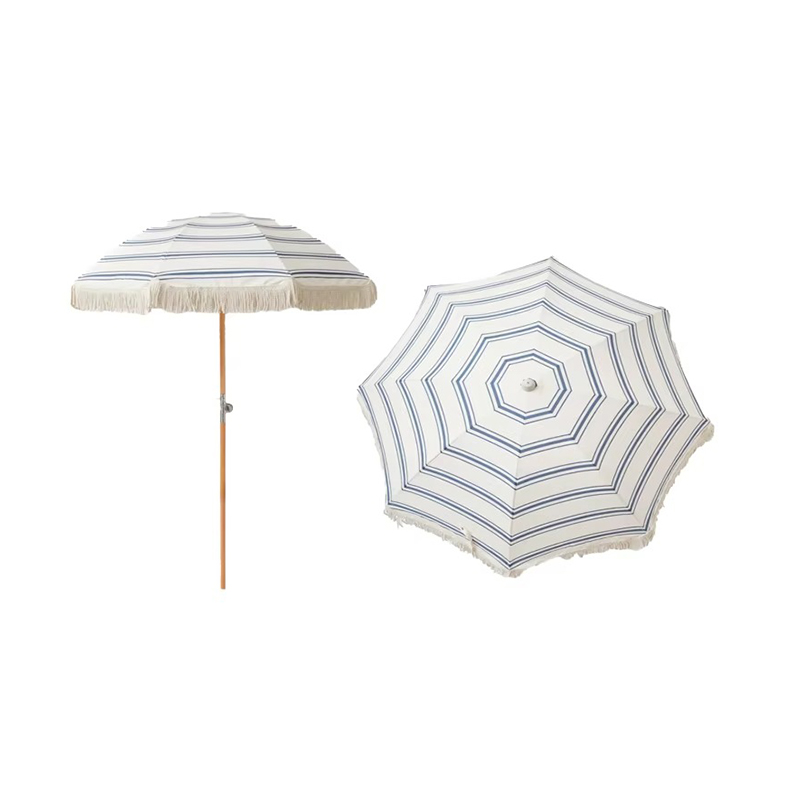
A canopy with a purpose-built tilt joint handles this far better than a fixed-frame umbrella, since the adjustment happens at a reinforced hinge instead of at the fabric seam. An umbrella designed around that hinge, such as an 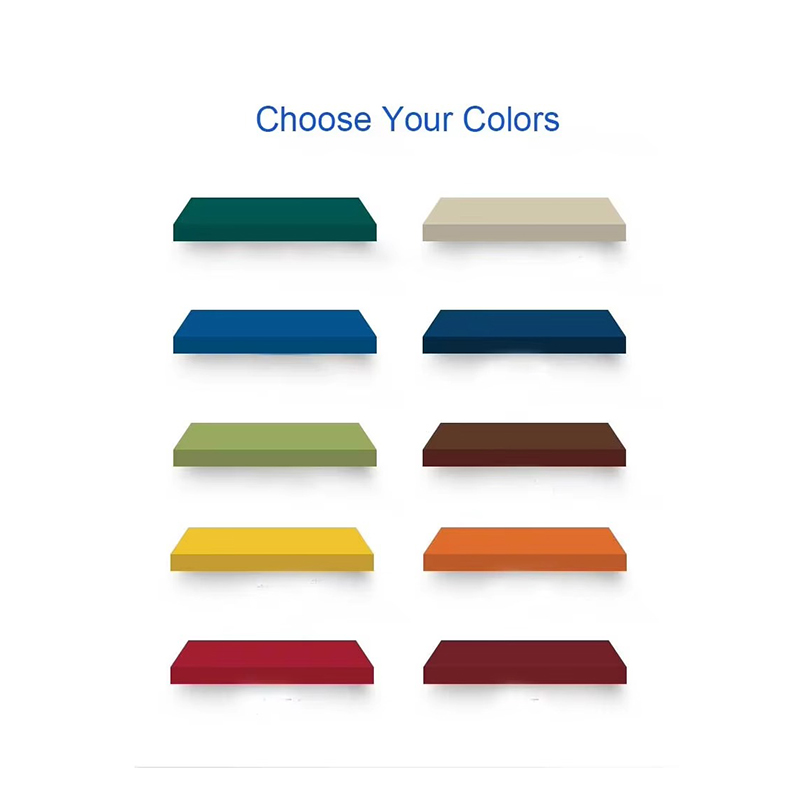 UPF50 + Angle Adjustable Sunshade Beach UmbrellaThis UPF50 + Angle Adjustable Sunshade Beach Umbrella combines modern design and functionality to provide all-round sun protection. The umbrella fabric is made of high...View Product → angle-adjustable model, lets you follow the sun through the whole afternoon without ever re-driving the pole.
Holding It Down: Sandbags, Screw Anchors, and Bases Compared
Depth alone will not save you in windblown dry sand, because dry grains have almost no cohesion and the pole can work its way loose in minutes. You need a second mechanism. There are three that actually work.
- Sandbags on a cross-strap. Two bags of 7 to 10 kg each, hung on the ground straps around the pole base, give you the 15 to 20 kg of ballast that matches the load figures above. Fill them on site rather than carrying them, and fill them with damp sand from below the dry surface layer, which packs roughly twice as densely.
- Screw-in sand anchors. A helical anchor 30 to 40 cm long screwed into damp sand below the dry layer resists pull-out far better than a straight pole. This is the cleanest option when you are carrying everything on your back, and it works even where the sand is too loose to hold bags in place.
- Weighted plates or a wheeled base. Best for hard-packed sand, boardwalks, and resort terraces where you cannot drive anything into the ground. The trade-off is that a plate base only works if the plate is genuinely heavy; a 5 kg plate on a 2.7 m canopy is decoration.
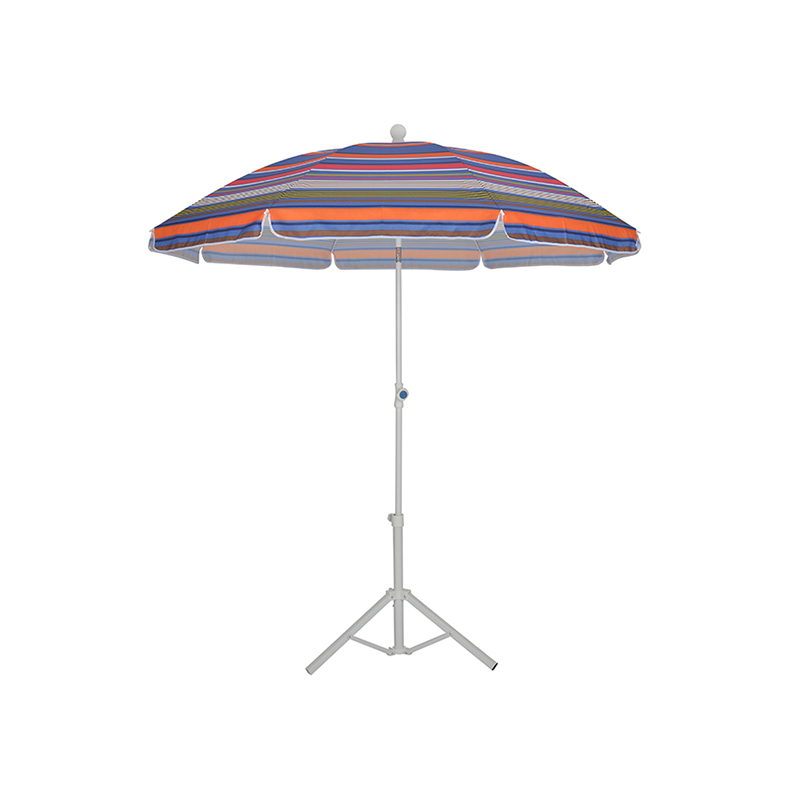
Combining methods is normal on exposed beaches. Screw the anchor in first, then add one sandbag as insurance. That combination is what a purpose-built fishing or windproof umbrella is designed around, with a thicker pole wall and a wider foot to spread load into the sand. A heavier-gauge frame paired with a stand, such as this 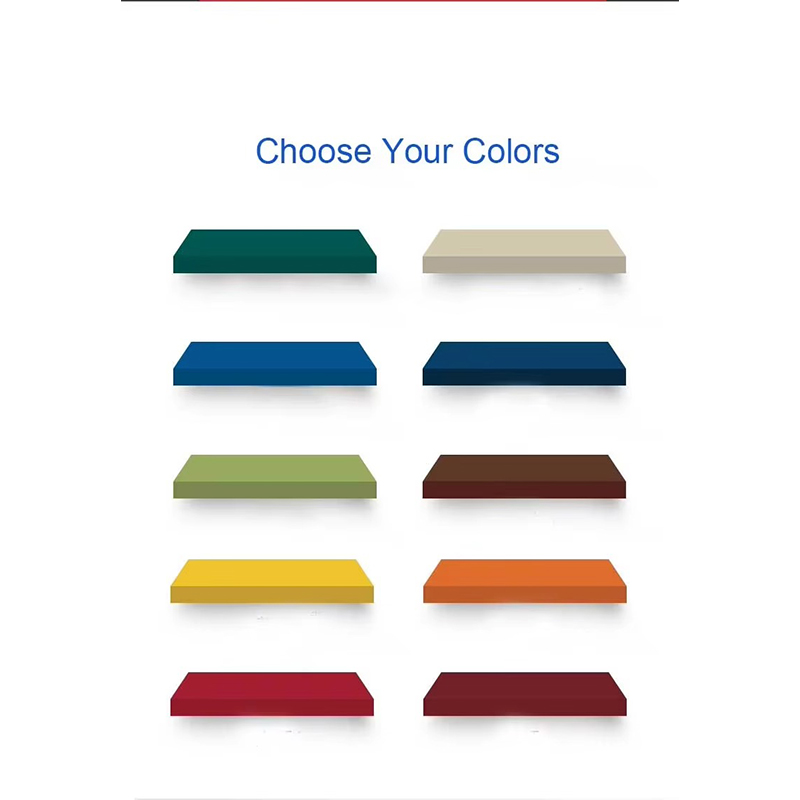 Windproof Thickened Fishing Umbrella With StandDesigned for bad weather, the Windproof Thickened Fishing Umbrella With Stand is your best choice for outdoor fishing. The umbrella surface is made of thickened anti-U...View Product → windproof model with a matching stand, removes most of the guesswork because the pole and the anchor were sized for each other.
Different Surfaces Need Different Techniques
The same umbrella behaves completely differently on dry dune sand and on a packed lawn. Match the anchoring method to the ground and you will stop guessing.
| Surface | Best Method | Entry Depth | Watch Out For |
|---|---|---|---|
| Dry, windblown dune sand | Screw anchor plus two sandbags | 60 cm or more | Pole works loose within 20 minutes |
| Damp sand near the waterline | Straight pole, sandbags optional | 40 to 50 cm | Incoming tide and sudden water level change |
| Packed grass or lawn | Ground stake or plate base | 25 to 30 cm | Irrigation lines and shallow roots |
| Decking, concrete, or terrace | Heavy plate or wheeled base | Not applicable | Wind funnelling between buildings |
Notice the pattern: the softer and drier the ground, the more the setup depends on a mechanical anchor rather than on the pole alone. On a pool deck, an umbrella with a proper weight base and a vented canopy will outperform a heavier fixed umbrella because the vent lets the trapped air escape instead of lifting the whole frame.
Instant-Open Umbrellas: Convenient, but Do Not Skip the Anchoring
Push-up and instant-open mechanisms have changed how quickly a beach umbrella goes from bag to standing, and for a single person carrying chairs, towels, and a cooler, that matters. The trade-off is that spring-loaded frames store energy in the ribs, and that stored energy makes the umbrella less forgiving of a bad setup.
Three habits keep an instant-open umbrella working for years.
- Open it fully before you drive the pole in. Opening it while the pole is already buried loads the ribs unevenly.
- Push the pole down through the sand with the canopy closed, then open. This keeps sand out of the runner and avoids grit grinding inside the mechanism.
- Never force the mechanism closed against a headwind. Collapse it with the wind behind you so the frame is not fighting the canopy.
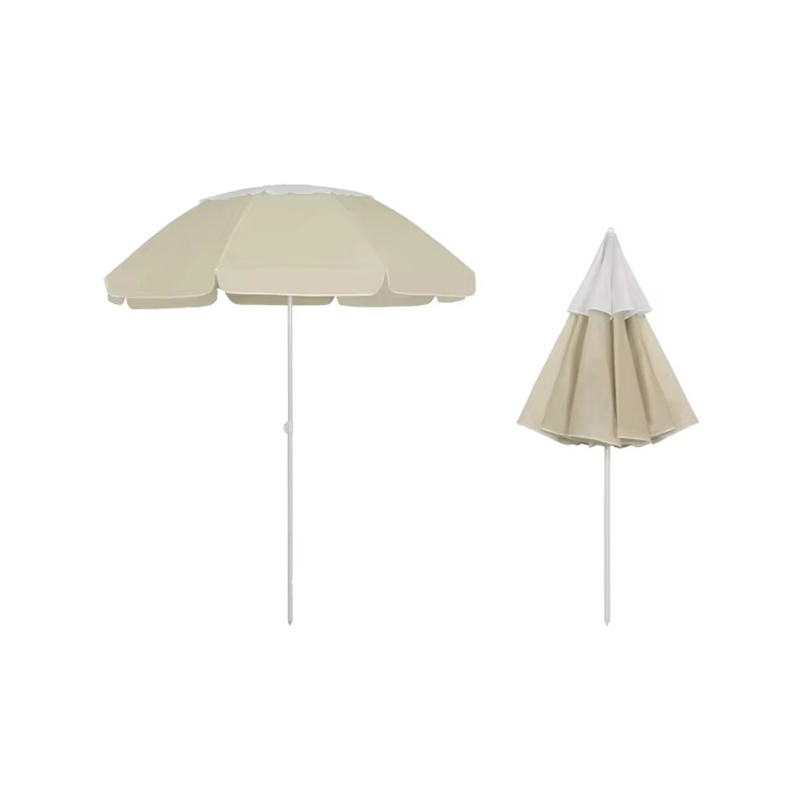
For short trips where the walk from the car is the main constraint, a compact instant-open design is the practical choice, provided you still carry a sandbag. A lightweight instant-open umbrella like this 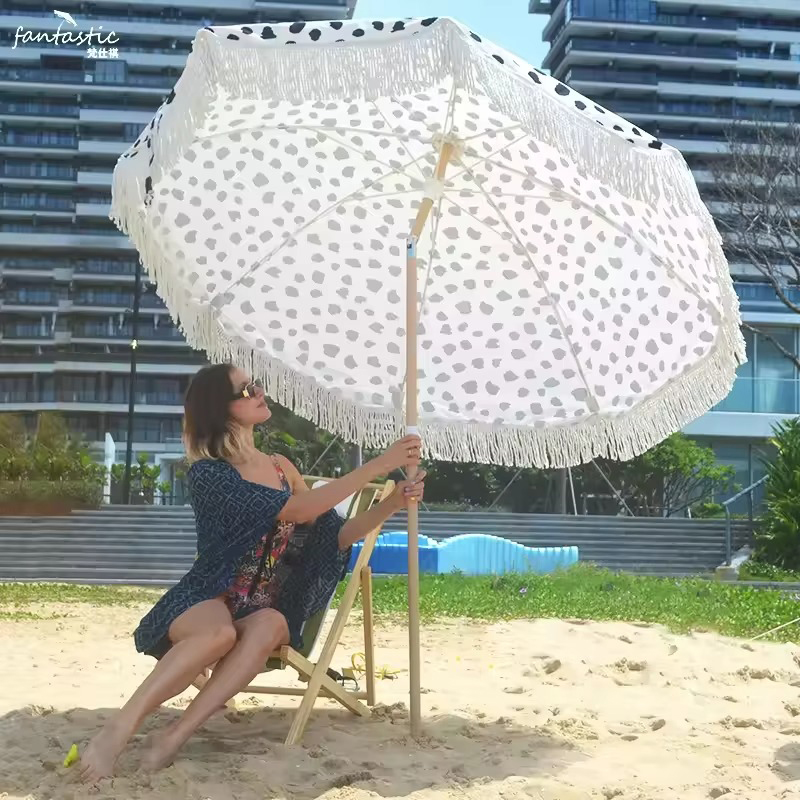 Portable Instant Sun Protection Beach UmbrellaIf you value convenience and sun protection, the portable instant sun protection beach umbrella will be your ideal choice. Its lightweight design means you don't have ...View Product → portable model is built exactly for that scenario: fast to deploy, easy to carry, and stable once the base is properly weighted.
Taking It Down and Keeping It Usable Next Season
Most beach umbrellas fail in storage, not on the beach. Sand left in the runner, salt left on the ribs, and a canopy folded while damp are the three causes of a frame that will not open smoothly the following summer.
The takedown sequence
- Close the canopy first, then pull the pole. Pulling a buried pole with the canopy still open puts the full wind load on the ribs.
- Rinse the pole and hub with fresh water at the end of the day. Salt accelerates corrosion on aluminium and stiffens the locking collar within a single season.
- Let the canopy dry fully open in the shade before folding. Fold a damp canopy and you are storing mildew in the fabric.
- Store it upright or hanging rather than folded flat under other gear, which is how ribs take a permanent bend.
Check the tilt hinge and the locking collar once before each season. A collar that slips under load is the first warning sign that the umbrella is about to fail in the wind, and it is usually fixable by tightening a single screw rather than replacing the umbrella.
Five Mistakes That Put Umbrellas on Their Side
- Pushing the pole in vertically. This creates a lever with nothing resisting rotation. Lean it into the wind instead.
- Stopping at 20 cm of depth. That feels firm until the top 30 cm of dry sand blows away. Go to 40 cm minimum, 60 cm in loose sand.
- Using a light base as a substitute for depth. A 5 kg plate on a large canopy buys you maybe 10 extra km/h of wind resistance.
- Leaving it unattended. An empty shaded spot is the clearest sign that the umbrella has already failed; nobody notices until it is airborne.
- Ignoring the vent. Single-layer canopies trap air underneath and lift. A vented or double-layer canopy lets that air escape and measurably reduces lift in gusty conditions.
Frequently Asked Questions
How deep should a beach umbrella pole go into the sand?
At least 40 cm in firm or damp sand, and 60 cm or more in dry, loose sand. On a windy day with an exposed beach, depth matters more than the weight of the base.
Which direction should the umbrella lean?
Lean the pole into the wind, at 15 to 20 degrees off vertical. On a typical coastal afternoon that means leaning the top toward the water, since the breeze usually comes off the sea.
How much weight does a beach umbrella base need?
Match it to canopy size. A 1.8 m umbrella needs about 10 kg, a 2.2 m umbrella about 15 kg, and a 2.7 m umbrella 18 to 20 kg. Anything above 3 m should be treated as 25 kg or more.
How often should I move the umbrella to follow the sun?
The sun moves about 15 degrees per hour in azimuth, so re-tilting the canopy every 60 to 90 minutes keeps the shade on your seating area through the afternoon. Re-tilting is almost always easier than re-driving the pole.
Can one person set up a large beach umbrella alone?
Yes, up to about 2.7 m, provided you use a screw anchor or fill sandbags on site rather than carrying the ballast with you. Larger canopies above 3 m generally need a second person for the initial drive and the first lean adjustment.
Does a vented canopy really make a difference?
Yes. A vent lets air that would otherwise be trapped under the canopy escape upward, which lowers lift and reduces the load transferred to the pole. On gusty beaches, the difference is noticeable during sudden changes in wind speed.
What is the safest wind speed to leave an umbrella up?
Keep a properly anchored umbrella up to roughly 30 km/h. Above that, take it down rather than adding weight, because the pole and ribs are the parts that fail first, and no base weight protects against a bent pole.
Using a beach umbrella well comes down to a short list of physical facts rather than technique or luck. Lean the pole into the wind, go deeper than feels necessary, put real weight on the base, and re-tilt the canopy as the sun moves. Those four habits cover the difference between an umbrella that holds through the afternoon and one that spends the afternoon on its side.
The equipment matters too, but mostly in the ways this article described: canopy diameter matched to the number of people, pole gauge matched to canopy size, a vent that lets trapped air escape, and a tilt hinge that lets you follow the sun without re-driving the pole. Get those specifications right once and the setup routine becomes a ninety-second habit you never think about again.
Recommended products
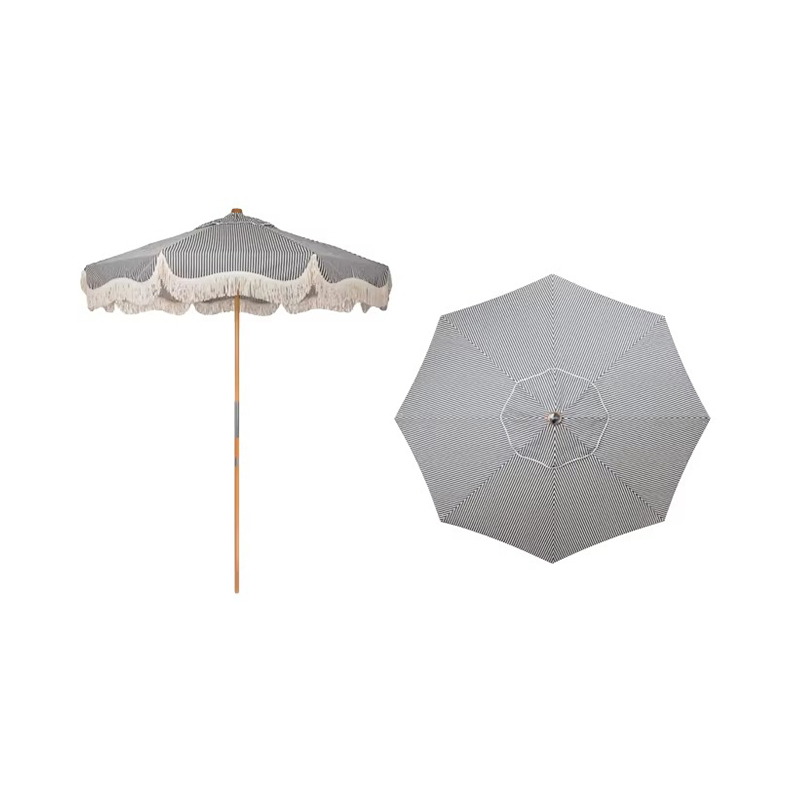
Contact Us Now
Copyright 2024 @ Shaoxing Jinqiao Umbrella Co., Ltd. All Rights Reserved. OEM/ODM umbrellas manufacturers Custom Umbrellas Factory
