

 English
 中文简体






Outdoor Umbrella Storage Guide: Dry, Fold and Protect Your Patio Umbrellas
Posted by Admin
Content
- 1 Outdoor Umbrella Storage in Three Rules
- 2 Why Umbrella Storage Goes Wrong: Three Root Causes
- 3 Cleaning Before Storage: A Sequence That Works
- 4 Frame Materials Behave Differently in Storage
- 5 Drying: The Step That Decides Whether Mildew Shows Up
- 6 Where to Store an Outdoor Umbrella: Options Ranked
- 7 Breathable Covers, Plastic Bags and the Condensation Problem
- 8 Storing Each Umbrella Type Differently
- 9 Winter Storage: A Practical Checklist
- 10 Buying Umbrellas With Storage in Mind
- 11 Storage Mistakes That Shorten Umbrella Life
- 12 Frequently Asked Questions About Outdoor Umbrella Storage
- 12.1 Can I leave an outdoor umbrella outside all winter?
- 12.2 How do I remove the mildew smell from an umbrella canopy?
- 12.3 Should I store a patio umbrella open or closed?
- 12.4 How long can a folded umbrella safely stay in a storage bag?
- 12.5 Is it OK to store an umbrella in a plastic bag?
- 12.6 What temperature is too cold for umbrella fabric?
- 12.7 How should I store an umbrella base?
- 12.8 Do wooden-pole umbrellas need different storage?
- 12.9 How do I stop ribs from bending out of shape in storage?
- 13 The Bottom Line on Outdoor Umbrella Storage
Two things quietly ruin an outdoor umbrella between seasons: water that never left the fabric, and weight that never should have been placed on the frame. A scratched pole, a stiff crank or a slightly dull panel are all small, slow variations of those same two problems.
So here is the conclusion first, before the detail. An umbrella goes into storage completely dry, folded around its own frame, and sitting in moving air. Not sealed in a plastic bag. Not leaning ribs-first against a concrete wall. Not bunched up around the hub with the canopy still damp in the seams. Get those three things right and most canopies come out of a six-month break looking the way they went in.
Outdoor Umbrella Storage in Three Rules
Almost every storage decision you will make comes back to these three points. If you have to break one of them, break the cover, never the airflow.
- Dry means dry inside the folds. Fabric surface dryness tells you almost nothing. The hems, the hub pocket, the strap and the sleeve where the pole passes through all hold water far longer than the open panels do.
- Support the frame, not the canopy. Ribs take a permanent set when they sit under a load for months, and a bent rib pulls the whole canopy out of tension the following season.
- Let air move around it. A breathable sleeve plus a shelf or hook beats a sealed bag on a damp floor in every climate we have seen.
Why Umbrella Storage Goes Wrong: Three Root Causes
1. Moisture hides in the folded canopy
A canopy folded at dusk after a rain shower can carry several grams of water locked in the seams and in the pocket around the hub. Closed into a bag, that water has nowhere to go. The U.S. Environmental Protection Agency's moisture control guidance recommends keeping indoor humidity below 60 percent and ideally between 30 and 50 percent, because mold and mildew need sustained moisture to establish. Folded fabric in a sealed bag at 25 degrees Celsius is a very small, very effective humidity chamber, and visible mildew can appear on damp textiles within one to three days in warm conditions.
2. Heat cycling attacks coatings, not just colour
A metal garden shed in direct summer sun regularly exceeds 60 degrees Celsius inside. Repeated heating and cooling softens the acrylic or polyurethane coating applied to the back of many canopy fabrics. Once that coating turns tacky, the umbrella sticks to itself in the fold and the coating can flake off along the crease lines. That is a storage problem, not a use problem, and it shows up as pale streaks along the fold after two or three seasons.
3. Mechanical load and frame fatigue
Ribs, hubs and crank cables are designed for tension, not for long-term compression. Leaning a closed umbrella on its ribs, hanging it by the canopy strap, or dropping a base on top of the folded canopy in a storage box all create the same result: a deformed rib, a stiff runner, or a crank cable that slips under load the next season.
Cleaning Before Storage: A Sequence That Works
Dirt left on a canopy pulls moisture out of the air and feeds mildew, so cleaning is part of storage rather than a separate task. Work in this order and you avoid pushing water into the places that are hardest to dry.
- Open the umbrella fully and leave it standing for an hour so the fabric relaxes and the creases open up.
- Brush off dust, pollen, sand and bird droppings with a soft dry brush. Loose grit becomes an abrasive the moment you add water.
- Mix roughly one teaspoon of mild dish soap into four litres of lukewarm water. Skip pressure washers entirely, they drive water straight past the hub seals.
- Wash panel by panel from the top down with a soft sponge, following the direction of the weave rather than scrubbing across it.
- Rinse until the water runs clear. Soap residue is slightly hygroscopic, meaning it attracts moisture long after the fabric feels dry.
- Treat mildew spots with an oxygen-based cleaner or diluted white vinegar, leaving it to sit for ten to fifteen minutes before rinsing. Chlorine bleach lifts colour from printed polyester and weakens stitching, so spot test on an inner hem first if you use it at all.
- Wipe the pole, ribs and hub dry, then apply a light silicone spray to the crank, the runner and the tilt joint. Oil-based lubricants collect grit and turn into grinding paste.
- Never put a canopy in a washing machine or a tumble dryer. The heat sets creases permanently and the drum destroys the coating.
Frame Materials Behave Differently in Storage
The same shed can be kind to one frame and cruel to another. This is the comparison that matters most when you are stacking umbrellas away for months.
| Frame material | Typical finish | Main storage risk | Practical handling |
|---|---|---|---|
| Aluminium | Anodised or powder coated | White oxide dust at scratches; contact corrosion where steel rivets meet the pole | Wipe dry, touch up deep scratches, keep off bare concrete floors |
| Powder-coated steel | Polyester powder coat | Rust creeps out of chips and from condensation inside hollow poles | Store upright so water can drain; a thin oil film on exposed chips |
| Wood (ash, eucalyptus, acacia) | Oil or lacquer | Moisture swelling lifts the finish; dry heat splits the grain | Store vertically in moderate humidity, refresh the oil before packing away |
| Fibreglass ribs | Resin matrix | Ribs take a permanent curve if bundled under constant tension | Store straight, avoid tight elastic bundling straps |
| Stainless hardware | Passivated | Pitting when salt residue or plain steel parts sit against it | Rinse coastal umbrellas before storage and separate mixed metals |
Frame choice and storage outcome are really the same conversation. If you are comparing aluminium, steel and wood before a purchase, our breakdown of how the material of patio umbrellas affects durability and sun protection covers the trade-offs in more depth.
Drying: The Step That Decides Whether Mildew Shows Up
Plan on 24 to 48 hours of open-air drying for a soaked canopy, and longer for a heavy canvas or double-layer model. Hang the umbrella fully open in shade with the ribs locked, ideally with a fan moving air across the fabric. Direct sun is fine for the first few hours but leaving a canopy in strong UV for two days simply trades a moisture problem for a fading problem.
Check the four places that stay wet longest: the seam closest to the hub, the runner pocket, the valance hem and the strap. If any of them feels cool against your wrist, it is still evaporating. Aim for a room or shed between 30 and 50 percent relative humidity while it dries, in line with the EPA guidance mentioned earlier.
 Double Layer Ventilated Waterproof Patio UmbrellaThis Double Layer Ventilated Waterproof Patio Umbrella adopts an innovative double-layer umbrella design, which can effectively prevent wind from blowing down and prov...View Product →
If you are buying new stock rather than storing old stock, ventilation in the canopy itself changes how fast an umbrella dries after rain. A double-layer ventilated waterproof patio umbrella lets warm air escape through the top vent, which reduces the heat pocket under the canopy and shortens the dry-out window considerably.
Where to Store an Outdoor Umbrella: Options Ranked
Not all storage rooms are equal, and the difference is almost entirely about humidity and temperature swing. Here is how the usual options compare for a folded outdoor umbrella.
| Storage location | Typical relative humidity | Temperature behaviour | Verdict |
|---|---|---|---|
| Interior closet, climate controlled | 30 to 50 percent | Stable | Best option for fabric and wood frames |
| Garage | 40 to 75 percent | Warm in summer, cold in winter | Good if the umbrella is raised off the floor |
| Garden shed | Tracks outdoor humidity closely | Can exceed 60 degrees Celsius in sun | Risky in humid regions, add airflow and a raised shelf |
| Basement | 60 to 80 percent without a dehumidifier | Cool and stable | Only with a dehumidifier running |
| Attic | Very low | Regularly above 50 degrees Celsius in summer | Fine for aluminium, hard on coatings and wood |
| Outdoor storage box | Tracks outdoor humidity | Same as ambient | Short-term only unless the box is vented and raised |
Breathable Covers, Plastic Bags and the Condensation Problem
A plastic bag looks protective and behaves like a terrarium. Even a few grams of residual moisture in a canopy will raise the relative humidity inside a sealed bag toward saturation within a day or two, and that is exactly the environment mildew needs.
- Breathable non-woven or canvas sleeves: the standard for long-term storage. Vapour escapes, dust and insects stay out.
- Plastic sheeting or bin bags: transport only, and only when the canopy is bone dry and the trip is short.
- Vacuum compression bags: they crush ribs and force permanent creases into coated fabric. Avoid them for anything with a frame.
- Shrink wrap: a shipping solution for container loads, not a home storage solution.
- An old cotton bedsheet: a perfectly serviceable cover if it is clean and dry, and easier to wash than a fitted sleeve.
One additional detail: flexible PVC covers stiffen noticeably below roughly minus 18 degrees Celsius and can crack when unfolded. In unheated storage, a fabric sleeve survives winter better than a plastic one.
Storing Each Umbrella Type Differently
A cantilever frame and a beach umbrella do not want the same treatment. Match the storage method to the mechanism.
Patio and market umbrellas
Close the canopy, secure the strap loosely rather than tightly, and stand the umbrella vertically in a corner or lay it flat on a shelf with the ribs supported along their length. If the pole is two-piece, separate the sections so no residual water sits in the joint.
Cantilever and offset umbrellas
Retract the arm fully and engage the locking pin before storage. The crank housing and the cable are the parts that fail, so never store a cantilever with the arm extended or with tension on the cable. Store the base separately, upright and dry.
Table umbrellas
Remove the umbrella from the table before storage. A small four-rib table umbrella is compact, but it still needs the canopy dry before it goes into a sleeve. Close the ribs gently and let the fabric fall into natural folds rather than forcing a tight roll.
Beach umbrellas and folding fishing umbrellas
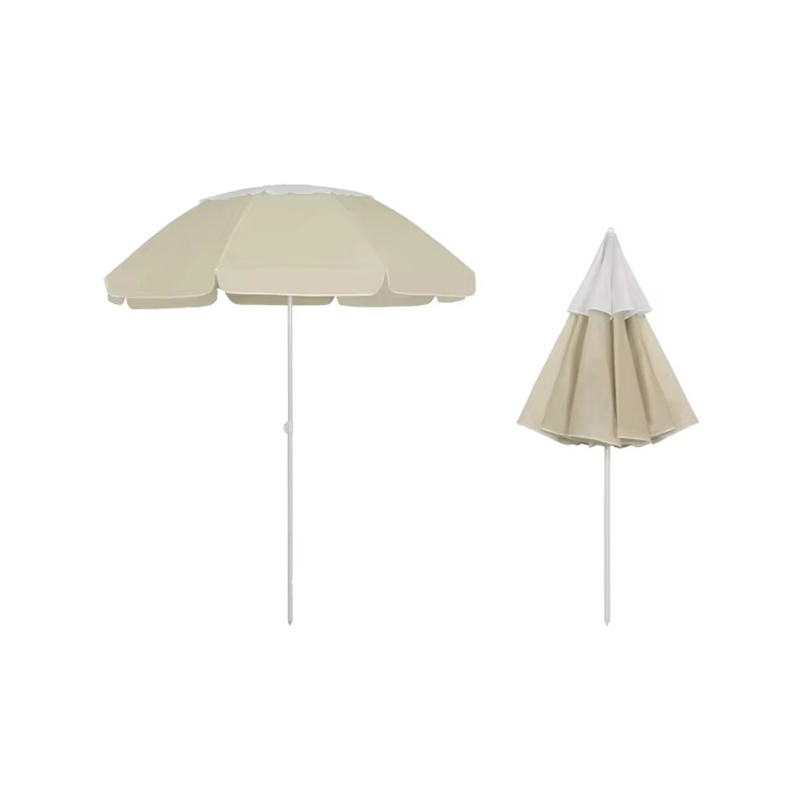
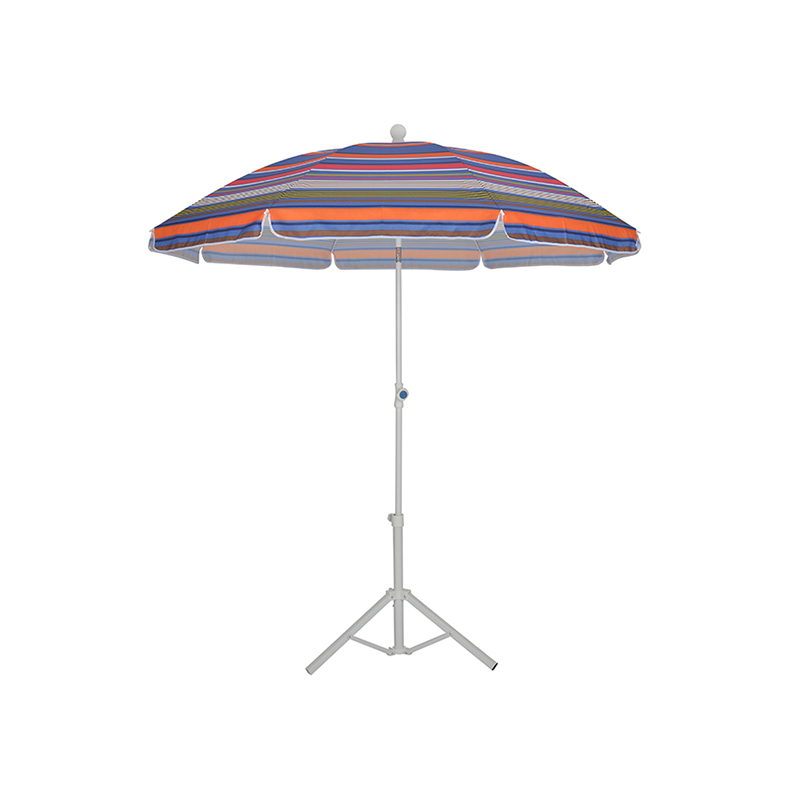
Sand is abrasive and salt holds moisture, so rinse the fabric and the pole in fresh water, dry fully, and shake out the sand before folding. Folded beach umbrellas store well in a mesh bag that lets air circulate, which matters when several are stacked together in a vehicle or a small locker.
 Portable Folding Fishing UmbrellaThis portable folding fishing umbrella is the ideal companion for fishing enthusiasts with its lightweight and convenient design. The umbrella is made of waterproof an...View Product →
For small lockers, van racks and apartment balconies, packed size decides whether an umbrella actually gets stored properly. A portable folding fishing umbrella collapses into a slim bundle that fits a mesh sleeve without forcing the ribs into a curve.
Umbrella tents and folding canopies
Dry these fully open, then collapse the aluminium ribs last so the fabric is not trapped between joints. Store folded tent frames horizontally, never leaning against a wall, because the leg joints take a set if they carry weight for months.
Winter Storage: A Practical Checklist
Work through this list on the last warm, dry weekend of the season and the umbrella will be ready for an uneventful spring.
- Pick a dry day with low humidity and start the wash and dry cycle in the morning.
- Clean the canopy, then let it dry open for at least a full day.
- Check the seams, the hub pocket and the strap by hand before folding anything.
- Lubricate the crank, runner and tilt joint with silicone spray, then wipe off the excess.
- Separate the base from the pole. Concrete, resin and granite bases should be stored flat, out of standing water.
- Raise the umbrella at least 10 centimetres off the floor so air moves underneath and no water wicks up the pole.
- Use a breathable sleeve, and leave it slightly loose rather than strapped tight.
- Keep the umbrella away from concrete walls, which hold and release moisture, and away from windows that bake in afternoon sun.
- Check the stored umbrella once mid-winter. If the sleeve feels damp, air everything out for a day.
- Note which parts show wear so replacements can be ordered before the season starts.
 High Quality Windproof Large Umbrella With Base Garden UmbrellaThis high-quality windproof large umbrella with base garden umbrella is designed for outdoor courtyards, gardens and terraces, providing perfect sunshade and windproof...View Product →
Bases deserve a mention of their own, because they are the heaviest single component in the set and the one most often left outdoors through winter. A high-quality windproof large umbrella with base is easier to manage across seasons when the base separates cleanly from the pole and drains rather than holding rainwater around the pole socket.
Storage Mistakes That Shorten Umbrella Life
- Putting the umbrella away while the canopy is still cool to the touch along the seams.
- Sealing a dry-looking canopy into a plastic bag for the whole off-season.
- Storing cantilever umbrellas with the arm extended and the cable under tension.
- Stacking bases on top of folded canopies in a storage box.
- Leaning a folded umbrella against a damp concrete wall for months.
- Using oil-based lubricant on the crank, which then collects grit and accelerates wear.
- Storing a dry wooden-pole umbrella in a hot attic, where the grain can split.
- Never inspecting stored umbrellas between autumn and spring.
Frequently Asked Questions About Outdoor Umbrella Storage
Can I leave an outdoor umbrella outside all winter?
You can, but expect fabric and hardware to age faster. If outdoor storage is unavoidable, keep the umbrella closed, covered with a breathable sleeve, raised off the ground, and clear of standing water. Freeze-thaw cycles are hardest on wood poles, powder-coated steel and flexible PVC covers. An open-sided carport or a vented storage box is a workable middle ground.
How do I remove the mildew smell from an umbrella canopy?
Wash the canopy with mild soap and lukewarm water, then treat the affected panels with an oxygen-based cleaner or diluted white vinegar and rinse thoroughly. Sun-dry the canopy fully open for a day. The smell usually disappears with the residue, but if it returns within a week of storage, moisture is still trapped somewhere in the folds.
Should I store a patio umbrella open or closed?
Closed, in almost every case. A closed umbrella takes up a fraction of the space and keeps the canopy under even tension. The exception is during the drying stage, when the umbrella should stay fully open in shade with air moving around it. Never store it partially open, because a half-folded canopy traps water in the creases.
How long can a folded umbrella safely stay in a storage bag?
A genuinely dry umbrella in a breathable bag can sit for six months or more with no problem. A damp one should not stay bagged for even a day. Damp fabric inside a closed bag reaches high humidity quickly, and visible mildew can develop within one to three days in warm conditions.
Is it OK to store an umbrella in a plastic bag?
Only for transport and only when the canopy is completely dry. Plastic traps the moisture that fabric continues to release for hours after it feels dry. For anything longer than a short trip, switch to a non-woven or canvas sleeve that breathes.
What temperature is too cold for umbrella fabric?
The fabric itself tolerates frost, but coatings and flexible PVC covers stiffen in the cold. Below roughly minus 18 degrees Celsius, unfolding a stored canopy or a plastic cover can crack the coating or the cover. If your storage space is unheated, let the umbrella reach room temperature before opening it in spring.
How should I store an umbrella base?
Separate the base from the pole, tip out any water that has collected in the socket, and store it flat on a dry surface. Resin bases filled with sand or water should be emptied before winter in cold climates, because freezing water expands and can split the shell. Keep bases off the folded canopy at all times.
Do wooden-pole umbrellas need different storage?
Yes. Wood responds to humidity, swelling in damp air and drying out in hot, dry rooms. Store wooden-pole umbrellas vertically in a space between roughly 40 and 60 percent relative humidity, refresh the oil or lacquer before the off-season, and never leave them lying on a damp concrete floor where moisture wicks along the grain.
How do I stop ribs from bending out of shape in storage?
Support the umbrella along the length of the ribs rather than at a single point, and avoid hanging it from the canopy strap. Close the canopy gently so the ribs sit in their natural curve instead of being compressed against each other, and store the umbrella horizontally on a shelf or vertically in a stand rather than leaning against a wall.
The Bottom Line on Outdoor Umbrella Storage
Outdoor umbrella storage rewards a little patience at the end of the season and nothing else. Dry the canopy properly, clean it while it is open, fold it around a supported frame, and let the air reach it all winter in a breathable sleeve. Do that and a well-built umbrella will open next spring with the same tension, the same colour and the same smooth crank it had when it was packed away.
Recommended products
Contact Us Now
Copyright 2024 @ Shaoxing Jinqiao Umbrella Co., Ltd. All Rights Reserved. OEM/ODM umbrellas manufacturers Custom Umbrellas Factory
