

 English
 中文简体
中文简体






What Is a Six Foot Umbrella and Why Does Size Matter?
Posted by Admin
Content
- 1 What Is a Six Foot Umbrella and Why Does Size Matter?
- 2 Who Should Choose a 6 Foot Beach Umbrella?
- 3 Key Features to Look for in a Six Foot Beach Umbrella
- 4 Six Foot vs. Larger Beach Umbrellas: How Do They Compare?
- 5 How to Set Up a Six Foot Beach Umbrella Safely and Correctly
- 6 Canopy Fabric and Materials: What Goes Into a Quality Six Foot Umbrella?
- 7 Color Options, Styles, and Customization for Six Foot Beach Umbrellas
- 8 Caring for Your Six Foot Beach Umbrella to Extend Its Lifespan
- 9 Six Foot Beach Umbrellas vs. Six Foot Patio Umbrellas: Key Differences
- 10 Useful Accessories That Make a Six Foot Beach Umbrella More Functional
- 11 Frequently Asked Questions About Six Foot Beach Umbrellas
What Is a Six Foot Umbrella and Why Does Size Matter?
A six foot umbrella refers to a beach or outdoor umbrella with a canopy diameter of 6 feet (roughly 183 cm). This is one of the most popular canopy sizes on the market, striking a balance between portability and shade coverage. For solo beachgoers or couples who want meaningful sun protection without hauling an oversized pole through the parking lot, a 6 foot beach umbrella is often the go-to pick.
Size matters because shade coverage scales with the canopy's surface area — not just the diameter. A 6-foot canopy covers approximately 28 square feet of ground shade, enough to shelter two lounge chairs, a cooler, and your beach bag comfortably. According to outdoor shade specialists at ShadeUSA, up until recently, the 6.5-foot beach umbrella was considered the industry standard, and 6-foot models remain widely popular because they're easy to carry, set up quickly, and fit into standard carry bags without a fight.
Beach umbrellas are more than accessories — they're genuine sun-protection tools. Even on overcast days, up to 80% of UV rays penetrate cloud cover, so shade from a properly rated canopy is your most reliable line of defense against UV exposure. A 6-foot beach umbrella with a UPF 50+ canopy blocks 98% or more of harmful UVA and UVB radiation, making it a practical companion for any outdoor outing near sand, water, or grass.
Who Should Choose a 6 Foot Beach Umbrella?
Not every umbrella size fits every situation. The 6 foot beach umbrella hits a sweet spot for specific types of users. Here is a breakdown of who benefits most:
Solo Beachgoers
A 6-foot canopy provides more than enough shade for one person plus their gear. The lighter weight (most models come in under 6 lbs) means you can carry it on your own without straining your shoulder on the walk from the car to the sand.
Couples and Small Families
Two adults sitting close together on beach chairs fit comfortably under a 6-foot canopy, especially if the umbrella has a tilt function that lets you angle shade toward the sun's position. For families of three or four, you may want to step up to a 7- or 7.5-foot model.
Travelers and Day-Trippers
Beach umbrellas that pack down to around 44 inches in length fit inside overhead luggage compartments or the back of compact cars. If portability is a priority, a 6-foot umbrella is significantly easier to transport than larger 8-foot alternatives.
Picnics and Backyard Use
Six foot beach umbrellas are not limited to sandy shores. Their lightweight aluminum frames and vibrant canopy colors make them a popular choice for garden picnics, sports sidelines, and outdoor events where a weighted patio base is not available.
Key Features to Look for in a Six Foot Beach Umbrella
Buying a beach umbrella is not as simple as grabbing the cheapest one off the shelf. Several technical features separate a reliable shade companion from a frustrating waste of money. Here is what matters most:
The Ultraviolet Protection Factor (UPF) rating tells you how much UV radiation the canopy fabric blocks. According to AMMSUN's buying guide, the ratings break down as follows:
| UPF Rating | Protection Level | UV Blocked |
|---|---|---|
| UPF 15–24 | Good | 93.3%–95.9% |
| UPF 25–39 | Very Good | 96%–97.4% |
| UPF 40–50+ | Excellent | 97.5%+ |
For extended beach days, UPF 50+ is the recommended minimum. Some premium canopies feature silver-coated undersides that reflect infrared heat, keeping the air underneath noticeably cooler — one manufacturer claims their canopy keeps users up to 15 degrees cooler in direct sunlight.
The pole and rib material determines how well the umbrella handles wind and how long it lasts near salt water. The main options are:
- Aluminum: Lightweight and corrosion-resistant, ideal for most 6-foot beach umbrellas. A quality two-piece aluminum pole with powder coating will resist rust and won't add unnecessary weight.
- Fiberglass ribs: Flex under wind pressure rather than snapping. Modern 8-rib fiberglass designs distribute wind loads far better than older 6-rib layouts, making the canopy less likely to invert in a gust.
- Steel: Heavier and prone to rust near saltwater unless properly coated. Steel poles offer rigidity but are less forgiving in wind compared to fiberglass ribs.
Look for a vented double-canopy design. A mesh vent at the top allows wind to flow through rather than pushing against the canopy like a sail, which dramatically reduces the risk of the umbrella flipping inside out or pulling free from the sand. Tightly woven polyester or acrylic canopies with darker colors typically offer better UV absorption than loose weaves in lighter shades.
How the umbrella stays in the sand is arguably more important than its fabric or frame. The ASTM F3681-24 safety standard — developed with input from the Consumer Product Safety Commission — specifies that an umbrella anchor must provide at least 75 pounds of resistance at the base to be considered safe in winds up to 30 mph. Common anchor styles include:
- Auger-style screw anchors: Twist into loose sand for a firm grip. Effective in soft beach sand, but may struggle in compacted or rocky ground.
- Built-in spike anchors: Simple and fast. Found on entry-level models like the Tommy Bahama 6 ft. tilt umbrella, which uses a built-in sand anchor for quick installation.
- Sandbag-base systems: Provide the most resistance but require significant effort to fill and set up at the beach.
A tilt function lets you angle the canopy to track the sun as it moves throughout the day. Push-button tilt systems are generally more reliable than collar tilts, which tend to slip over time. For a 6-foot beach umbrella used at midday when the sun is nearly overhead, a tilt is less critical. For afternoon beach sessions when the sun drops lower, it becomes much more useful.
Six Foot vs. Larger Beach Umbrellas: How Do They Compare?
Choosing between a 6-foot umbrella and a larger model comes down to how many people you need to shade, how much wind you typically face, and how far you have to carry the umbrella. Here is a direct size comparison:
| Canopy Size | Approx. Shade Area | Ideal For | Typical Weight | Wind Handling |
|---|---|---|---|---|
| 6 ft | ~28 sq ft | 1–2 people | 4–6 lbs | Good |
| 6.5 ft | ~33 sq ft | 2 people | 5–7 lbs | Good |
| 7 ft | ~38 sq ft | 2–3 people | 6–9 lbs | Moderate |
| 7.5 ft | ~44 sq ft | 3–4 people | 8–11 lbs | Challenging |
| 8 ft | ~50 sq ft | 4+ people | 10–14 lbs | Difficult |
A key insight from beach umbrella experts: a slightly smaller but well-anchored, vented umbrella often outperforms a huge, flimsy one in gusty conditions. Bigger canopies catch exponentially more wind, which puts greater stress on both the frame and the anchor. If you regularly visit windy beaches, the 6-foot size is actually a strategic advantage.
How to Set Up a Six Foot Beach Umbrella Safely and Correctly
Even the best beach umbrella becomes a hazard if set up improperly. A flying umbrella can cause serious injury — a study published in the Journal of Safety Research documented thousands of beach umbrella injuries between 2000 and 2019, some resulting in fatalities. Proper setup is not optional. Follow these steps every time:
Choose a Location in Moist, Compact Sand
Dry, loose sand near the dune line provides little resistance. Move closer to the water's edge where sand is damp and compacted. This alone dramatically improves how well any anchor holds.
Angle Into the Wind, Not Straight Down
Insert the pole at a 30- to 45-degree angle facing into the oncoming wind. This reduces the aerodynamic lift force that threatens to pull the umbrella out of the sand. Inserting it perfectly vertically maximizes wind resistance and makes it easier to dislodge.
Use an Auger Anchor or Built-In Sand Anchor
Twist or drive the anchor at least 18 to 24 inches into the sand. A shallow anchor — less than 12 inches — is unlikely to hold in moderate winds. After insertion, rock the pole gently to test resistance before opening the canopy.
Open the Canopy and Adjust Tilt
Once the pole is secure, slide the canopy open from the bottom. Use the tilt mechanism — if available — to face the canopy into the wind rather than broadside against it. This further reduces the pressure the canopy exerts on the anchor.
Check Stability Before Sitting Down
Push down on the canopy with one hand. If the pole wobbles or lifts, re-drive the anchor deeper. Never assume wind conditions will stay calm — check the stability of your setup every hour, and close the canopy if you step away.
Canopy Fabric and Materials: What Goes Into a Quality Six Foot Umbrella?
The canopy of a beach umbrella is not just about color — its material composition determines sun protection, heat resistance, durability, and wind performance. Most 6-foot beach umbrellas use polyester, acrylic, or canvas fabric:
- Polyester: The most common material. Lightweight, quick-drying, and easy to treat with UV-blocking coatings. Quality polyester canopies hold their color well and are water-resistant for light rain. The downside is that very thin polyester allows more UV to pass through, so check for an independent UPF rating rather than relying on manufacturer claims.
- Acrylic (solution-dyed): Heavier and more expensive, but fade-resistant and naturally UV-blocking. Solution-dyed acrylic fibers are colored during the manufacturing process, so the color runs all the way through the strand and won't fade from saltwater or sunlight exposure as quickly as surface-coated fabrics.
- Canvas: Natural and breathable with a classic aesthetic. Heavier than synthetic options and prone to mildew if stored damp, but some canvas fabrics are treated for UV resistance and water repellence.
A silver-coated or reflective underside adds another layer of protection by bouncing infrared heat away from the space under the umbrella. One manufacturer's testing found that their silver-lined canopy kept air temperatures underneath up to 10 degrees Fahrenheit cooler than the ambient beach environment.
Darker colors on the exterior absorb more UV radiation, which means less passes through to the underside where you are sitting. If maximum UV protection is a priority, avoid very light-colored or pastel canopies without a verified UPF rating.
Always look for a UPF rating tested under the AATCC TM183 or AS/NZS 4399 standard. The phrase "UV protection" without a specific number and testing standard is meaningless as a buying signal.
A quality 6-foot umbrella with an aluminum pole and polyester canopy should weigh between 4 and 7 pounds. Anything over 8 pounds at this size suggests a heavy steel pole or unnecessary hardware that adds bulk without improving performance.
Color Options, Styles, and Customization for Six Foot Beach Umbrellas
The six foot beach umbrella market offers an enormous range of canopy colors and print patterns, from solid primaries to tropical stripe designs. While aesthetics are personal, color choice has some functional implications worth understanding:
Dark Solid Colors
Deep navy, hunter green, and charcoal canopies absorb more UV radiation at the fabric surface, providing better UV blockage than lighter shades of equivalent thickness. They also tend to maintain vibrant appearance longer in salt air.
Stripe Patterns
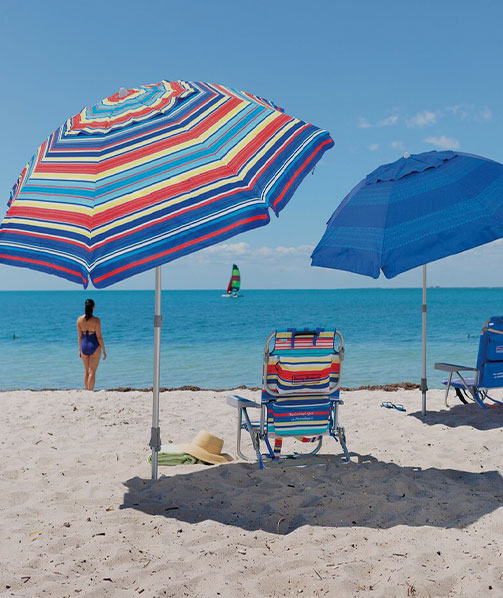
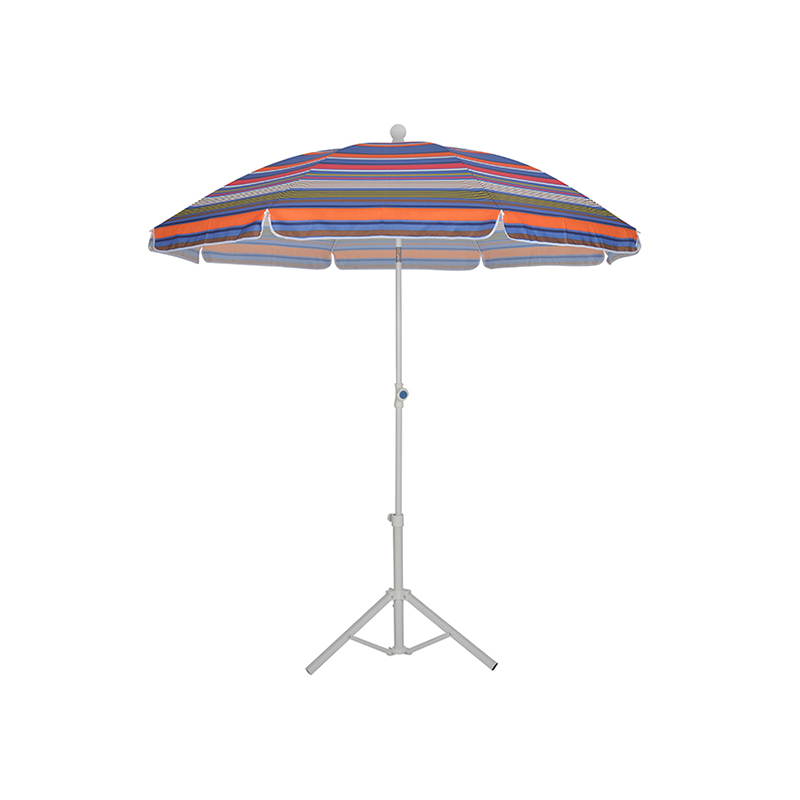
The classic beach stripe — alternating white and bright color bands — remains the most popular style. White stripes pass more UV through than colored stripes, which is why a striped canopy without a verified UPF rating should be assessed carefully. A verified UPF 50+ rating removes this concern regardless of pattern.
Print and Custom Designs
Six foot patio and beach umbrellas are also widely available in custom-branded versions for commercial events, resorts, and outdoor promotions. Custom canopy printing is typically done panel by panel, with options ranging from a single logo panel to all 8 panels, depending on the manufacturer and order size.
Fringe Edges
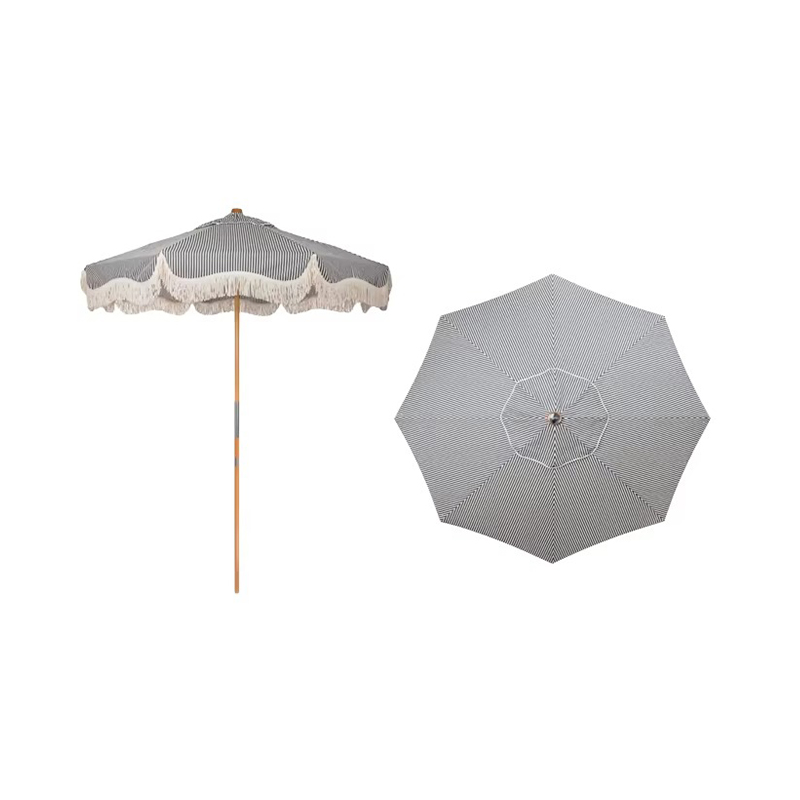
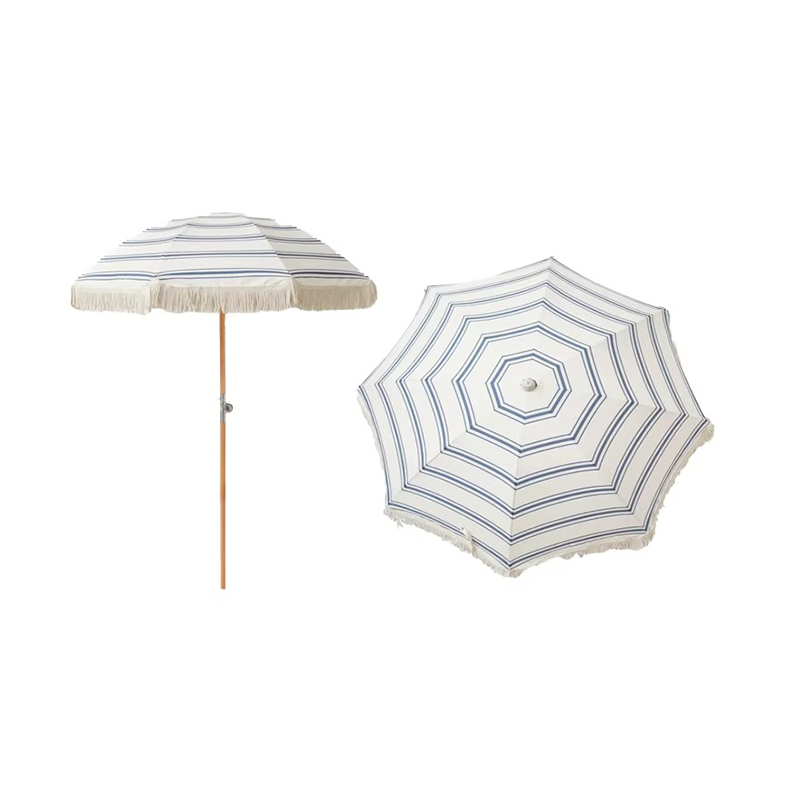
Fringe-trimmed canopies add a fun, festive look and are particularly popular for backyard parties and resort-style setups. The fringe is decorative rather than functional, though it does create a slight visual boundary that makes shade edges easier to see.
For beach use specifically, choose a canopy color that you can spot easily from a distance if you leave your umbrella to swim. Bright, high-contrast colors — red, yellow, orange, or vibrant multi-color stripes — are easiest to find on a crowded beach shoreline.
Caring for Your Six Foot Beach Umbrella to Extend Its Lifespan
A quality 6-foot beach umbrella should last multiple seasons with basic maintenance. Salt, sand, and UV exposure are the main degradation factors, and all three are manageable with simple habits:
Rinse with Fresh Water After Every Beach Trip
Salt crystals that dry on aluminum frames accelerate oxidation. A quick rinse with tap water removes salt deposits before they can cause pitting or corrosion. Pay particular attention to the joints, runner, and tilt collar, where salt tends to collect.
Dry Completely Before Storage
Never store a beach umbrella while the canopy is still damp. Moisture trapped in a closed carry bag creates the ideal environment for mold and mildew, which stains fabric permanently. Open the umbrella in a shaded, ventilated area for at least two hours before rolling it up for storage.
Store Out of Direct Sunlight When Not in Use
UV exposure is cumulative. An umbrella stored on a balcony in direct sunlight year-round will lose fabric integrity and color faster than one stored indoors. Keep the umbrella in its carry bag in a cool, dry place when not in use.
Inspect Ribs and Joints Before Each Use
A cracked rib or loose joint is a failure point waiting to happen in windy conditions. Run your fingers along each rib and check that the ferrules (metal bands at rib ends) are intact and the stretcher arms are not bent. Replace or repair damaged components before taking the umbrella to a busy beach.
Close and Secure the Umbrella When Unattended
If you leave your beach setup to swim or grab lunch, close the canopy. An open, unsupervised umbrella in shifting winds is a genuine hazard to other beachgoers. Most 6-foot beach umbrellas include a Velcro strap or tie closure — always use it when the umbrella is closed.
Six Foot Beach Umbrellas vs. Six Foot Patio Umbrellas: Key Differences
Both beach umbrellas and patio umbrellas can measure 6 feet in canopy diameter, but they are designed for entirely different purposes. Mixing them up leads to frustration and potential damage. Here is what sets them apart:
- Pole designed to anchor in sand or soft soil
- Lightweight frame for carrying across sand
- UPF-rated canopy for direct UV protection
- No base required — sand is the anchor
- Compact carry bag for portability
- Typically lower pole height (6–7 ft extended)
- Salt-resistant frame materials
- Price range: roughly $20–$100 for quality models
- Pole designed for weighted base or table insert
- Heavier frame for wind stability on hard surfaces
- Canopy may or may not have UV rating
- Requires a separate base weighing 25–50 lbs
- Not intended for portability or beach use
- Often features crank-open mechanisms
- Available in wood, aluminum, or steel frames
- Price range: roughly $50–$200 for mid-range models
The core takeaway: beach umbrellas are not substitutes for patio umbrellas, and vice versa. A beach umbrella used without a proper sand anchor on a patio will tip in mild wind. A patio umbrella driven into sand without its weighted base provides almost no resistance and poses a significant safety risk.
Useful Accessories That Make a Six Foot Beach Umbrella More Functional
A 6 foot beach umbrella on its own provides shade. The right accessories transform it into a complete beach setup that's more stable, more comfortable, and more convenient:
Auger Sand Anchor
A screw-in auger anchor provides dramatically better holding power than a simple spike. Look for anchors made from corrosion-resistant aluminum or stainless steel with a handle that lets you apply enough torque to reach 18–24 inches of depth.
Umbrella Table
A small accessory table that clips onto the umbrella pole at a convenient height lets you keep sunscreen, phones, snacks, and sunglasses within reach without putting them directly on the sand where they collect grit.
Towel Hook
A simple clip-on hook that attaches to the pole or a rib allows wet towels to hang and dry while you continue lounging. Some umbrella models include built-in towel hooks as a standard feature.
Carry Bag with Shoulder Strap
The plastic sleeve that comes with budget umbrellas wears out quickly. A dedicated padded carry bag with a padded shoulder strap makes the walk from car to beach significantly more comfortable, especially if you're carrying other gear.
Sand-Pocketed Beach Blanket
A beach blanket with built-in corner sand pockets and an umbrella-pole slot in the center keeps the blanket flat in a breeze and positions the umbrella shade exactly where you want it from the moment you set up.
Tethering Stakes
Secondary anchor stakes that tether the canopy ribs to the ground provide additional stability in gusty conditions. Some retailers sell these as a kit alongside their 6-foot beach umbrellas for an extra margin of safety on exposed shorelines.
Frequently Asked Questions About Six Foot Beach Umbrellas
A 6-foot canopy creates approximately 28 square feet of circular shade at midday when the sun is directly overhead. In practice, the usable shade shifts as the sun moves, and the ellipse of shade on the ground becomes larger (but narrower) when the sun is lower in the sky. Most users find a 6-foot umbrella comfortable for one adult fully reclined on a beach chair, or two adults sitting upright. Add a tilt function and you can extend the shaded area further in one direction.
Probably not, unless the family is comfortable sitting very close together. For a group of four adults or older children, a 7- or 7.5-foot canopy is a more comfortable choice. For young children who naturally cluster close together, a 6-foot umbrella might work, but it will feel crowded. A practical solution is to bring two 6-foot beach umbrellas for a family of four — they're easier to transport than one very large umbrella and give you flexibility in how you arrange shade.
Yes, though with some caveats. Beach umbrellas are designed for sand anchoring, not hard surfaces. On a patio or pool deck, you'll need a weighted base designed for hard surfaces — never just lean the pole against furniture or jab it into potted plant soil. On grass, a standard spike or auger anchor works reasonably well. Some people use beach umbrellas at backyard picnics with excellent results, provided they set up the anchor properly and don't leave the umbrella unattended in wind.
This depends heavily on the anchor system and frame construction rather than the canopy size alone. Entry-level beach umbrella systems with a basic spike anchor are unlikely to hold in sustained winds above 15–20 mph. Mid-range models with auger anchors and vented canopies can handle 25–35 mph gusts reasonably well. According to the ASTM F3681-24 safety standard, a beach umbrella anchor must provide 75 pounds of resistance to be considered safe in 30 mph winds. Always close your umbrella if wind speeds rise significantly or if you leave the beach setup unattended.
The three most effective measures are: (1) use a screw-in auger anchor and drive it at least 18–24 inches into moist sand, (2) angle the pole at 30–45 degrees into the wind rather than inserting it vertically, and (3) choose a canopy with a vented top that lets air escape rather than building pressure. Closing the umbrella when you leave the setup is the single most important safety habit, no matter how calm the weather appears.
No. Many entry-level beach umbrellas sold at discount stores have no verified UPF rating at all. Some use thin, loosely woven polyester that blocks only 60–70% of UV radiation, far below the standard for meaningful sun protection. Always look for a stated UPF rating (ideally 50+) that has been independently tested, not just a vague marketing claim. When in doubt, check whether the manufacturer lists the specific test standard used (such as AATCC TM183 or AS/NZS 4399).
The 6.5-foot canopy provides approximately 33 square feet of shade versus 28 square feet for a 6-foot canopy — about 18% more coverage. In practical terms, this means a single extra person can fit comfortably in the shade, or one person has noticeably more room to stretch out. The weight difference is usually small (less than a pound), so the 6.5-foot model is often worth the slight upsize if you're on the fence.
For most polyester and acrylic canopies, a soft brush or sponge with mild soap and warm water is sufficient. Rinse thoroughly with fresh water and let the canopy dry fully before closing. For mildew stains, a diluted solution of water and white vinegar (1:3 ratio) applied with a soft cloth can remove light staining without damaging the fabric. Avoid bleach on colored canopies, as it will strip the dye and degrade UV-protective coatings.
With proper care — rinsing after beach use, drying before storage, and keeping it out of sun when not in use — a quality 6-foot beach umbrella with an aluminum frame and polyester canopy should last 3–5 seasons of regular use. Premium acrylic canopy versions tend to hold their color and UV-blocking properties longer than entry-level polyester models. Frame components like ribs and the runner/runner sleeve are often available as replacement parts from quality manufacturers, which can extend a well-built umbrella's functional lifespan significantly.
Recommended products
Contact Us Now
Copyright 2024 @ Shaoxing Jinqiao Umbrella Co., Ltd. All Rights Reserved. OEM/ODM umbrellas manufacturers Custom Umbrellas Factory
