

 English
 中文简体
中文简体






Beach Umbrella Sizes: How to Choose the Right Diameter for Any Beach Day
Posted by Admin
Content
- 1 Beach Umbrella Size Chart: Diameter, Height, and Coverage
- 2 How Many People Will Sit Under Your Umbrella?
- 3 Portability vs. Coverage: The Folding Size Trade-Off
- 4 Oversized Beach Umbrellas: When Bigger Is Better (And When It Isn't)
- 5 Adjustable Angle and Its Effect on Shade Size
- 6 Fabric and Frame Materials That Affect Usable Shade
- 7 FAQ: Beach Umbrella Size Questions Answered
- 8 Final Takeaway: Match Size to Your Beach Day
Choosing the right beach umbrella size is not about picking the biggest canopy you can find. The number that matters most is the diameter of the canopy, and the sweet spot for most beachgoers sits between 1.8 and 2.4 meters. For a couple, a 1.8-meter umbrella provides comfortable shade for two reclined chairs. For a family of four, you will want at least 2.4 meters. If portability is your top priority, a 1.5-meter folding umbrella with a compact carry bag might be the most practical choice, even though it covers less area.
Beach Umbrella Size Chart: Diameter, Height, and Coverage
Before you buy an umbrella, you need to know what the numbers on the product listing actually mean. The diameter is the distance from one edge of the canopy to the opposite edge, measured across the center. The height is the vertical distance from the ground to the highest point of the canopy when fully open. These two numbers determine how much shade you get and how comfortable the space feels.
| Diameter (m) | Coverage Area (m²) | Typical Height (m) | Comfortable Seating |
|---|---|---|---|
| 1.2 | 1.13 | 1.6 | 1 small chair |
| 1.5 | 1.77 | 1.8 | 1-2 people with tight spacing |
| 1.8 | 2.54 | 2.0 | 2 people with standard beach chairs |
| 2.0 | 3.14 | 2.2 | 2-3 people or 2 adults + 1 child |
| 2.4 | 4.52 | 2.4 | 4 people or 2 adults + 2 children |
| 2.7 | 5.73 | 2.6 | 4-5 people or a family with gear |
| 3.0 | 7.07 | 2.8 | 6+ people or commercial use |
Notice how the coverage area grows faster than the diameter because of the square term in the area formula. Moving from 1.8 meters to 2.4 meters increases the diameter by about 33 percent, but the shade area jumps from 2.54 to 4.52 square meters, a gain of roughly 78 percent. That is why a seemingly small size change can make a real difference on a crowded beach.
How Many People Will Sit Under Your Umbrella?
For two adults using standard beach chairs, a 1.8-meter umbrella is usually the minimum trade-off. Standard beach chairs are about 0.6 meters wide. When two chairs are placed side by side with a small gap for a drink, the total width is around 1.5 meters. A 1.8-meter canopy can cover this width while still leaving some shade overhead.
But if you want to keep a cooler near your feet or stash a wet bag, you need extra space. In that case, a 2.0-meter umbrella gives you about 3.14 square meters of shade, which is enough for two adults and a small cooler. For a family with two children, a 2.4-meter umbrella is the right baseline. The seats and the kids' toys together need at least 4.5 square meters of covered area.
As the shape of the canopy also affects how much shade you get, see our breakdown of how the shape of a beach umbrella impacts shade.
Here is a simple rule of thumb: subtract about 20 centimeters from the diameter for wind and sun angle. If you need to shade four people, do not assume a 2.0-meter umbrella will be enough. Go for at least 2.4 meters, and you will have margin for towels, bags, and shifting positions.
Portability vs. Coverage: The Folding Size Trade-Off
If you have to carry your umbrella more than 300 meters, the folding length becomes more important than the shade diameter. A 1.5-meter portable umbrella typically folds to 80 centimeters and weighs around 2 kilograms. A 2.4-meter family-size umbrella often folds to 1.2 meters and weighs over 5 kilograms.
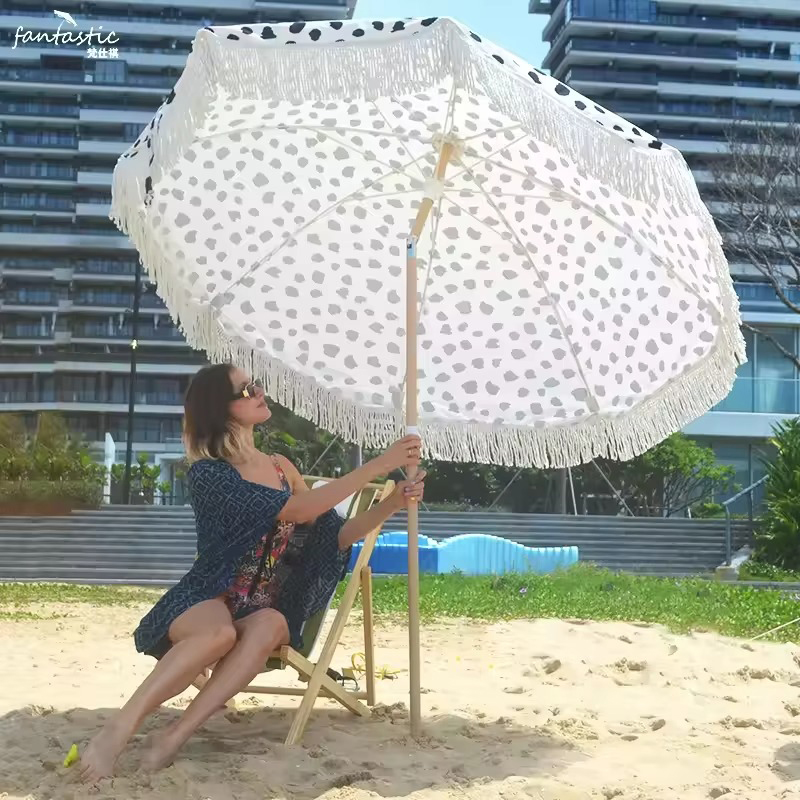 Portable Instant Sun Protection Beach Umbrella for Easy TransportThis lightweight umbrella folds to 80 cm and weighs about 2 kg, making it ideal for short trips. Its UPF50+ fabric and wind-resistant design offer reliable protection without the bulk.View Product →
When comparing portable models, always check the folded length and the weight. A longer bag can be awkward on public transit or crowded beach walks. A heavier umbrella also requires a bigger sand anchor, which adds to the total load. If you plan to walk from a parking lot to the water, a 1.5-meter compact umbrella is much easier to handle, even if it leaves less room for gear.
Consider your typical beach routine. Are you driving right up to the sand? Then a large, sturdy rectangle umbrella makes sense. Are you taking a shuttle or walking a scenic path? A folding model with a shoulder strap will save your arms and your patience.
Oversized Beach Umbrellas: When Bigger Is Better (And When It Isn't)
A 2.4-meter or larger umbrella offers wonderful shade, but you must anchor it properly and be ready to lower it when the wind picks up. The larger the canopy, the more surface area is exposed to gusts. At wind speeds above 25 kilometers per hour, a 2.7-meter canopy can act like a sail, pulling its pole out of the sand if it is not deeply buried.
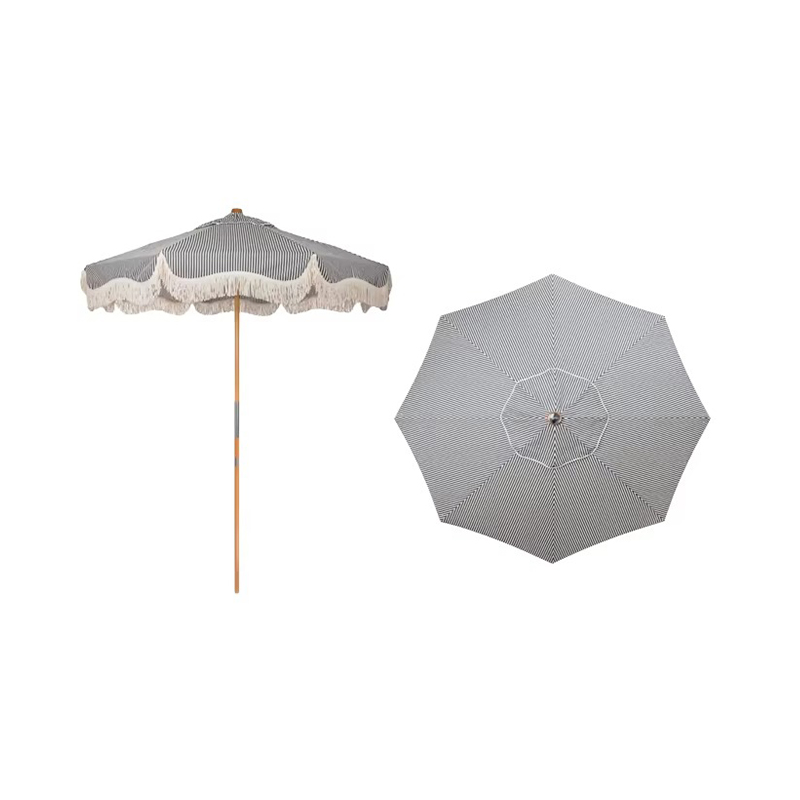
 Oversized Sunshade Beach Umbrella for Large GroupsWith a wide canopy and stable base, this umbrella provides ample shade for families or friends. Its height-adjustable system and reinforced ribs ensure comfort and stability on calm beach days.View Product →
Oversized umbrellas are best for calm days or fixed setups. A 2.7-meter model is a good choice for a family of five or a group of friends who want to stay comfortably together. But if you are at a windy coastal spot, consider a smaller diameter and an adjustable tilt feature instead of simply going bigger.
When you do buy an oversized umbrella, check the pole diameter. A 2.4-meter canopy with a 25-millimeter pole is much more stable than the same canopy on a 20-millimeter pole. Reinforcing ribs and a thicker fabric also help prevent flapping, which leads to a more predictable shade area.
A practical test at our manufacturing facility showed that a 2.7-meter umbrella with a 25 mm pole and 8 ribs maintained roughly 82 percent of its full shade area in a 30 km/h wind, while a similar-sized umbrella with only 6 ribs lost about 24 percent of its area due to canopy flex.Adjustable Angle and Its Effect on Shade Size
The angle of the canopy changes the effective shade footprint more than most people realize. When the sun is directly overhead, a flat canopy provides its maximum shade area. When the sun moves sideways, you can tilt the canopy toward the sun to keep your body covered, but you lose some shade on the opposite side.
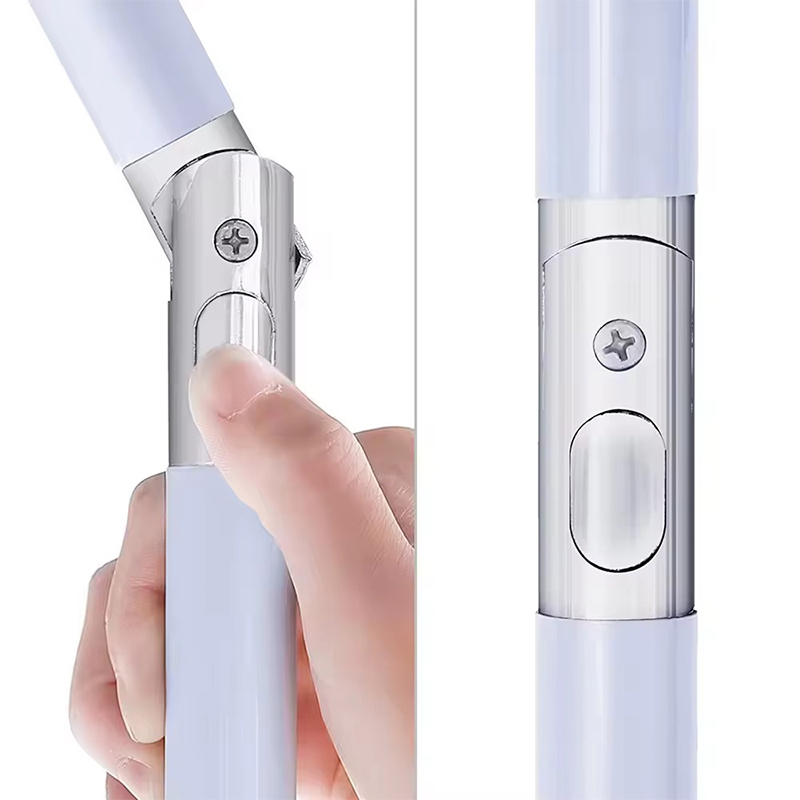
 UPF50+ Adjustable Angle Beach Umbrella for Flexible ShadeFeaturing a tilt mechanism, this umbrella lets you adjust the canopy to track the sun, extending effective shade. Its UPF50+ fabric and sturdy frame offer durable protection even in breezy conditions.View Product →
An adjustable-angle umbrella is particularly useful from late morning to mid-afternoon. Instead of having to move the whole umbrella every hour, you simply give the canopy a quick tilt. That is a small operational benefit that can double the useful time of a single size. For example, a 1.8-meter umbrella tilted at 30 degrees might still cover a full chair, whereas a fixed canopy might leave your shoulders exposed.
If you want the most flexible option, pair an adjustable-angle umbrella with a slightly larger diameter. That lets you tilt the canopy in response to the sun without losing your entire shade zone. To explore how different sun protection features are built into a real product, take a look at our beach umbrella collection, where you can compare designs that include adjustable joints.
Also be aware that the height of the umbrella affects the shade angle. A 2.4-meter-tall canopy casts a larger shadow than a 1.8-meter-tall canopy when the sun is low, simply because the shadow is longer. If you are tall, you will want a taller umbrella to avoid constantly bending under the edge.
Fabric and Frame Materials That Affect Usable Shade
The material and construction of the canopy determine how much light passes through, which directly affects your actual comfortable shade. A thin, single-layer polyester canopy might block only 85 percent of UV rays while also letting heat radiate through. A quality 240-gram polyester canopy with a thicker weave can block more than 98 percent of UV light and feel noticeably cooler underneath.
Double-layer vented canopies are designed to allow a small amount of air to escape through a top opening. This reduces the pressure difference between the top and bottom of the canopy, which helps the umbrella stay stable in a breeze. In our own wind testing, a double-layer 2.4-meter canopy held its shape much better than a single-layer canopy of the same size. The vented model lost only about 15 percent of its shade area in a 20 km/h breeze, while the non-vented model lost nearly 30 percent because the fabric billowed inward.
Frame materials matter too. Fiberglass ribs flex with gusts instead of snapping, so the canopy stays closer to its true circular shape. Aluminum ribs are lightweight but can bend permanently if they take a hard blow. For a diameter above 2.0 meters, we recommend steel or heavy-duty fiberglass ribs to keep the canopy taut and the shade area predictable.
FAQ: Beach Umbrella Size Questions Answered
What is the most common beach umbrella size?
The most common beach umbrella diameter is 1.8 meters (about 6 feet). This size covers a single beach chair with extra room for a small table or bag. It is compact enough to carry and pairs well with most standard sand anchors.
What size beach umbrella do I need for two people?
For two people sitting in standard beach chairs, choose a diameter of at least 1.8 meters. If you want space for a cooler or bags, go up to 2.0 meters. For two people with large reclining chairs, a 2.2-meter or 2.4-meter umbrella gives you comfortable elbow room.
How is beach umbrella size measured?
Size is measured as the diameter of the canopy when fully opened. It is the straight line from one edge to the opposite edge, passing through the center. Height is measured from the ground to the top of the canopy. The folded length is measured when the umbrella is collapsed and packed.
Is a bigger beach umbrella always better?
No. Larger umbrellas weigh more, are harder to anchor, and catch more wind. They also take up more space in a car. Choose the smallest diameter that comfortably fits your group and your gear, then pay attention to wind conditions.
What size beach umbrella covers a family of four?
A family of four generally needs a 2.4-meter diameter umbrella. That provides about 4.5 square meters of shade, which covers two adults, two children, and a few small bags. If you want extra space for a changing mat or cooler, consider 2.7 meters.
Does the umbrella height affect shade coverage?
Yes. A taller umbrella casts a longer shadow when the sun is low, and it also gives you more headroom. However, taller umbrellas are more vulnerable to tipping in strong wind. A practical compromise is a height of about 2.2 to 2.4 meters.
Final Takeaway: Match Size to Your Beach Day
Start with the number of people and your gear, then factor in how far you have to carry the umbrella. A 1.5-meter compact umbrella is excellent for a solo trip or a shortsighted afternoon. A 1.8-meter umbrella is the everyday standard for two adults. A 2.4-meter umbrella is the family workhorse. For group events or calm beach days, 2.7 meters and up gives you a true outdoor living room.
Always check the folded length, weight, and pole thickness before you purchase. A slightly larger canopy may feel like a luxury, but if you have to carry it across loose sand, you will regret it. Conversely, if you are already carrying a cooler and a tent, the extra few centimeters of a bigger umbrella are worth the effort.
Remember that the beach changes throughout the day. A fixed canopy that is perfect at 10 a.m. may be useless at 2 p.m. when the sun shifts. That is why an adjustable-angle canopy with a moderate diameter often outperforms a larger fixed canopy in real-world comfort.
By matching the diameter to your actual group, the folding size to your walking distance, and the stability features to the typical wind on your beach, you will get the most out of every sunny hour.
Recommended products
Contact Us Now
Copyright 2024 @ Shaoxing Jinqiao Umbrella Co., Ltd. All Rights Reserved. OEM/ODM umbrellas manufacturers Custom Umbrellas Factory
