

 English
 中文简体
中文简体






How to maintain and care for a beach umbrella?
Posted by Admin
Content
Direct Answer: The Golden Rule of Maintenance
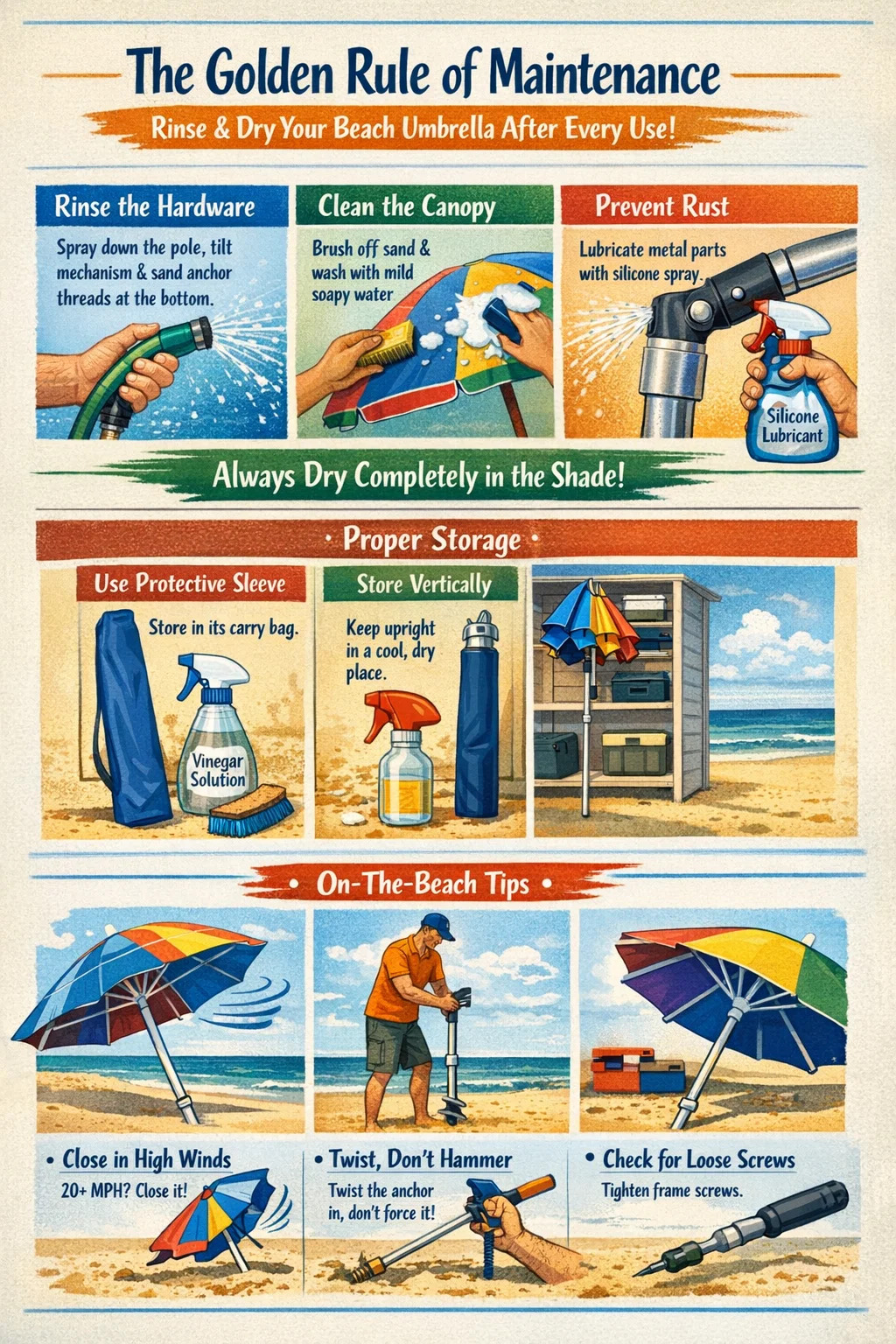
The most critical step to maintain a beach umbrella is to rinse it with fresh water and dry it completely after every single use. Saltwater and sand act as corrosive agents that degrade fabric and rust metal joints. By spending five minutes rinsing your gear, you can extend its lifespan from a single season to over five years of reliable use.
After-Beach Cleaning Routine
When you return from the shore, your beach umbrella is covered in microscopic salt crystals and abrasive sand. If left unattended, these particles trap moisture and lead to mold or mechanical failure.
Rinsing the Hardware
Use a garden hose to spray down the pole, the tilt mechanism, and the ribs. Pay close attention to the sand anchor threads at the bottom. Sand stuck in these threads can grind down the plastic or metal over time, making it difficult to screw the umbrella into the ground during your next trip.
Canopy Fabric Care
Most beach umbrella canopies are made of polyester or acrylic. For general cleaning, use a soft brush to remove loose sand. If you spot bird droppings or salt stains, use a mixture of mild dish soap and lukewarm water. Avoid harsh detergents or bleach, as these can strip the UV-protective coating from the fabric.
Preventing Rust and Mechanical Seizure
Mechanical parts are the "heart" of your shade structure. A seized tilt button or a snapped rib often renders the entire unit useless.
| Component | Potential Issue | Maintenance Action |
|---|---|---|
| Tilt Mechanism | Corrosion/Jamming | Lubricate with silicone spray |
| Metal Ribs | Rust Spots | Wipe with a thin layer of oil |
| Telescoping Pole | Scratching/Sticking | Clear sand from locking pin |
| Integrated Anchor | Thread Wear | Rinse and inspect for cracks |
For umbrellas with metal poles, applying a marine-grade silicone lubricant to the joints twice a season can prevent the "locking" effect caused by oxidation. Never use WD-40 for long-term storage as it can attract more dust and sand; stick to dry silicone sprays.
Deep Cleaning and Stain Removal
If your beach umbrella develops mold or deep stains from sitting in a damp garage, a simple rinse won't suffice. You need a more constructive approach to restoration.
- Mold Removal: Mix one cup of white vinegar with two cups of water. Spray the affected area and let it sit for 15 minutes before scrubbing with a soft-bristled brush.
- Grease Stains: If sunscreen or food oil gets on the canopy, apply a small amount of cornstarch to soak up the oil, then wash with soapy water.
- Drying Time: Always air-dry the beach umbrella in a fully open position in the shade. Drying it in direct, intense sun while wet can sometimes cause uneven fading or "baking" of salt residue into the fibers.
Proper Storage Techniques
How you store your gear during the off-season determines whether you'll be buying a new beach umbrella next summer. The storage environment should be cool, dry, and ventilated.
Use a Protective Sleeve
Most mid-range umbrellas come with a carry bag. Use it. This prevents dust from settling into the folds of the fabric and protects the pole from getting scratched or dented by other heavy items in your garage or shed.
Vertical vs. Horizontal Storage
Storing the beach umbrella vertically is generally preferred as it prevents heavy objects from being stacked on top of it, which can bend the ribs. If you must store it horizontally, ensure it is placed on the very top of your gear pile.
Tips for On-Site Care During Use
Maintenance also happens while you are at the beach. Being proactive can prevent immediate damage.
- Close during high winds: If wind speeds exceed 20-25 MPH, close the canopy. Even the sturdiest beach umbrella can suffer structural fatigue if left open during a storm.
- Avoid the "Thrust" Method: Don't try to hammer the umbrella into the sand. This can crack the pole or the top cap. Always use a twisting motion or a dedicated sand anchor.
- Check for loose screws: Occasionally check the small screws that hold the fabric to the ribs. A quick turn with a screwdriver can prevent a rib from poking through the fabric mid-trip.
Recommended products
Contact Us Now
Copyright 2024 @ Shaoxing Jinqiao Umbrella Co., Ltd. All Rights Reserved. OEM/ODM umbrellas manufacturers Custom Umbrellas Factory
