

 English
 中文简体
中文简体






Straw Beach Umbrella Guide: Materials, Sizing & Wind Tips
Posted by Admin
Content
- 1 A Straw Beach Umbrella Is the Right Choice When Shade, Ventilation, and a Natural Look All Matter
- 2 Materials Used to Make Straw Beach Umbrella Canopies
- 3 Frame, Pole, and Rib Construction
- 4 Durability Comparison: Straw vs. Other Beach Umbrella Canopy Types
- 5 Choosing the Right Canopy Size for Groups and Coverage
- 6 Sun Protection: How Much UV Does a Woven Canopy Actually Block
- 7 Wind Stability: Keeping a Straw Beach Umbrella Upright on Open Sand
- 8 Cleaning and Off-Season Storage
- 9 Popular Straw Beach Umbrella Styles
- 10 Sustainability Considerations
- 11 Cost Factors to Understand Before Ordering
- 12 Matching the Umbrella to the Setting
- 13 Frequently Asked Questions
- 13.1 Does a straw beach umbrella actually block the sun?
- 13.2 Is synthetic straw better than real straw for beach use?
- 13.3 How do I stop a straw beach umbrella from blowing over in wind?
- 13.4 Can a straw beach umbrella get wet?
- 13.5 What size straw beach umbrella works for a family of four?
- 13.6 How long does a straw beach umbrella typically last?
- 13.7 Can a straw beach umbrella be repaired if a section frays?
- 13.8 Do straw beach umbrellas work well near saltwater pools as well as the ocean?
A Straw Beach Umbrella Is the Right Choice When Shade, Ventilation, and a Natural Look All Matter
A straw beach umbrella is the better pick over a plain polyester canopy whenever a buyer wants three things at once: airflow that keeps the shaded area cool, a woven texture that filters harsh midday light instead of blocking it completely, and a resort-style appearance that photographs well and fits a boho or tropical setting. Straw and straw-look weaves let a portion of light and air pass through the canopy, which lowers the "hot box" effect that solid vinyl or polyester tops create on windless afternoons. The trade-off is that raw natural straw needs more care around moisture and salt air than synthetic fabric, so the fiber type chosen for the canopy matters more than almost any other spec on the umbrella.
The short version: for a beach club, poolside lounge, resort walkway, or backyard tiki bar, a straw beach umbrella built from synthetic straw (PE or PP raffia-style fiber) delivers the woven look with far better weather resistance than dried natural reed or real palm straw, which is better suited to covered patios or short-term event styling. The rest of this guide breaks down materials, frame construction, sizing, sun protection, wind stability, maintenance, seasonal storage, sustainability, cost factors, and the questions buyers ask most before placing an order.
Beach umbrellas in general fall into a handful of broad canopy families: solid fabric, striped canvas, vinyl-coated blackout, and woven straw or straw-look. Straw sits apart from the other three because its appeal is almost entirely about texture and atmosphere rather than raw sun-blocking numbers. Buyers who choose it are usually prioritizing the look and feel of a beachfront lounge over maximum shade density, and understanding that trade-off up front makes every later decision on the umbrella — size, lining, frame, and anchoring — much easier to get right the first time.
Materials Used to Make Straw Beach Umbrella Canopies
"Straw" on a beach umbrella spec sheet can mean several different fiber types, and the fiber determines how the umbrella performs once it is exposed to sun, sand, and salt spray for an entire season.
Natural Fiber Options
- Dried palm leaf or thatch, hand-woven into panels and layered over a frame
- Water hyacinth or seagrass rope, wrapped around ribs or woven into strips
- Rattan or bamboo skin strips, used more for structure than for the canopy itself
- Raffia palm fiber, a thin natural strand often blended with synthetic strands for extra strength
Natural fiber canopies have real advantages indoors or under a covered patio roof: the color variation from strand to strand looks organic, the weave has an uneven, handmade texture, and the material biodegrades naturally at the end of its life instead of sitting in a landfill for decades. The drawback is moisture sensitivity — natural cellulose fiber absorbs water, and repeated wetting and drying cycles cause the strands to swell, crack, and eventually shed, which is why most suppliers rate natural straw canopies for a single outdoor season in coastal conditions.
Synthetic "Straw-Look" Options
- PE (polyethylene) raffia, the most common choice for outdoor synthetic thatch
- PP (polypropylene) woven strip, slightly stiffer and lower cost than PE
- UV-stabilized resin thatch tiles, pre-formed panels attached to the umbrella ribs
- PVC-coated straw strand, used where extra rain resistance is a priority over natural texture
Buyers sourcing for commercial beach clubs or rental fleets should ask specifically for UV-stabilized synthetic straw, since untreated PE fiber will fade and turn brittle within a single summer of full sun exposure, while stabilized fiber is commonly rated for several years of continuous outdoor use. It also helps to ask the supplier whether the fiber is solid-color extruded or surface-dyed: solid-color extrusion holds its tone much longer because the color runs through the entire strand rather than sitting on the surface where it can wear off from handling and sand abrasion.
Blended and Layered Canopies
Some manufacturers combine both approaches by building a solid fabric canopy first and then attaching a decorative straw fringe or straw overlay panel on top. This blended construction is worth considering for buyers who want the woven look but cannot compromise on rated sun protection, since the base fabric layer does the actual UV blocking while the straw layer provides the visual texture and airflow gaps around the edges.
Frame, Pole, and Rib Construction
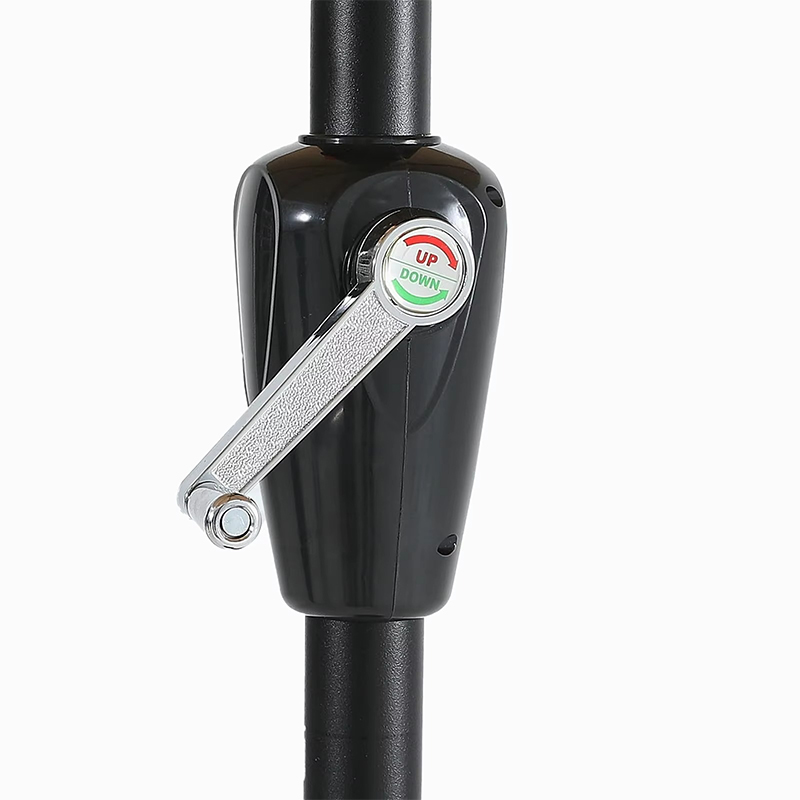
The canopy gets most of the attention, but the frame underneath determines how long the umbrella survives daily folding, wind loading, and beach transport. A straw canopy is only as good as the skeleton holding it up.
Pole Materials
| Pole Material | Weight | Corrosion Resistance | Typical Cost Tier |
|---|---|---|---|
| Aluminum | Light | High | Mid to high |
| Steel (powder-coated) | Heavy | Moderate | Low to mid |
| Wood (treated hardwood) | Medium | Low unless sealed | Mid to high |
| Fiberglass rib core | Light | High | Mid |
Wood poles pair visually with a straw canopy and are common on resort-style umbrellas, but untreated or poorly sealed wood absorbs salt moisture at the base and can rot or split within a couple of seasons near the ocean. Aluminum with a marine-grade coating, or fiberglass ribs with a wood-look powder coat on the pole, gives a similar appearance with much better long-term corrosion resistance.
Rib Count and Flex
More ribs generally spread wind load more evenly across the canopy and reduce the chance of a single rib bending or snapping in a gust. Fiberglass ribs flex under sudden wind pressure and spring back into shape, while rigid steel ribs hold their form better in calm conditions but are more likely to bend permanently if caught by a strong gust while fully open.
Durability Comparison: Straw vs. Other Beach Umbrella Canopy Types
Straw is not the most durable canopy material available, but it offers a distinct combination of ventilation and appearance that solid fabrics cannot match. The table below compares the three most common canopy types used on beach umbrellas.
| Canopy Material | Airflow | Sun Blocking | Water Resistance | Typical Lifespan |
|---|---|---|---|---|
| Natural straw / palm thatch | High | Moderate | Low | 1 season |
| Synthetic straw (PE/PP) | High | Moderate to High | High | 3 to 5 years |
| Solid polyester / canvas | Low | High | High | 2 to 4 years |
| Vinyl-coated blackout | Very low | Very high | Very high | 4 to 6 years |
The synthetic straw beach umbrella sits in the sweet spot for most commercial buyers: it keeps the woven, breathable look while surviving repeated exposure to salt spray, rain, and daily folding far better than dried natural fiber. Vinyl-coated blackout canopies last the longest and block the most light, but they sacrifice all airflow and none of the woven aesthetic that draws buyers to straw in the first place, which is why the two materials tend to serve different parts of the same product line rather than competing head-to-head.
Choosing the Right Canopy Size for Groups and Coverage
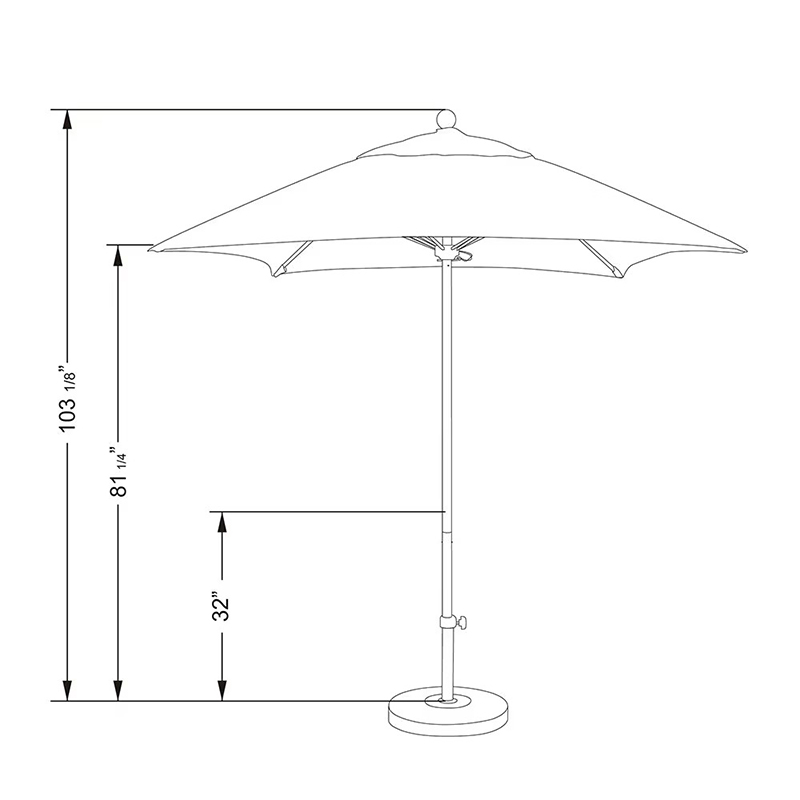
Beach umbrella diameter is usually measured across the fully open canopy, not the pole height. A larger canopy does not automatically mean better shade if the pole is not tall enough to keep the shadow edge clear of the seating area during the afternoon sun angle.
| Canopy Diameter | Recommended Group Size | Typical Use Case |
|---|---|---|
| 6 to 7 feet | 1 to 2 people | Solo sunbather or couple's beach chairs |
| 8 to 9 feet | 2 to 4 people | Family beach setup with a small table |
| 10 feet and larger | 4 to 6 people | Resort loungers, beach club cabana, event rental |
For commercial cabana rows, a 9 to 10 foot straw beach umbrella paired with a pole height of roughly 7.5 to 8 feet gives enough shadow depth to cover two loungers through most of the afternoon without constant repositioning.
Shade Angle and Repositioning
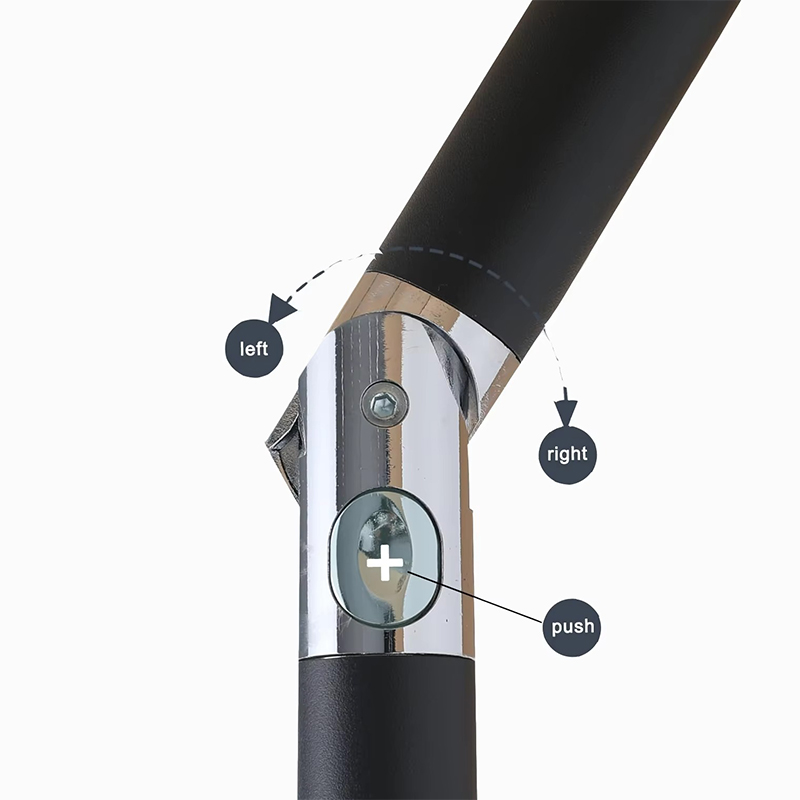
The sun moves roughly 15 degrees across the sky every hour, so a fixed straight-pole umbrella needs to be tilted or physically moved two to three times over a full beach day to keep the shade over the same seating spot. A cantilever-style base or a tilting joint reduces how often the whole umbrella needs to be lifted and re-anchored, which matters more for a heavier straw canopy than for a lightweight solid fabric top.
Sun Protection: How Much UV Does a Woven Canopy Actually Block
Because a straw weave has small gaps between the fibers, it will never block as much direct UV as a tightly woven solid fabric rated at a specific UPF number. That does not make a straw canopy a poor sun-protection choice; it means the protection strategy is different.
- A dense weave with tight fiber spacing cuts most direct overhead sun even though small light specks pass through
- Reflected and scattered UV from sand and water still reaches skin under any umbrella, straw or solid
- A double-layer straw canopy, or a straw canopy with a solid fabric liner underneath, closes most of the light gaps while keeping the woven look on the outside
- Darker fiber colors generally absorb more visible light than very pale, bleached straw tones
For buyers who need documented UPF ratings for a specific market, a lined straw beach umbrella (woven exterior, solid fabric interior layer) is the practical compromise between appearance and measurable sun protection. Sunscreen use underneath the umbrella is still recommended regardless of canopy type, since no umbrella eliminates all indirect and reflected UV exposure at the beach.
Wind Stability: Keeping a Straw Beach Umbrella Upright on Open Sand
Open sand has no windbreaks, so a beach umbrella faces stronger and more unpredictable gusts than a backyard umbrella in the same wind forecast. Because straw canopies weigh less than solid vinyl tops, they can catch a gust and tip the whole frame if the base is undersized.
Anchoring Methods That Work Best in Sand
- A corkscrew sand anchor threaded onto the pole base before the pole is twisted into the sand
- A weighted base ring filled with sand or water, used for umbrellas mounted through a table hole
- A cross-brace or tripod stand for freestanding cabana-style umbrellas on hard-packed sand or decking
- Guy lines staked at an angle away from the pole for tall cabana umbrellas used in exposed, high-traffic beach areas
Tilt and Vent Design
A tilting pole joint lets the canopy angle to follow the sun without moving the whole base, which reduces how often the umbrella has to be re-anchored during the day. Many synthetic straw umbrellas also include a small vent gap at the crown, similar to a market umbrella, which lets wind pressure release through the top instead of pushing the whole canopy sideways.
When to Close the Umbrella
As a general rule, an unattended beach umbrella should be closed once sustained wind starts to visibly ripple or lift the canopy edge, since a straw weave has more surface area catching the wind than its actual fabric weight would suggest. Closing the canopy fully and laying the umbrella flat is safer than leaving it open and loosely anchored during a sudden gust.
Cleaning and Off-Season Storage
Salt residue and sand grit are the two biggest causes of premature wear on a straw beach umbrella canopy, and both are avoidable with a short routine.
- Rinse the canopy with fresh water after any day at the ocean to remove salt before it dries into the fiber
- Let the canopy air dry fully open in shade before folding or storing to prevent mildew between the woven strands
- Store the folded umbrella in a breathable cover rather than a sealed plastic bag
- Brush off dry sand with a soft brush instead of shaking it out near the frame joints, which can loosen rivets over time
- Check pole joints and rib hinges for trapped sand before folding, since grit in the hinge is a common cause of stiff or squeaky joints
Natural fiber canopies need the most attention: they should be stored somewhere with airflow and low humidity, since trapped moisture is what leads to the mold spotting that shortens a natural straw canopy's single-season lifespan. Synthetic straw is far more forgiving and can typically be left assembled in a garage or storage shed between uses without special handling.
End-of-Season Inspection Checklist
- Check the canopy fabric or straw strands for fraying, gaps, or brittle spots
- Test each rib joint for smooth movement and tighten any loose screws or rivets
- Look at the pole base and ferrule for rust, corrosion, or cracking
- Confirm the tilt mechanism locks firmly in the open position
Popular Straw Beach Umbrella Styles
Straw canopies are often paired with design details that reinforce the resort look, which is one of the main reasons buyers choose this style over a plain solid canopy in the first place.
| Style | Key Feature | Best Fit |
|---|---|---|
| Classic thatch dome | Rounded canopy, tightly layered fiber | Tiki bars, poolside cabanas |
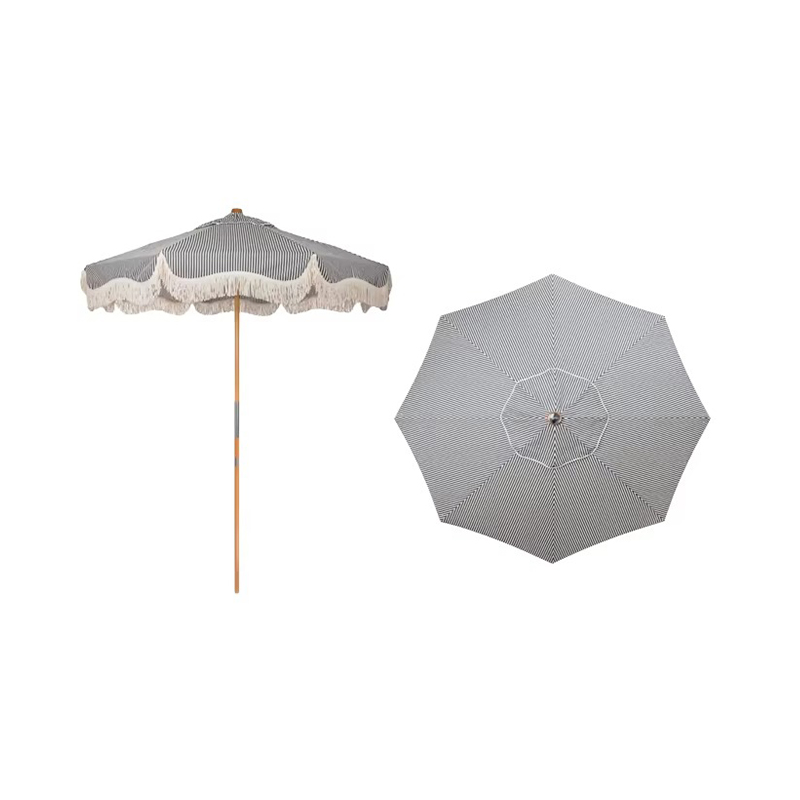
| Fringed edge | Loose straw fringe hanging from the rim | Boho beach photography setups |
| Flat-top market style | Straw panels over a standard octagonal frame | Beach clubs, restaurant patios |
| Layered tiki hut | Multiple overlapping thatch tiers around the pole | Large freestanding cabana structures |
Color and Finish Choices
Natural tan and golden-brown remain the most requested tones because they match the traditional thatch look, but many synthetic straw lines are now offered in bleached ivory, weathered gray, and two-tone woven patterns that mix a straw base with a colored fabric trim. A bleached or gray-toned synthetic finish tends to show less visible fading over time than a warm golden tone, since color shift is more noticeable on richly saturated fibers.
Sustainability Considerations
Buyers increasingly ask about the environmental footprint of outdoor furnishings, and straw beach umbrellas sit in an interesting middle ground between fully natural and fully synthetic materials.
- Natural straw and palm fiber are renewable and biodegrade at end of life, but their short usable lifespan in coastal conditions means more frequent replacement
- Synthetic straw made from recycled PE or PP reduces virgin plastic use while still delivering multi-year outdoor durability
- A longer-lasting canopy, natural or synthetic, generally has a lower overall environmental impact than a short-lived one that needs yearly replacement
For buyers weighing this trade-off, the most balanced option is often a UV-stabilized recycled-content synthetic straw canopy, which combines a multi-year service life with a reduced reliance on new raw plastic.
Cost Factors to Understand Before Ordering
Price differences between straw beach umbrellas are driven mostly by fiber type, frame material, and canopy size rather than by brand alone.
- Fiber source: natural hand-woven panels typically cost more in labor than machine-woven synthetic strip
- Frame grade: marine-grade aluminum and fiberglass ribs add cost over basic painted steel
- Canopy diameter: larger canopies require more fiber and heavier ribs to support the added wind load
- Lining: a solid fabric UV liner adds cost but extends the useful sun-protection life of the umbrella
- Base and anchoring hardware: sand anchors, weighted rings, or tripod stands are sometimes sold separately from the umbrella itself
For high-turnover commercial settings such as beach clubs, the lower up-front cost of natural straw is often offset within one to two seasons by the labor cost of replacing worn canopies, which is why many operators eventually standardize on synthetic straw for anything used daily.
Matching the Umbrella to the Setting
Residential Beach or Backyard Use
Lighter natural or blended straw canopies work well for occasional weekend use where the umbrella is stored indoors between trips, since the shorter exposure window reduces the moisture and UV damage that shortens natural fiber life.
Commercial Beach Clubs and Resorts
Daily outdoor exposure calls for UV-stabilized synthetic straw on a marine-grade frame, ideally with a fabric UV liner to meet guest expectations for consistent shade across a full operating season.
Event and Wedding Rentals
Short-term event use favors appearance over long-term durability, which is one of the few settings where natural straw's warmer, more textured look can outweigh its shorter service life, since the umbrella may only be deployed for a single event.
Frequently Asked Questions
Does a straw beach umbrella actually block the sun?
It blocks most direct overhead sun, but the woven gaps let in more scattered light than a solid canopy. A lined straw umbrella with a solid fabric layer underneath closes most of the gap while keeping the woven appearance on top.
Is synthetic straw better than real straw for beach use?
For regular outdoor and coastal use, yes. Synthetic straw resists salt, moisture, and UV fading far longer than natural fiber, which tends to degrade within a single season of full sun and sea air exposure.
How do I stop a straw beach umbrella from blowing over in wind?
Use a corkscrew sand anchor pushed deep into the sand, add a weighted base if the umbrella sits through a table hole, and close or tilt the canopy during sudden gusts rather than leaving it fully open and unattended.
Can a straw beach umbrella get wet?
Synthetic straw handles rain and splashing well and can be left outdoors. Natural straw should be dried fully in the shade after getting wet, since trapped moisture between the fibers is the main cause of mold and premature breakdown.
What size straw beach umbrella works for a family of four?
An 8 to 9 foot canopy with a pole height around 7 feet typically gives enough shade for two adults and two children on beach chairs with room for a small cooler or bag underneath.
How long does a straw beach umbrella typically last?
Natural straw canopies generally last about one outdoor season in coastal conditions, while UV-stabilized synthetic straw canopies commonly hold up for three to five years with routine rinsing and shaded storage.
Can a straw beach umbrella be repaired if a section frays?
Small frayed sections of synthetic straw can often be trimmed or re-secured with matching strand replacement, while widespread fraying across a natural straw canopy usually signals it is time to replace the canopy rather than repair it.
Do straw beach umbrellas work well near saltwater pools as well as the ocean?
Yes, and the same care routine applies: rinsing off chlorine or salt residue and allowing the canopy to dry fully between uses will noticeably extend the life of either a natural or synthetic straw canopy near any pool or ocean setting.
Recommended products
Contact Us Now
Copyright 2024 @ Shaoxing Jinqiao Umbrella Co., Ltd. All Rights Reserved. OEM/ODM umbrellas manufacturers Custom Umbrellas Factory
