

 English
 中文简体
中文简体






XL Beach Umbrella Buying Guide: Sizes, Wind Ratings & Setup
Posted by Admin
Content
- 1 What Actually Counts as an XL Beach Umbrella
- 2 XL vs Standard vs Commercial: Where the Lines Sit
- 3 Matching Canopy Size to Your Group
- 4 Pole and Rib Materials Compared
- 5 Canopy Fabric, UPF Rating, and Sun Protection
- 6 Wind Resistance: What the Numbers Mean
- 7 Base and Stand Options Beyond a Simple Sand Anchor
- 8 Anchoring a Large Canopy in Sand
- 9 Tilt Mechanisms and Adjustability
- 10 Setting Up on Different Beach Terrain
- 11 Shade, Airflow, and Managing Heat Underneath
- 12 Weight, Transport, and Folding Down
- 13 Care and Off-Season Storage
- 14 What Different Price Tiers Typically Include
- 15 A Practical Pre-Purchase Checklist
- 16 Common Mistakes When Buying or Setting Up an XL Umbrella
- 17 Frequently Asked Questions
- 17.1 How big is considered XL for a beach umbrella?
- 17.2 How many people can sit under a 9-foot beach umbrella?
- 17.3 Do XL beach umbrellas need a special anchor?
- 17.4 Is a vented canopy worth it on a large umbrella?
- 17.5 What UPF rating should I look for?
- 17.6 Can an XL beach umbrella be used on a patio or deck instead of sand?
- 17.7 How often should the canopy fabric be replaced?
- 17.8 Should the umbrella be closed every time it is not in use?
- 17.9 How heavy is a typical XL beach umbrella?
- 17.10 Does a darker canopy color get hotter underneath than a lighter one?
What Actually Counts as an XL Beach Umbrella
An xl beach umbrella is generally any canopy measuring 7 feet (about 213 cm) across or larger, with most products sold under this label falling between 7.5 and 9 feet in diameter. Anything smaller than 6.5 feet is typically marketed as a standard or compact beach umbrella, while anything past 9 feet usually shifts into the commercial or resort-style category used by hotels and beach clubs. The extra span matters because shade coverage does not scale in a straight line with diameter — a 9-foot canopy covers roughly double the ground area of a 6-foot canopy, not just 50 percent more, since shade area follows the square of the radius rather than the diameter itself.
Shoppers looking for a beach umbrella for a family outing, a group of friends, or a long day at the shore usually gravitate toward the XL category because it removes the need to constantly shift chairs and towels as the sun moves. A larger canopy also tends to sit on a thicker pole and a sturdier frame, since the added fabric surface catches more wind and needs more structural support to stay upright through an entire afternoon.
The category grew alongside a broader shift in how people spend a day at the beach. Where a single small umbrella once covered one or two loungers, group outings, multi-family trips, and longer stays now call for a canopy that can shelter chairs, coolers, bags, and a play area all at once without repositioning every hour. That shift is the main reason XL sizing has moved from a niche resort product into something sold at nearly every beach and outdoor retailer.
XL vs Standard vs Commercial: Where the Lines Sit
Retail listings are not always consistent about naming, so it helps to compare the three tiers side by side rather than relying on a single label.
| Category | Typical Diameter | Common Setting | Pole Thickness |
|---|---|---|---|
| Standard | 5.5 to 6.5 feet | Solo or couple use | Around 1 inch |
| XL | 7 to 9 feet | Families, small groups | 1.25 to 1.5 inches |
| Commercial | 9.5 feet and up | Resorts, beach clubs, rentals | 2 inches or more, often with a base plate |
Commercial-grade units are usually bolted into a fixed base rather than moved daily, while XL units are still designed to be carried, folded, and transported by one or two people, which keeps their weight and pole thickness within a manageable range.
Matching Canopy Size to Your Group
Picking the right diameter comes down to how many people and how much gear need to sit under the shade at once. The table below reflects typical chair and cooler footprints used by beach outfitters when advising customers on umbrella sizing.
| Group Size | Suggested Diameter | Typical Setup |
|---|---|---|
| 1 to 2 people | 6 to 7 feet | Two loungers, one bag |
| 3 to 4 people | 7.5 to 8 feet | Two chairs, a small cooler, a blanket |
| 5 to 6 people | 8.5 to 9 feet | Four chairs, a cooler, a wagon |
| 7 or more | 10 feet or a double canopy pairing | Extended family or group outing |
Anyone unsure between two sizes should size up rather than down. Shade retreats as the sun angle changes throughout the day, and an oversized canopy gives a wider buffer before someone ends up sitting in direct sun by mid-afternoon. A canopy that looks generous at noon can shrink its usable shadow by nearly half by four in the afternoon once the sun angle drops, so groups that plan to stay past lunch benefit from rounding up a full size.
Pole and Rib Materials Compared
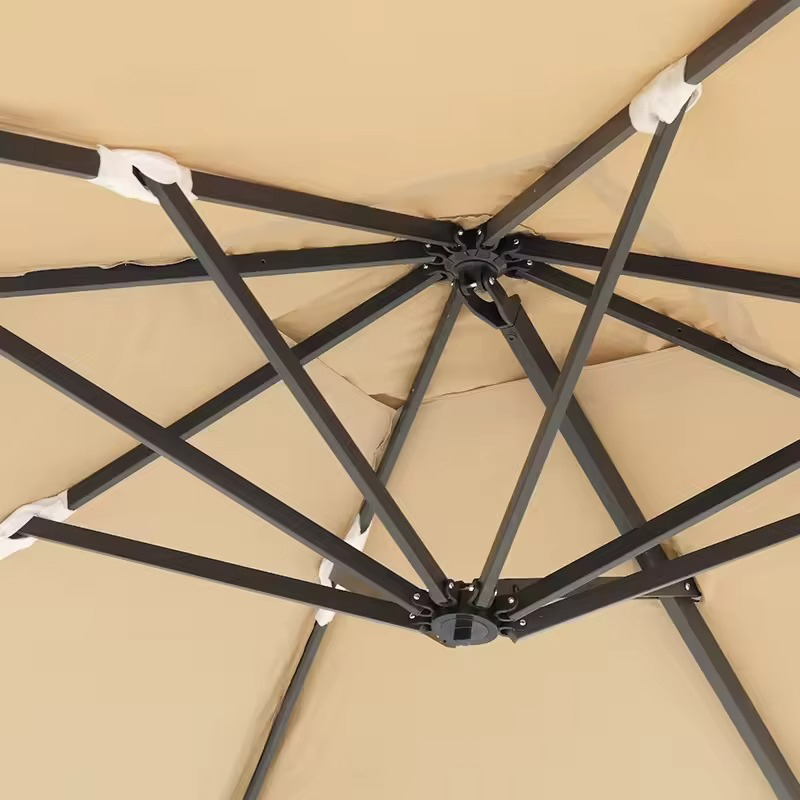
The frame determines how well an xl beach umbrella holds its shape once wind picks up. Three materials dominate the market, and each behaves differently once the canopy size grows past 7 feet.
Aluminum Poles
Aluminum is the most common choice for XL umbrellas because it resists salt corrosion and stays light enough to carry across sand without straining an arm. Anodized aluminum poles, in particular, hold up against years of coastal humidity without pitting or discoloring. The tradeoff is that aluminum ribs can bend under a sudden gust if they are thin-gauge, so buyers should look for a rib diameter of at least 8 mm on canopies 8 feet or larger.
Fiberglass Ribs
Fiberglass ribs flex under wind load instead of snapping, which makes them a common upgrade paired with an aluminum center pole. A hybrid aluminum-pole, fiberglass-rib build is generally considered the strongest configuration for XL sizes because it combines corrosion resistance with rib flexibility, letting the canopy bow slightly in a gust and spring back rather than cracking at the joint.
Wood Poles
Wood poles, usually made from oiled hardwood, are chosen mainly for their appearance on resort patios and upscale beach clubs rather than for pure wind performance. They are heavier, need periodic oiling to prevent cracking, and are less common once canopy size exceeds 8 feet, since the added weight of a longer wooden pole makes daily carrying impractical for most households.
Hub and Joint Quality
The central hub, where all the ribs meet the pole, takes more repeated stress than any other part of the frame. On an XL canopy, a plastic hub with thin walls is the most common failure point, cracking after repeated opening and closing. A reinforced metal or thick nylon hub adds very little weight but meaningfully extends the working life of the umbrella.
Canopy Fabric, UPF Rating, and Sun Protection
Fabric quality affects both how long the umbrella lasts and how much ultraviolet light actually gets blocked. Most XL beach umbrellas use one of three fabrics: polyester, olefin, or a sunbrella-style solution-dyed acrylic.
- Polyester with a silver or black coating: budget-friendly, blocks a large share of UV rays, but the coating can flake after two or three seasons of heavy sun exposure.
- Olefin fabric: naturally fade-resistant since the color runs through the fiber rather than sitting on the surface, and it dries fast after rain or splashes.
- Solution-dyed acrylic: the most durable of the three, holding color and UV performance for five or more seasons, though it typically costs more per canopy.
Look for a stated UPF 50+ rating, which blocks roughly 98 percent of UV radiation. A canopy without any UPF label may still block visible light while letting a meaningful share of UV pass through, since shade and sun protection are not the same thing. A dark, densely woven fabric can feel completely opaque to the eye while still allowing scattered UV to reach skin underneath, especially near the umbrella's edge where reflected light from surrounding sand adds to total exposure.
Silver-Backed vs Standard Coating
A silver or aluminum-backed underside reflects heat away from the fabric rather than absorbing it, which keeps the air underneath the canopy noticeably cooler on a hot afternoon. This coating also slows fabric degradation from prolonged sun exposure, since it deflects a portion of the UV load rather than letting it pass straight through the weave.
Double-Layer Canopies
Some premium XL umbrellas use a double-layer canopy, with a small air gap between the two fabric layers. This gap acts as insulation, further reducing heat transfer, and also adds a secondary layer of wind venting since air can pass between the layers near the seams rather than pressing against a single solid sheet.
Wind Resistance: What the Numbers Mean
Wind is the single biggest factor separating a beach umbrella that survives a windy afternoon from one that ends up airborne. Manufacturers usually list a wind rating in miles per hour, but that number only applies when the umbrella is properly anchored.
| Wind Speed | Effect on Canopy | Recommended Action |
|---|---|---|
| Under 10 mph | Minimal movement | Normal use, no adjustment needed |
| 10 to 20 mph | Noticeable flapping, mild pull on the pole | Bury the anchor deeper, angle the canopy slightly downwind |
| 20 to 30 mph | Strong tugging, risk of tipping without a secondary anchor | Add sand anchor bags or a screw-style base |
| Above 30 mph | High risk regardless of anchoring | Close and lay the umbrella flat |
Vented canopy designs, which include a small mesh panel or a double-layer top vent, release pressure that would otherwise build up under the fabric and push the whole umbrella like a sail. On an XL-sized canopy, a vent is less of a bonus feature and closer to a requirement, since a solid 9-foot top acts as a much larger sail than a small 6-foot canopy. A single vent near the crown typically reduces the net lifting force on the canopy by a meaningful margin during gusty conditions, which is part of why almost every well-reviewed XL umbrella on the market includes one.
Base and Stand Options Beyond a Simple Sand Anchor
Not every setting is loose beach sand, so several base styles have developed to match different ground conditions.
Screw Auger Anchors
A corkscrew-style anchor twists directly into sand and grips far more firmly than a straight push-in pole tip, since the threads resist being pulled straight up the same way a screw resists being pulled out of wood.
Water-Fillable Bases
Common on patios, decks, and pool areas, these plastic bases fill with water to add weight and can be emptied for easy transport. They work poorly on true beach sand since there is nothing solid for the base to sit against, but they are a strong option for a paved or decked setting.
Weighted Plate Bases
A flat, heavy plate, often filled with sand or gravel, sits on the surface rather than digging in. This suits hard-packed sand near the waterline or any flat, firm ground where digging is not practical.
Table-Mounted Setups
Some XL umbrellas are designed to slot through the center hole of a picnic table, relying on the table's own weight for stability rather than a separate ground anchor. This works well for shaded seating at a fixed picnic area but is not portable in the same way a standalone anchor system is.
Anchoring a Large Canopy in Sand
An oversized canopy needs an anchoring method that matches its surface area. A basic push-in sand tip is rarely enough once diameter passes 7 feet. The steps below reflect the anchoring approach most beach rental operators use for their XL rental units.
- Dig a hole at least 18 to 24 inches deep rather than simply pushing the pole into loose surface sand.
- Insert an auger-style screw anchor or a wide sand anchor plate before placing the pole, so the base sits below the loose top layer.
- Backfill with wet sand where possible, since wet sand compacts far more firmly than dry sand and holds the pole in place longer.
- Tamp the sand down in layers rather than filling the hole all at once.
- Angle the canopy slightly against the prevailing wind direction rather than dead upright, which reduces direct wind load on the pole.
- Test the hold by pushing gently on the pole from a few directions before leaving the setup unattended.
Sand anchor bags, which loop around the base and get filled with wet sand, add a useful second layer of stability for anyone setting up on a public beach where digging a deep hole is impractical or against local rules for shared beach areas.
Tilt Mechanisms and Adjustability
Because an XL canopy stays in one spot for hours, a tilt mechanism matters more than it does for a small umbrella that gets repositioned often. Two tilt styles are common:
Push-Button Tilt
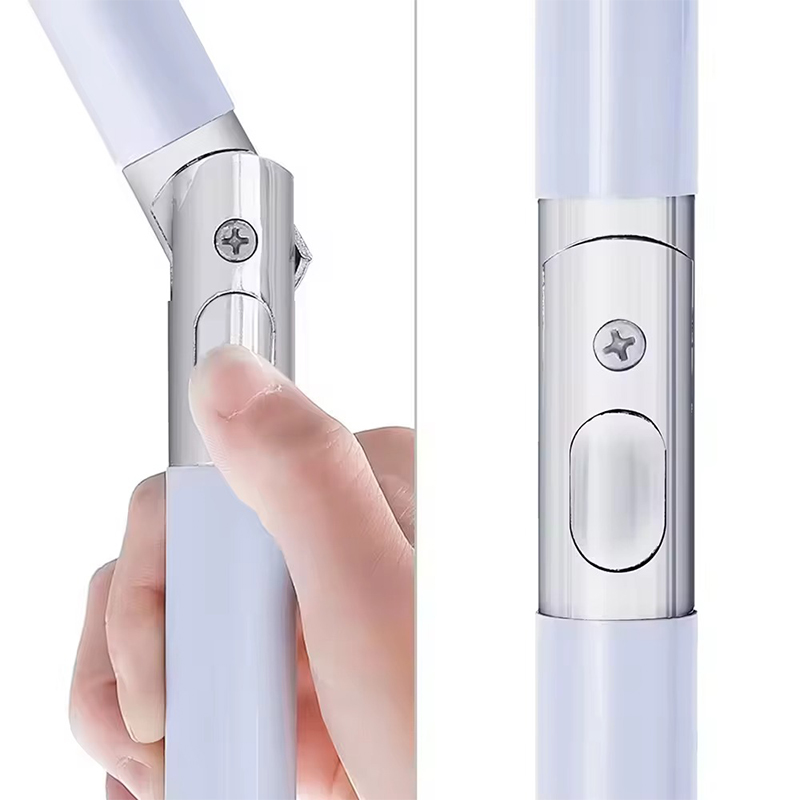
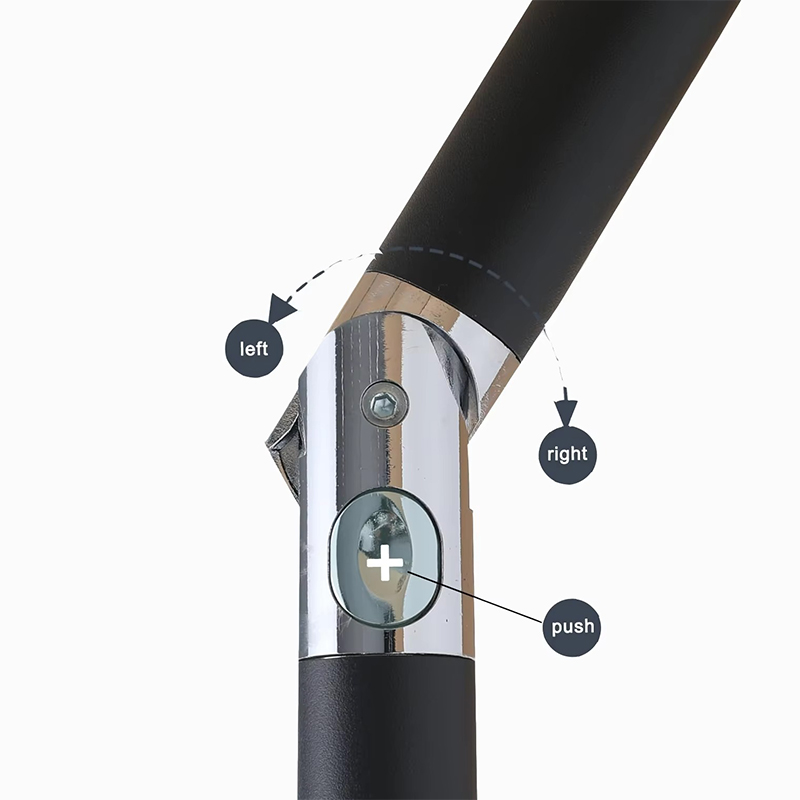
A spring-loaded button near the canopy hub lets the umbrella pivot to a fixed angle, usually offering two or three preset positions. This is the fastest system to operate but offers less fine control.
Crank and Joint Tilt
A rotating joint below the canopy allows a continuous range of tilt angles, which is useful for tracking the sun gradually over a long afternoon rather than resetting the angle every hour.
Full 360-Degree Rotation
A small number of XL models add a rotating collar that spins the entire canopy around the pole independent of the tilt joint, which lets the shade follow the sun's east-to-west arc without needing to loosen and re-angle the whole umbrella.
Setting Up on Different Beach Terrain
Sand condition changes throughout the day and across different stretches of shoreline, and the right anchoring approach shifts along with it.
| Ground Type | Challenge | Best Approach |
|---|---|---|
| Loose dry sand, upper beach | Poor grip, shifts easily | Deep hole plus screw anchor |
| Hard-packed sand near waterline | Difficult to dig deep | Weighted plate base on the surface |
| Grass or dune edge | Root systems resist a straight pole | Auger-style twist anchor |
| Wooden deck or patio | No sand to anchor into | Water-fillable or weighted base |
Shade, Airflow, and Managing Heat Underneath
A large canopy blocks direct sun, but heat still builds up under any still patch of air, especially on a windless day. A few design details noticeably change how comfortable the space underneath actually feels.
- A higher pole height, generally 7.5 to 8 feet from ground to canopy, allows more airflow underneath compared to a low-set umbrella.
- Light-colored or silver-backed fabric reflects more heat than dark solid colors, which absorb and re-radiate warmth toward the seating area below.
- A vented crown lets warm rising air escape rather than pooling under the canopy's peak.
- Angling the umbrella to also block reflected glare off wet sand or shallow water reduces the secondary heat and brightness that comes from below rather than directly overhead.
Weight, Transport, and Folding Down
Bigger canopies come with a real transport tradeoff. Most XL beach umbrellas weigh between 7 and 14 pounds depending on frame material, with fiberglass-rib models sitting toward the lighter end of that range and aluminum-heavy or wood models sitting toward the heavier end. That weight matters most on the walk from a parking area to the sand, where an extra few pounds becomes noticeable over several hundred yards.
Most XL models fold down to a length between 48 and 56 inches once closed, which is long enough that it typically will not fit inside a standard beach bag and instead needs its own carry sleeve or a strap across a beach wagon. Buyers who already use a wagon for chairs and coolers should check that the closed umbrella length fits diagonally across the wagon bed, since a mismatch there is one of the more common post-purchase frustrations.
Care and Off-Season Storage
An XL beach umbrella represents a bigger investment than a compact one, and the larger fabric surface also has more area exposed to salt, sand, and UV breakdown. A few habits extend usable life by several seasons:
- Rinse the canopy with fresh water after any beach session, since dried salt crystals abrade the fabric coating over time.
- Let the canopy dry fully before folding it closed, since trapped moisture leads to mildew spotting on both polyester and acrylic fabrics.
- Store the closed umbrella in a carry bag or upright in a dry area rather than leaving it assembled outdoors between uses.
- Check the rib joints and finial cap each season, tightening any hardware that has loosened from repeated opening and closing.
- Wipe down the pole with a dry cloth before storage, since trapped sand grains inside a telescoping pole can scratch the finish and eventually jam the mechanism.
What Different Price Tiers Typically Include
| Tier | Frame | Fabric | Extras |
|---|---|---|---|
| Entry | Basic aluminum, thin ribs | Coated polyester | Push-button tilt only |
| Mid-range | Aluminum pole, fiberglass ribs | Olefin, UPF 50+ | Vented top, carry bag, sand anchor |
| Premium | Full fiberglass rib set, thick anodized pole | Solution-dyed acrylic | Double vent, auger anchor, reinforced hub |
A Practical Pre-Purchase Checklist
Running through a short checklist before buying helps avoid the most common regret points reported by beach umbrella owners:
- Diameter matched to actual group size, not just the largest number on the shelf.
- Stated UPF rating of 50+ printed on the product listing or tag.
- At least one vent panel near the canopy crown.
- Rib diameter of 8 mm or more for canopies 8 feet and larger.
- A tilt mechanism that matches how long the umbrella will stay in one spot.
- A carry bag or sleeve included, since closed length often exceeds 48 inches.
- An anchor style that matches the actual ground the umbrella will be used on most often.
Common Mistakes When Buying or Setting Up an XL Umbrella
A few recurring errors show up again and again with oversized canopies:
- Choosing diameter based on price alone rather than the actual group size and chair layout.
- Setting the umbrella perfectly vertical in windy conditions instead of angling it against the wind.
- Pushing the pole only a few inches into dry sand instead of digging a proper anchor hole.
- Leaving a solid, non-vented canopy open during a sudden gust rather than closing it early.
- Skipping the freshwater rinse after beach use, which shortens fabric and hardware life.
- Choosing a water-fillable base for loose beach sand, where it has nothing solid to press against.
Frequently Asked Questions
How big is considered XL for a beach umbrella?
Most retailers use 7 feet in diameter as the starting point for the XL label, with the category generally running up to about 9 or 10 feet before a product shifts into the commercial or resort class.
How many people can sit under a 9-foot beach umbrella?
A 9-foot canopy comfortably shades four to six people along with a cooler and a bag or two, depending on how the chairs are arranged around the pole.
Do XL beach umbrellas need a special anchor?
Yes. A larger canopy catches more wind, so a deep anchor hole, an auger-style screw base, or a sand anchor bag is strongly recommended instead of a shallow push-in tip.
Is a vented canopy worth it on a large umbrella?
A vent releases wind pressure that would otherwise build up under a large solid canopy, reducing the chance of the umbrella flipping or pulling free of its anchor.
What UPF rating should I look for?
A UPF 50+ rating is the benchmark most sun-protection guidelines point to, since it blocks around 98 percent of ultraviolet radiation passing through the fabric.
Can an XL beach umbrella be used on a patio or deck instead of sand?
Yes, though it typically needs a heavy weighted or water-fillable base rather than a sand anchor, since a hard surface offers nothing for a sand-style anchor to grip.
How often should the canopy fabric be replaced?
A well-maintained solution-dyed acrylic canopy can last five seasons or more, while a basic coated polyester canopy often shows fading or coating flake within two to three seasons of regular sun exposure.
Should the umbrella be closed every time it is not in use?
Closing it during any break in supervision is the safer habit, since an unattended open canopy is the most common way an umbrella catches a gust and tips or travels across the beach.
How heavy is a typical XL beach umbrella?
Most models weigh between 7 and 14 pounds depending on frame material, with fiberglass-rib designs generally sitting on the lighter end of that range.
Does a darker canopy color get hotter underneath than a lighter one?
Yes. Dark, solid-colored fabric tends to absorb more heat and re-radiate it downward, while lighter or silver-backed fabric reflects a larger share of that heat away from the seating area.
Recommended products
Contact Us Now
Copyright 2024 @ Shaoxing Jinqiao Umbrella Co., Ltd. All Rights Reserved. OEM/ODM umbrellas manufacturers Custom Umbrellas Factory
